
Eugenia whitefly
Dialeurodes eugeniae
Description
How to identify
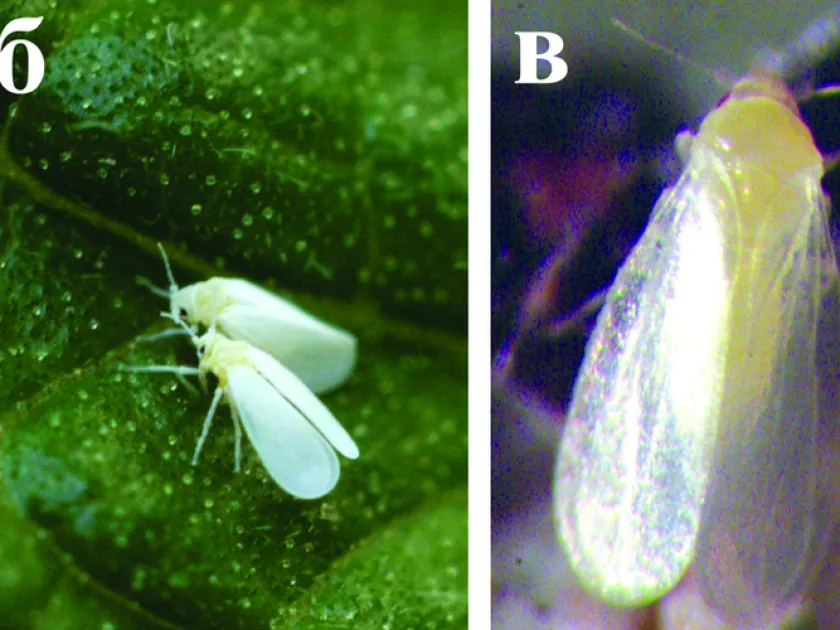
The Eugenia whitefly (Dialeurodes eugeniae) is a member of the Aleyrodidae family, order Hemiptera. These are tiny insects, typically measuring 2–3 mm, which resemble miniature white moths in their adult stage.
Adults possess wings covered in a characteristic white waxy powder. They are usually found on the underside of leaves, where they remain relatively sedentary, often clustering together in large groups.
The nymphal stage, known as the puparium, is flat and oval-shaped. These nymphs firmly attach themselves to the leaf surface, appearing as translucent or yellowish-green scale-like structures that are difficult to spot.
The lifecycle progresses through the egg stage, three nymphal instars, the puparium, and finally the adult stage. Each phase requires specific environmental conditions to complete its development cycle effectively.
Proper identification often requires microscopic analysis of the puparium's morphology, particularly the marginal characteristics, which helps agronomists distinguish this species from other whiteflies.
What it damages
This pest primarily attacks plants in the Myrtaceae family, particularly those of the genus Eugenia. It can also infest various ornamental species, especially in protected greenhouse environments.
The whitefly feeds by piercing plant tissues and extracting cell sap. This feeding process drains the plant of vital nutrients, leading to weakened growth, stunted development, and a lack of vigor.
Heavy infestations cause visible stress to the plant, characterized by yellowing leaves and premature leaf drop. This is particularly detrimental to the aesthetic and commercial value of ornamental plants.
In addition to sap extraction, the insects excrete a sticky substance called honeydew. This provides a substrate for sooty mold growth, which manifests as black patches covering the leaves.
The sooty mold blocks sunlight from reaching the leaves, significantly reducing the plant's photosynthetic capacity. Without intervention, this leads to secondary infections and long-term damage to the plant's health.
When it appears
The development of the Eugenia whitefly is highly dependent on temperature. In outdoor settings, activity peaks during the warm summer months when temperatures remain consistently high.
In greenhouses or indoor environments, the pest can reproduce year-round. Consistent warmth and humidity allow the population to grow rapidly without a natural dormant period.
Females deposit eggs on the youngest, most tender shoots, ensuring the emerging nymphs have immediate access to nutrient-rich sap. This rapid turnover of generations makes the infestation hard to control.
Humidity is a critical factor for the survival of the nymphal stages. High humidity levels tend to facilitate faster development and increase the survival rate of the offspring in controlled environments.
Adults are capable of flying, especially on calm, warm days. They spread the infestation by moving from plant to plant, quickly colonizing new areas within the garden or nursery.
Signs of infestation
The most immediate sign is the presence of tiny white insects on the undersides of leaves. When the foliage is disturbed, the adults will fly up in a noticeable white cloud.
Sticky residue on the upper surface of the leaves, known as honeydew, is a primary indicator of whitefly presence, even if the insects themselves are not initially observed.
Black sooty mold appearing on the foliage is a sign of an advanced infestation. It indicates that the whiteflies have been present long enough for the fungus to establish itself on the honeydew.
Leaf curling, deformation, and chlorosis (yellowing spots) on young shoots are classic symptoms of the plant struggling against the persistent sap-sucking activity of the whiteflies.
Overall plant weakness, poor flowering, and premature senescence of leaves are late-stage signs that indicate the pest population has reached an economically damaging level.
Control measures
Managing the Eugenia whitefly requires an Integrated Pest Management (IPM) approach. Relying on a single control method is rarely sufficient due to the pest's high reproductive rate.
Cultural control measures involve maintaining proper plant spacing, ensuring good ventilation in greenhouses, and pruning away heavily infested leaves to reduce the overall pest load.
Biological control involves the use of natural enemies, such as parasitic wasps (e.g., Encarsia species). These predators effectively hunt the whitefly nymphs, significantly lowering the pest population.
Chemical control is effective when using systemic insecticides that are absorbed by the plant. This makes the sap toxic to the insects, providing a more reliable way to reach hidden nymphs.
- Deploy yellow sticky traps for monitoring and reducing adult populations.
- Regularly inspect the undersides of leaves for egg clusters and nymphs.
- Use horticultural soaps or oils to physically disrupt the insects' respiration.
- Implement strict quarantine protocols for any new plants introduced to the area.
- Rotate insecticide classes to prevent the development of resistant pest populations.
Taxonomy
- Latin name
- Dialeurodes eugeniae
- Order
- Hemiptera (bugs, aphids, leafhoppers)
- Family
- Aleyrodidae
- EPPO code
- DIALEU
Discussion
No discussions yet — be the first.