
Dialeurodes
Dialeurodes
Description
How to identify
Dialeurodes is a genus of insects belonging to the Aleyrodidae family. They are commonly known as whiteflies due to the powdery white wax covering the wings of the adults.
The adults are small, measuring approximately 2–3 mm in length, and are easily disturbed, flying off in clouds when the infested plant is shaken.
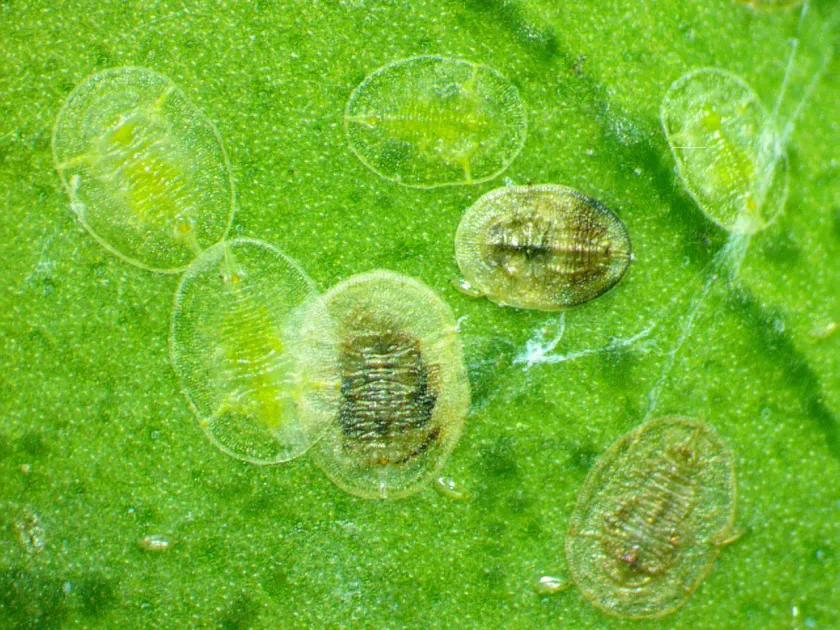
The immature stages, often called nymphs or pupae, are stationary and oval-shaped, tightly pressed against the underside of the leaves.
These insects undergo hemimetabolous development, with the nymphal stages being the most feeding-intensive and difficult to detect without close inspection.
They prefer sheltered environments, which is why they are particularly problematic in greenhouses and indoor gardens where temperatures are stable.
What it damages
Dialeurodes species primarily infest woody plants, including various citrus varieties, laurel, gardenia, and other evergreen ornamentals.
By piercing the leaf tissue, they extract essential plant sap, which stunts growth and causes the overall weakening of the host plant.
The constant feeding pressure leads to leaf curling, chlorosis, and in severe cases, significant defoliation of the infested branches.
Commercial citrus production can be heavily impacted, as infestations degrade both the aesthetic value of the trees and the total harvest yield.
The damage is compounded by the accumulation of honeydew, which interferes with gas exchange and promotes the growth of secondary fungal infections.
Signs of infestation
A major indicator is the presence of honeydew, a sticky substance secreted by the nymphs, which often turns black due to the growth of sooty mold.
Yellowing spots on the foliage, which eventually spread across the entire leaf, are symptomatic of long-term nutrient loss due to sap-sucking activity.
If you observe small, white, moth-like insects hovering around the canopy, it is a clear sign that the population has reached an active stage.
The underside of leaves may show small, flat, semi-transparent discs, which are the stationary larvae and pupae of the whitefly.
Reduced vigor of new shoots and the sudden drop of leaves are often observed when the infestation is advanced and systemic damage has occurred.
Control measures
Control measures rely heavily on systemic insecticides, such as neonicotinoids or insect growth regulators, applied to ensure complete coverage.
Yellow sticky traps are an essential monitoring tool for detecting early arrivals and reducing the population of flying adults.
Cultural practices, including pruning heavily infested branches and maintaining good airflow, help to create less hospitable conditions for the whiteflies.
Biological control through the release of natural enemies like Encarsia formosa has proven highly successful in managing populations in controlled environments.
Integrated Pest Management (IPM) requires consistent scouting and rotating different classes of insecticides to prevent the development of pesticide resistance.
Taxonomy
- Latin name
- Dialeurodes
- Order
- Hemiptera (bugs, aphids, leafhoppers)
- Family
- Aleyrodidae
- EPPO code
- DIALSP
Discussion
No discussions yet — be the first.