
Echium leaf miner
Dialectica scalariella
Description
How to identify
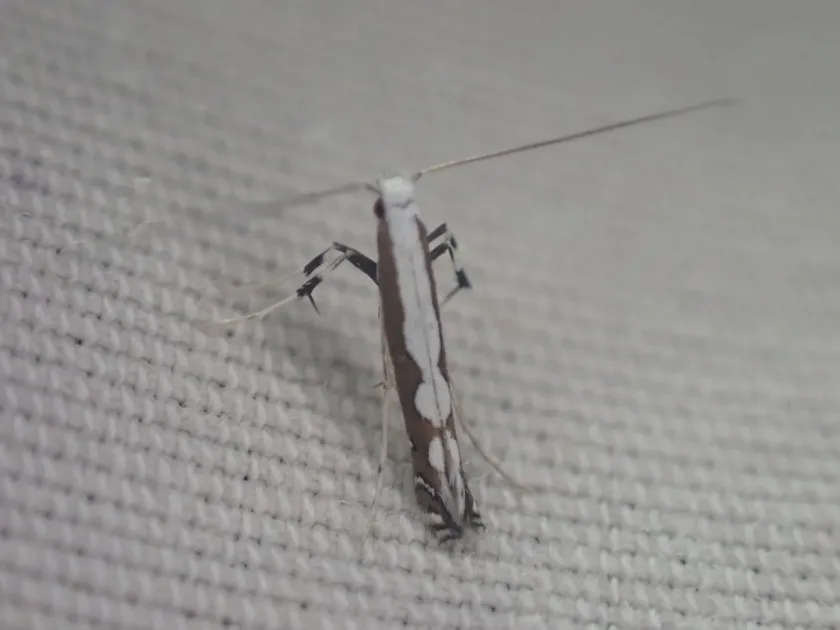
The Echium leaf miner (Dialectica scalariella) is a small moth belonging to the family Gracillariidae. The adult moth is characterized by its narrow, fringed wings and a distinct, stepped pattern.
With a wingspan of approximately 8–10 mm, these moths are often difficult to spot in the field due to their cryptic coloration, which blends well with plant foliage.
The larvae, known as leaf miners, are flattened and adapted for feeding between the upper and lower epidermal layers of the leaf.
Their life cycle consists of four distinct stages: egg, larva, pupa, and adult, with the pupal stage typically occurring within the plant tissue or in leaf folds.
The species is primarily recognized by the specialized feeding behavior of its larvae, which create extensive galleries within the leaves of host plants.
What it damages
The primary host plants for this pest are members of the Boraginaceae family, specifically the Echium genus, including the common Viper's Bugloss.
The damage is caused by larvae that mine the leaf tissue, consuming the chlorophyll-rich cells, which leads to a loss of photosynthetic capacity.
Heavy infestations can result in significant leaf loss, weakening the plant and impacting both seed production and biomass yield in herbal plantations.
The galleries created by the larvae provide entry points for secondary pathogens, which can lead to further tissue decay and plant death.
In ornamental or medicinal gardens, the visual impact of the mining damage significantly reduces the aesthetic and commercial value of the crop.
When it appears
The emergence of adults typically begins in the spring, coinciding with rising temperatures that trigger the development of the first generation.
Throughout the growing season, the moth can undergo multiple generations, with the speed of development being highly dependent on ambient temperature.
Peak larval activity generally occurs during the summer months when host plants are in their most vigorous state of development.
Generations overlap, meaning that at any given point in mid-summer, one may find multiple developmental stages present on the same plant.
As autumn approaches, the population begins to prepare for winter, often entering diapause in the pupal stage within sheltered plant debris.
Signs of infestation
The most prominent sign of infestation is the appearance of distinct, winding, or blotchy silver-white mines on the surface of the leaves.
Careful inspection of these mines often reveals small dark pellets of frass, confirming that they are caused by insect larvae rather than disease.
Affected leaves tend to yellow, curl, and eventually wither prematurely, causing the plant to lose its foliage long before the natural seasonal decline.
- Visible light-colored tunnels (mines) across the leaf surface.
- Curling of leaf margins where larvae have formed cocoons.
- Early leaf drop and reduced vegetative growth.
- Presence of small moths resting on the underside of leaves during the day.
- Ruptured leaf epidermis where mines have dried and cracked.
When held up against the light, the tunnels created by the larvae become transparent, revealing the extent of the internal tissue consumption.
Control measures
Sanitation practices, such as the removal and destruction of crop residues after harvest, are critical for reducing the overwintering population.
Crop rotation and spatial separation of Echium plantings from wild host populations can help mitigate the risk of recolonization.
Biological control measures, including the use of entomopathogenic fungi or bacteria, can be effective when applied during early stages of larval development.
Chemical control using systemic insecticides is generally reserved for severe outbreaks where the economic threshold has been clearly exceeded.
Regular monitoring using pheromone traps can help track the flight activity of adult moths, allowing for better timing of targeted protective applications.
Taxonomy
- Latin name
- Dialectica scalariella
- Order
- Lepidoptera (butterflies)
- Family
- Gracillariidae
- EPPO code
- DILCSC
Discussion
No discussions yet — be the first.