
Deuterosminthurus
Deuterosminthurus
Description
How to identify
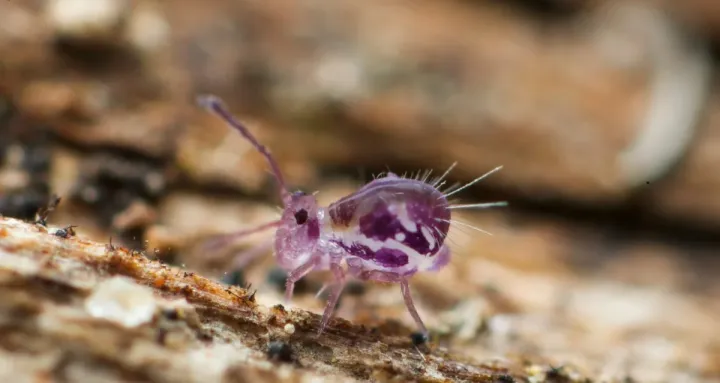
Deuterosminthurus belongs to the class of entognathous insects, specifically the order of springtails (Collembola) and the family Sminthuridae. These are minute arthropods, with body lengths rarely exceeding 1–2 mm.
A distinctive feature of this genus is the rounded, almost spherical shape of the body, which is characteristic of most members of the Sminthuridae family. They possess a specialized jumping mechanism (furcula), which allows them to make sudden leaps when threatened.
The coloration of Deuterosminthurus can vary from yellowish to greenish or spotted, helping them camouflage on leaf surfaces. They prefer moist microclimatic conditions and the presence of organic residues in the soil.
Unlike other soil-dwelling organisms, members of this genus actively inhabit the aerial parts of plants. Their chewing mouthparts are perfectly adapted for scraping the epidermis off young leaves and tender shoots.
The life cycle includes several developmental stages without metamorphosis. Insects actively reproduce under moderate temperature conditions, undergoing several molts, which allows them to rapidly increase their population when conditions are favorable.
What it damages
The main crops susceptible to damage by Deuterosminthurus are members of the Fabaceae and Asteraceae families. Specifically, the pest is often recorded in alfalfa, clover, pea fields, and certain vegetable crops.
Damage is caused by both adults and larvae, which concentrate on young leaves and stem tips. By feeding on plant tissues, they disrupt photosynthesis processes and slow down the overall development of the crop.
The pest poses a particular danger to seedlings and young plants, as damage to cotyledons can lead to the death of the entire plant. Intense feeding results in a loss of marketable produce quality and reduced overall yield.
The harmfulness of Deuterosminthurus increases in years with high humidity, as excess moisture contributes to egg survival and active population growth in the root zone and on the soil surface.
There is also a risk of pathogen transmission through damaged tissues, making Deuterosminthurus a secondary factor in the development of fungal and bacterial infections on weakened plants.
Signs of infestation
The first sign of infestation is the appearance of small holes in leaves, resembling "mining" or epidermis scraping. Gradually, these damages merge into larger necrotic areas.
Plants affected by springtails begin to lag in growth, and their leaves may turn yellow and curl. In the morning hours, during a detailed inspection of the leaf surface, one can notice the insects themselves, jumping when the plant is touched.
The presence of light spots or a net-like pattern on the leaf blade indicates that the pest has consumed the chlorophyll, leaving only transparent tissue areas. This critically reduces the plant's nutritional capacity.
In the event of mass population outbreaks, massive wilting of the upper plant layers can be observed, which, in the absence of control, leads to significant thinning of crops and serious economic losses.
To detect the pest, agronomists often use the "sweep net" method or inspect the underside of leaves, where pests prefer to hide from direct sunlight during the day.
Control measures
Protection measures include a complex of agrotechnical practices aimed at creating unfavorable conditions for springtails. Deep autumn plowing is crucial, as it destroys their overwintering sites.
Adherence to crop rotation and the timely removal of weeds deprives the pest of its food base during the off-season. Optimizing sowing dates allows plants to avoid the most dangerous period of infestation.
When the economic injury level is reached, the use of contact-stomach insecticides is recommended. Products from the organophosphate or pyrethroid groups are effective.
Special attention should be paid to ensuring optimal water balance in the field, avoiding water stagnation, which favors insect reproduction. The application of mineral fertilizers to strengthen plant immunity also improves their resistance.
- Regular monitoring of crop status.
- Application of insecticides when necessary.
- Removal of plant residues after harvest.
- Control of soil moisture levels.
- Use of high-quality seed material.
Taxonomy
- Latin name
- Deuterosminthurus
- Family
- Bourlettiellidae
- EPPO code
- DSMISP
Discussion
No discussions yet — be the first.