
Yellow Bourletiella
Bourletiella lutea
Description
How to identify
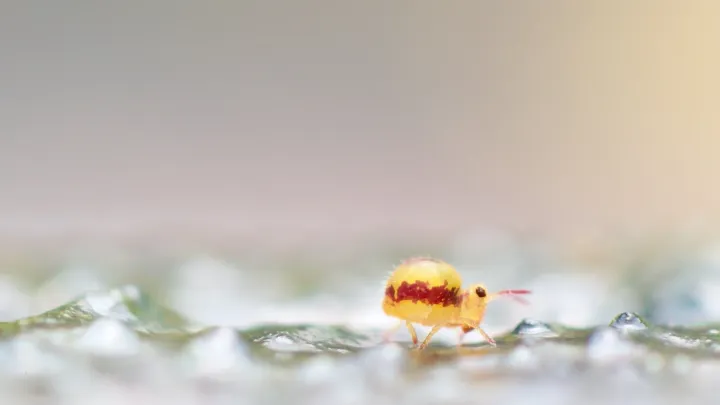
Yellow Bourletiella (scientific name Bourletiella lutea) belongs to the order Collembola, family Sminthuridae. These organisms, commonly known as springtails, are tiny arthropods, typically measuring between 1 and 2 millimeters in length.
They possess a distinct globular body shape and are characterized by a vibrant yellow to greenish-yellow coloration. This pigment helps them blend into moist soil or the foliage of young seedlings, making them difficult to detect without close observation.
The primary identification feature is their unique furcula (springing organ), which allows them to jump several centimeters when disturbed. This rapid movement is their primary defense mechanism against potential threats.
Immature stages resemble smaller versions of adults and occupy the same habitats. They are highly dependent on humidity, as they lack the thick cuticle that would prevent dehydration in drier environments.
Field identification often requires the use of a magnifying glass to inspect the base of plants or the underside of leaves, especially during the early morning hours when these pests are most active.
What it damages
Yellow Bourletiella primarily target young seedlings, causing significant damage to vegetable, ornamental, and leguminous crops during the vulnerable cotyledon and first-true-leaf stages.
They scrape the epidermal layers of leaves and stems, resulting in small pits or lesions. This feeding damage interferes with the plant’s ability to conduct photosynthesis and maintain proper water transport.
When present in high populations, these pests can cause severe stunting, leaf deformation, and, in extreme cases, the total destruction of the seedling population.
The feeding sites often serve as infection points for secondary pathogens, including fungi that cause damping-off or root rot, which further complicates the health of the young plants.
Damage to the apical meristem, or growing point, is particularly detrimental, as it forces the plant to sprout lateral shoots, significantly delaying crop development and maturity.
When it appears
The pest is most active during the spring, coinciding with the germination and early growth of many agricultural crops, particularly when soil moisture levels are high.
They thrive in cool, damp conditions, which is why infestations are frequently linked to periods of persistent rain, overcast skies, or excessive irrigation practices in greenhouse settings.
The life cycle of Bourletiella lutea is relatively rapid, allowing multiple generations to occur within a single growing season if the environmental conditions remain favorable.
During the onset of hot and dry weather in mid-summer, the population density typically decreases significantly as the surface soil dries out and becomes unsuitable for their survival.
Greenhouse environments provide a stable microclimate that may support these pests year-round, necessitating consistent vigilance and moisture management practices.
Signs of infestation
Early symptoms of an infestation include the appearance of tiny, scattered lesions on the cotyledons or young leaves, which may eventually coalesce into larger irregular patches.
Observation of the soil surface during irrigation often reveals jumping activity, as water droplets stimulate the springtails to disperse, creating a visible "flea-like" movement.
Affected seedlings exhibit a loss of vigor, yellowing of leaves (chlorosis), and general wilting, despite the soil appearing moist, due to the cumulative damage to the vascular tissues.
In severe cases, the stem near the soil line may show signs of tissue necrosis, leading to a constricted or "pinched" appearance that can cause the seedling to collapse.
- Presence of multiple small bite marks on leaves.
- Noticeable jumpy insects when the soil is disturbed.
- Yellowing and wilting of young seedlings.
- Stunted growth and irregular development of new leaves.
Control measures
The most effective strategy for managing Yellow Bourletiella involves improving drainage and adjusting irrigation to prevent excessive soil moisture, which is essential for their reproduction.
Regular cultivation or shallow hoeing of the topsoil layer helps dry out the habitat, significantly reducing the survival rate of the nymphs and adults.
If population thresholds are exceeded, targeted application of appropriate insecticides can be used, ensuring that products are safe for the specific crop stage and environment.
In greenhouses, biological control agents such as predatory mites or entomopathogenic nematodes can be highly effective in suppressing springtail populations without chemical residues.
Applying a layer of dry, coarse sand around the base of the seedlings acts as a physical barrier, discouraging these moisture-dependent insects from reaching the succulent plant tissue.
Taxonomy
- Latin name
- Bourletiella lutea
- Family
- Bourlettiellidae
- EPPO code
- BOURLU
Discussion
No discussions yet — be the first.