
Bourletiella signata
Bourletiella signata
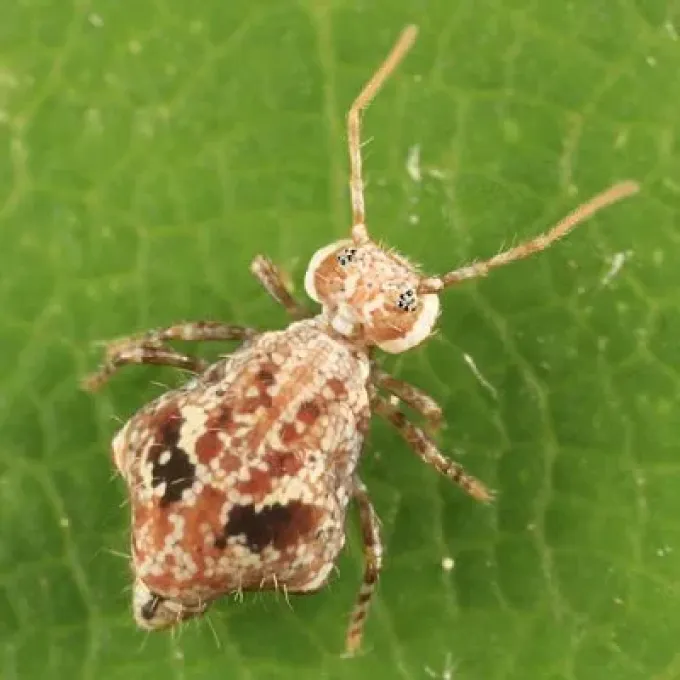
Description
How to identify
Bourletiella signata belongs to the class Entognatha, order Collembola, and family Bourletiellidae. Commonly known as globular springtails, these are microscopic arthropods that frequently evade detection due to their size, which rarely exceeds 2 mm.
The adult insect has a globular abdomen and a specialized forked organ called a furcula located at the end of the body. This structure allows the springtail to execute rapid, jerky jumps, which is its primary defense mechanism when disturbed.
The life cycle involves incomplete metamorphosis, moving through egg, larval stages that resemble miniature adults, and the reproductive adult stage. They are highly hygrophilous and require moist environments for respiration and survival.
Their distribution is typically concentrated in the upper soil layers rich in organic matter, or on the lower leaf surfaces of moist vegetation. They flourish during cool, damp weather conditions, which are ideal for their population growth.
Their ability to reach high population densities rapidly makes them significant pests, particularly in greenhouses and nurseries where controlled environments provide year-round stability for multiple generations of the insect.
What it damages
Bourletiella signata primarily threatens young seedlings of various agricultural crops. Vegetables, sugar beets, and emerging grain crops are particularly susceptible during the initial stages of germination and early leaf development.
Damage occurs when the insects scrape away the epidermal layer of cotyledons and young leaves. This feeding behavior results in small pits and necrotic spots, which can coalesce to destroy large portions of the tender plant tissue.
The loss of plant tissue significantly reduces photosynthetic capacity, causing stunted growth. In severe infestations, the damage to the apical meristem or growing points can lead to total seedling death and thinning of crop stands.
Wounds created by the springtails provide entry points for secondary soil-borne pathogens, including bacteria and fungi, which often leads to complex diseases that are difficult to diagnose solely as insect-related.
In indoor agriculture, these pests can ruin seedling trays before they are even transplanted. The economic impact is often compounded by the need for re-sowing or significant investment in emergency plant protection measures.
Signs of infestation
The earliest signs of infestation are microscopic pits or 'windows' on the cotyledons. With a hand lens, one can identify the insects by their characteristic jumping behavior when the plant is touched or the soil is vibrated.
Plants affected by Bourletiella signata often exhibit yellowing, curling, or wilting without showing symptoms of root decay. This indicates that the damage is primarily located on the aerial or surface-level parts of the plant.
Darkened or brownish patches on the stems at the soil line are indicative of concentrated feeding activity. If the soil surface is examined closely, one may notice tiny irregularities or fine, dust-like frass deposits left behind by the insects.
A reduction in growth vigor in fields with high soil moisture is a key indicator that should prompt a formal assessment. Monitoring should be focused on the transition period between seedling emergence and the formation of true leaves.
If the population is high, the sudden movement of numerous tiny insects upon light soil agitation confirms the presence of Bourletiella signata. This is a crucial observation for timely management interventions.
Control measures
Effective management requires an integrated approach. The most successful cultural control is to promote rapid, vigorous germination, ensuring the seedlings reach a size where they can tolerate minor damage before the population builds up.
Regulating moisture levels is essential; surface drying of the soil, where feasible, creates an inhospitable environment for springtails. Regular shallow cultivation of soil between rows helps disrupt their breeding sites and reduces their shelter.
Chemical control involving systemic or contact insecticides should be reserved for instances where the economic injury level is exceeded. Products must be selected based on local registrations for the specific crop and pest.
Greenhouse sanitation, including thorough disinfection of surfaces and substrates, is vital to prevent the introduction of these pests. Using certified sterile growing media is a standard preventative measure in modern agriculture.
- Crop rotation to break the insect's life cycle in the field.
- Stringent weed control to eliminate alternative food sources.
- Deployment of yellow sticky cards for population monitoring.
- Proper inspection and hygiene protocols for all farm equipment and tools.
Taxonomy
- Latin name
- Bourletiella signata
- Family
- Bourlettiellidae
- EPPO code
- BOURSI
Discussion
No discussions yet — be the first.