
Garden springtail
Bourletiella hortensis
Description
How to identify
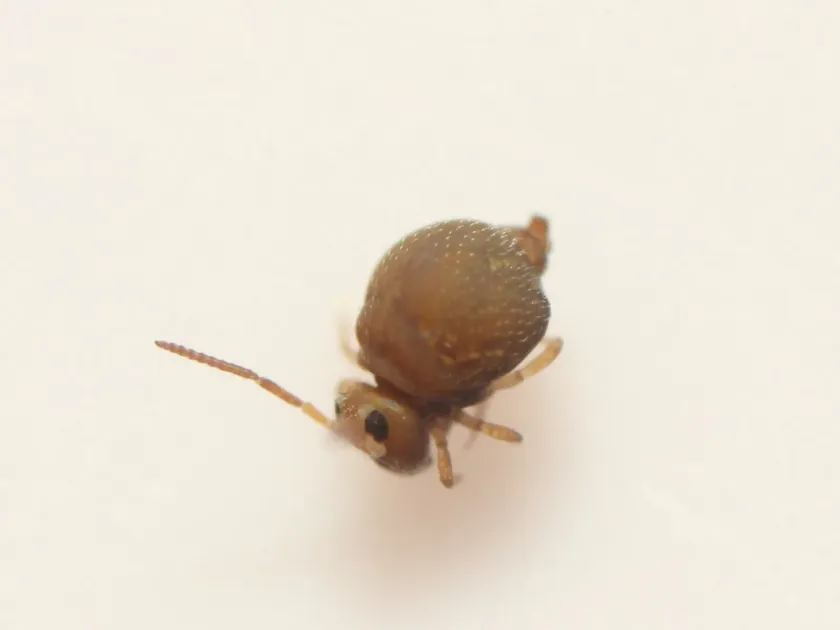
The garden springtail (Bourletiella hortensis) belongs to the order Collembola, specifically the family Sminthuridae. These are minute, wingless arthropods, typically measuring between 1 to 1.5 mm in length, characterized by their globular bodies and a specialized jumping organ called the furcula.
Adults are usually dark, ranging from grey to black, which helps them blend into the moist soil environment. Their ability to jump rapidly when disturbed is a defensive adaptation that allows them to escape threats quickly, making them difficult to observe.
The lifecycle of the garden springtail is highly dependent on environmental moisture. They thrive in damp conditions and are sensitive to desiccation, which is why they are primarily found within the top layer of soil or hiding under decaying plant debris.
Development occurs through a series of molts, with nymphs resembling miniature versions of the adults. The entire life cycle can be completed relatively quickly in favorable conditions, allowing populations to explode within a short timeframe.
These insects are essentially soil-dwelling organisms but migrate to the soil surface to feed when environmental conditions are optimal for both them and their host plants, particularly during cool, damp spring weather.
What it damages
The garden springtail is primarily a pest of young, tender seedlings. They feed by rasping the surface tissues of leaves and stems, which can cause significant physiological stress to the developing plant.
Host plants commonly affected include various vegetables such as cabbages, radishes, beets, tomatoes, and cucumbers. Seedlings are most vulnerable from the time of germination until the development of the first true leaves.
When populations are high, they can cause extensive damage to the epidermis of the stem near the soil line. This type of injury often disrupts the plant's vascular system, leading to wilting, stunted growth, or complete plant collapse.
The damage is often worse in greenhouse settings or early-season outdoor plantings where excessive moisture and cool temperatures prevail. Such conditions allow the springtails to remain active near the surface for extended periods.
Besides direct tissue loss, the lesions caused by feeding can provide entry points for soil-borne pathogens, leading to secondary fungal infections that further jeopardize the survival of the crop.
Signs of infestation
Initial signs of a garden springtail infestation include the appearance of tiny, scattered pinprick holes or pitted spots on the cotyledons and young leaves. These spots can rapidly enlarge if the population is dense.
Upon closer inspection, one might notice a large number of dark, tiny specks on the soil surface near the stem base. When the soil is tapped or disturbed, these specks jump sporadically, which is a classic indicator of a springtail infestation.
Seedlings may exhibit signs of overall decline, characterized by a lack of vigor and wilting, despite adequate soil moisture. The stems might look scarred or discolored where the insects have been feeding extensively.
- Small pin-sized holes appearing on seedling leaves.
- Visible jumping activity on the soil surface when disturbed.
- Sudden wilting or stunted development of young plants.
- Surface scarring or lesions on stems at the soil level.
- Presence of fine webbing or debris around the base of the plant.
In severe cases, the damage is so extensive that the entire leaf surface appears riddled with holes, effectively stopping photosynthesis and killing the plant within just a few days of germination.
Control measures
Effective management begins with cultural practices, particularly managing soil moisture. Allowing the top layer of the soil to dry out between waterings can significantly reduce the habitat suitability for Bourletiella hortensis.
Improving air circulation around the plants and avoiding overcrowding helps create a less favorable microclimate for these pests. Ensuring that the seedlings are grown in sterilized, high-quality media also prevents initial infestations.
Chemical control options include the use of contact or systemic insecticides labeled for use on vegetables. These are typically applied as a soil drench to ensure the chemical reaches the target population dwelling at the soil surface.
For protected cultivation, biological control agents such as predatory mites or entomopathogenic fungi can be employed. These biocontrols provide a sustainable way to suppress springtail populations without relying solely on chemical inputs.
Regular monitoring of seedling beds is crucial for early detection. By identifying the problem during the initial phases of colonization, growers can take immediate corrective action, preventing the infestation from reaching levels that cause irreversible crop loss.
Taxonomy
- Latin name
- Bourletiella hortensis
- Family
- Bourlettiellidae
- EPPO code
- BOURHO
Discussion
No discussions yet — be the first.