
Dendrocerus liebscheri
Dendrocerus liebscheri
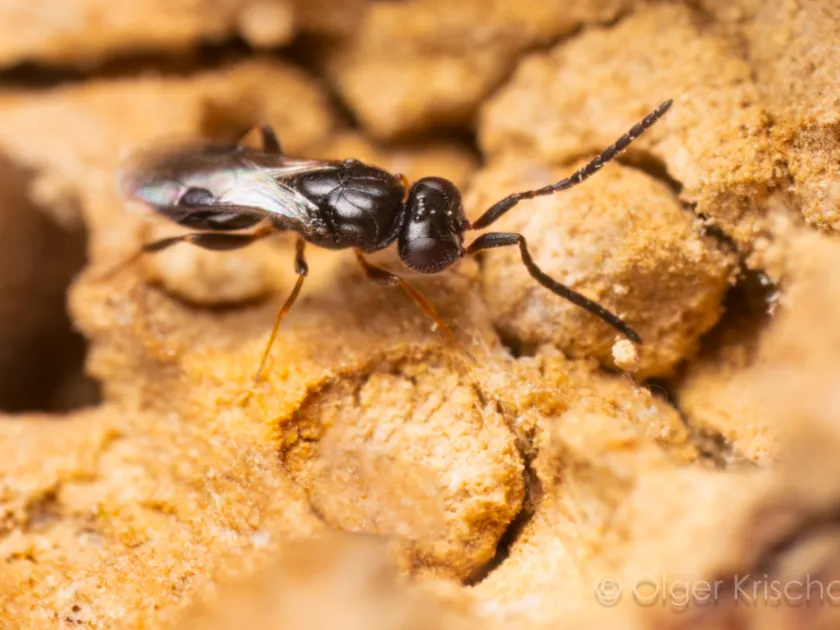
Description
How to identify
Dendrocerus liebscheri is a species of hymenopteran insect belonging to the family Megaspilidae.
These are tiny wasps, often characterized by their complex life cycles and specific parasitic behaviors within agricultural ecosystems.
The morphology of this species typically requires expert identification using microscopic examination of wing venation and body structure.
They are part of the complex guild of wasps that interact with aphids and their primary parasitoids in field conditions.
Understanding their taxonomy is crucial for researchers evaluating the stability and balance of pest control within agroecosystems.
What it damages
The damage caused by Dendrocerus liebscheri is indirect, as it acts as a hyperparasite, attacking primary parasitoids of aphids.
By reducing the efficiency of these primary biological control agents, this species can lead to higher aphid infestation levels.
A variety of horticultural and vegetable crops can suffer when the natural protection against aphids is compromised.
This disruption of natural control mechanisms often leads to economic losses and increased reliance on synthetic pesticides.
Therefore, while not a direct herbivore, its ecological role can significantly affect crop health and yield quality.
When it appears
The seasonal activity of this wasp is strictly synchronized with the presence of its host populations in the field.
Adults are most active during the peak of aphid infestations, usually occurring throughout the late spring and summer months.
Overwintering typically takes place in the pupal stage, protected within the mummified remains of aphids or in the soil layer.
The timing of emergence depends on temperature accumulation and the phenology of the host plants and aphid colonies.
Multiple generations per season allow this species to persist and track the availability of their hosts throughout the growing period.
Signs of infestation
Detection is challenging because there are no direct visible signs of feeding damage to the plant tissue itself.
A key indicator is the observation of exit holes in aphid mummies that differ in shape or size from those of primary parasitoids.
Monitoring using yellow sticky traps is the most common method for detecting the presence and seasonal abundance of adults.
A decline in the efficacy of primary parasitoids in aphid-infested crops is a sign that hyperparasitism may be taking place.
Field observations by entomologists are necessary to quantify the presence of this species and its impact on the aphid control complex.
Control measures
Management strategies should focus on maintaining a balanced ecosystem rather than the direct eradication of the species.
Avoid broad-spectrum insecticide applications that could inadvertently destroy primary parasitoids and other beneficial insects.
Focus on biological control measures that specifically target the aphids while minimizing harm to the complex of natural enemies.
Creating refugia and planting flowering borders can help support the populations of primary parasitoids, buffering the impact of hyperparasites.
- Integrated Pest Management (IPM) practices.
- Use of selective insecticides to protect beneficial guilds.
- Monitoring population dynamics of aphids and their parasitoids.
- Promoting biodiversity within agricultural landscapes.
Taxonomy
- Latin name
- Dendrocerus liebscheri
- Order
- Hymenoptera
- Family
- Megaspilidae
- EPPO code
- DENULI
Discussion
No discussions yet — be the first.