
Dendrocerus carpenteri
Dendrocerus carpenteri
Description
How to identify
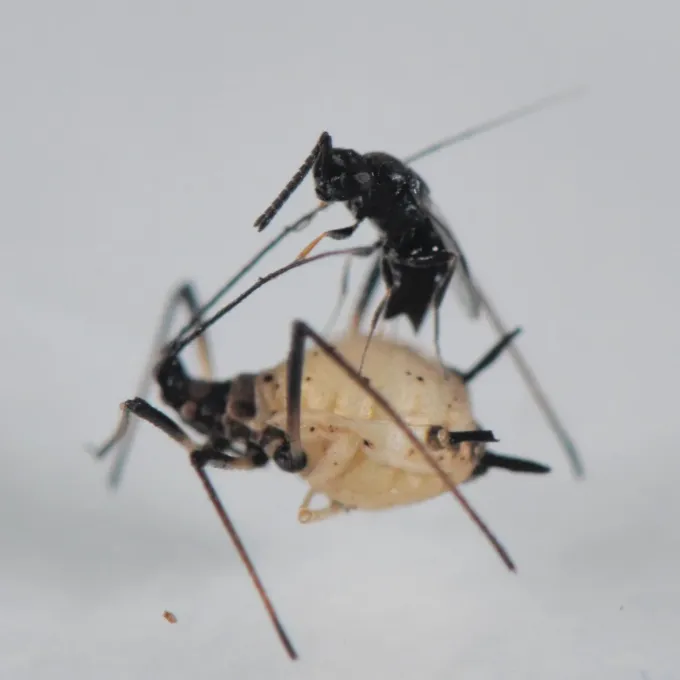
Dendrocerus carpenteri is a tiny parasitic wasp belonging to the family Megaspilidae. Unlike primary parasites, this species acts as a hyperparasitoid, meaning it targets other parasitic insects that control plant pests.
Adults are small, dark-colored, and winged, capable of actively searching for their hosts. Their presence is closely linked to aphid colonies, where primary parasitoids are commonly found developing inside the aphids.
The life cycle involves the female wasp laying eggs inside the larvae or pupae of primary parasitoids. The developing larvae then consume the internal tissues of the primary parasitoid, ultimately killing it before it can emerge.
This biological interaction essentially eliminates the natural predators of aphids, thereby disrupting the ecological control mechanisms within various agroecosystems.
The rapid generation turnover allows populations of Dendrocerus carpenteri to adapt quickly to environmental conditions, making them a significant challenge in biological pest control programs.
What it damages
The damage caused by Dendrocerus carpenteri is indirect but substantial. By attacking beneficial insects such as aphid-parasitizing wasps, it prevents them from suppressing aphid populations.
It impacts a wide variety of crops, including cereals, legumes, and various horticultural plants that are prone to aphid infestations. Without the intervention of primary parasitoids, aphid numbers can explode.
Increased aphid activity leads to direct plant damage, including leaf curling, stunted growth, and the transmission of viral diseases, which significantly impacts overall crop yields and quality.
In greenhouses, the accidental introduction of this hyperparasitoid can render expensive biological control efforts ineffective, leading to higher costs and loss of market-ready produce.
The economic impact is measured by the failure of integrated pest management (IPM) strategies, forcing farmers to resort to harsher chemical treatments to manage the resulting aphid outbreaks.
Control measures
Managing Dendrocerus carpenteri requires a balanced IPM approach that prioritizes the health of primary parasitoid populations over quick-fix solutions.
It is crucial to avoid broad-spectrum insecticides that kill beneficial insects, as this often leads to a resurgence of pests and creates an environment where hyperparasitoids thrive.
Implementing ecological infrastructure, such as wildflower margins, helps maintain a robust population of various natural enemies that can keep hyperparasitoid numbers in check through natural competition.
In indoor environments, implementing strict quarantine procedures for incoming biological control agents is essential to prevent the entry of this species into the production area.
- Monitoring population trends with yellow sticky traps.
- Promoting biodiversity in and around field crops.
- Avoiding unnecessary insecticide applications.
- Cleaning greenhouse equipment to remove overwintering stages.
Taxonomy
- Latin name
- Dendrocerus carpenteri
- Order
- Hymenoptera
- Family
- Megaspilidae
- EPPO code
- DENUCA
Discussion
No discussions yet — be the first.