
Dendrocerus
Dendrocerus
Description
How to identify
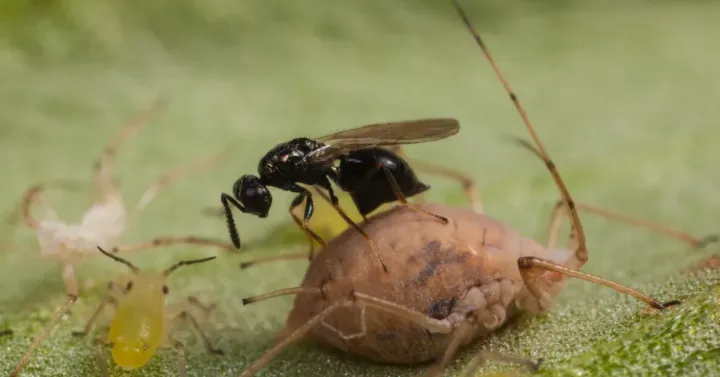
Dendrocerus is a genus of parasitic wasps belonging to the family Megaspilidae, order Hymenoptera. They are widely recognized by entomologists as hyperparasitoids.
The adults are very small, typically ranging from 1 to 3 mm in length, and often possess dark, shiny bodies with specialized wing venation patterns.
Their life cycle involves attacking the larvae or pupae of other parasitic wasps that have already infested aphids or other small arthropods.
These insects are frequently found in agricultural environments, where they integrate themselves into the local food web as secondary parasites.
Due to their microscopic nature, identification is best performed by professionals under a stereomicroscope to distinguish them from other similar wasps.
What it damages
Dendrocerus does not cause direct physical damage to plants like feeding on foliage. Instead, it functions as a biological pest by undermining natural control agents.
By parasitizing the beneficial wasps that regulate aphid populations, Dendrocerus allows aphid colonies to thrive unchecked on various vegetable and ornamental crops.
This disruption of natural biological control leads to higher pest pressure, necessitating more intensive and potentially costly intervention strategies.
The indirect impact of this insect can result in significant yield losses due to unchecked aphid damage, including leaf curling, stunted growth, and disease transmission.
In greenhouses, the presence of these hyperparasitoids can lead to the failure of biological control programs, rendering the introduction of beneficial insects ineffective.
Control measures
Effective management requires regular monitoring of the beneficial insect population using yellow sticky traps to identify the presence of hyperparasitoids.
Adjusting the timing and frequency of beneficial insect releases is crucial when Dendrocerus populations are detected in a greenhouse facility.
Integrated Pest Management (IPM) practices should be prioritized, avoiding broad-spectrum insecticides that negatively impact beneficial predator populations.
Maintaining clean agricultural practices and strictly inspecting incoming plant materials can prevent the introduction and spread of hyperparasitoid species.
Supporting local biodiversity by maintaining hedge rows or flower borders can sometimes help stabilize populations of primary parasitoids against hyperparasitism.
Taxonomy
- Latin name
- Dendrocerus
- Order
- Hymenoptera
- Family
- Megaspilidae
- EPPO code
- DENUSP
Discussion
No discussions yet — be the first.