
Dendrocerus aphidum
Dendrocerus aphidum
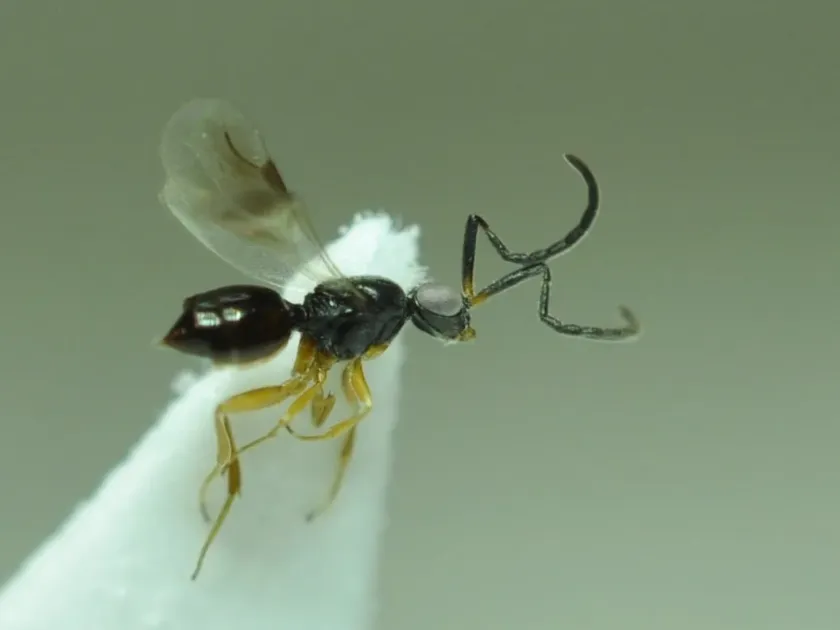
Description
How to identify
Dendrocerus aphidum belongs to the order Hymenoptera, family Megaspilidae. This minute insect is frequently misidentified as a primary pest, though, in its biological essence, it acts as a hyperparasitoid.
Adult individuals are tiny wasps, typically black or dark brown in color. Their lifecycle is intrinsically linked to primary aphid parasitoids, marking them as a critical yet complex component of agroecosystem population dynamics.
Field identification is highly challenging due to the microscopic size of the adults. Precise determination of morphological features requires the use of a binocular microscope by trained entomologists.
The taxonomy of this species is subject to frequent updates as researchers uncover the intricate trophic connections between aphids, their primary parasitoids, and hyperparasitoids. It is vital to note that Dendrocerus aphidum specifically targets larvae of other Hymenoptera.
In agronomic practice, distinguishing beneficial entomophagous insects from true crop pests is crucial to avoid disrupting the natural balance of predators and parasitoids within orchards and fields.
What it damages
This species does not cause direct damage to the vegetative parts of cultivated plants. It does not feed on leaf tissues, stems, or roots, meaning it does not induce mechanical deformation or chlorosis.
The primary economic damage is indirect. As a hyperparasitoid, it kills beneficial wasps that are essential for regulating aphid populations on various agricultural crops.
During outbreaks of Dendrocerus aphidum, the efficacy of biological control against aphids drops significantly. This leads to uncontrollable aphid proliferation, which causes massive damage to the crop yield.
The most common victims of this species are primary parasitoids from the family Aphidiidae, which serve as the primary natural enemies of aphids in cereal, vegetable, and fruit crops.
Consequently, the harmfulness of this object manifests in the disruption of the natural suppression system for sap-sucking pests, necessitating a complete review of plant protection strategies.
When it appears
The activity period of this wasp coincides with the life cycles of aphids and their primary parasitoids. Adult flight begins in late spring and continues throughout the entire growing season.
Optimal temperature conditions for the development of this species align with the average summer climate. High air humidity levels contribute to extended adult longevity.
The developmental cycle occurs entirely within the aphid mummies left behind by primary parasitoids. The speed of generation turnover is directly dependent on the accumulation of degree-days in the environment.
By late summer, population densities can reach peak levels, influenced by the high host availability on infested agricultural land.
Overwintering occurs in the pupal stage inside cocoons sheltered within plant debris or soil substrates, ensuring species survival until the following growing season.
Signs of infestation
Signs of infestation in an agroecosystem are indirect and manifest as reduced effectiveness of primary aphid parasitoids. Visually, this can be observed through the analysis of aphid mummies under a magnifying lens.
The presence of specific exit holes, which differ in shape and size from the holes made by primary parasitoids, serves as a primary diagnostic indicator of hyperparasitism.
In cases of high Dendrocerus aphidum density, a sharp increase in aphid colony size is observed, despite the presence of primary parasitoids within the population.
The absence of typical signs of successful emergence of primary wasps (clean, circular holes) indicates that the parasitized host has been compromised by a secondary agent.
Monitoring using yellow sticky traps can help detect the presence of adults in the field, although professional laboratory analysis remains necessary to confirm the exact species identity.
Control measures
Specialized control measures against this object are rarely implemented, as it is a fundamental component of the food web. The primary strategy focuses on maintaining a healthy balance of beneficial entomofauna.
If chemical crop treatment becomes necessary, preference should be given to selective pesticides that demonstrate minimal toxicity toward beneficial parasitoids and predatory wasps.
Utilizing eco-friendly technologies, such as planting nectar-producing flower strips, helps retain beneficial insects within the agroecosystem and prevents the dominance of hyperparasitoids.
Important agronomic practices include the management of plant residues where both aphids and their associated parasitoid complexes, including hyperparasitoids, may overwinter.
Integrated Pest Management (IPM) systems should be based on continuous monitoring of the "aphid — primary parasite — hyperparasitoid" ratio to ensure well-informed decisions regarding pesticide applications.
Taxonomy
- Latin name
- Dendrocerus aphidum
- Order
- Hymenoptera
- Family
- Megaspilidae
- EPPO code
- DENUAP
Discussion
No discussions yet — be the first.