
Delphinium leaf miner
Delphiniobium junackianum
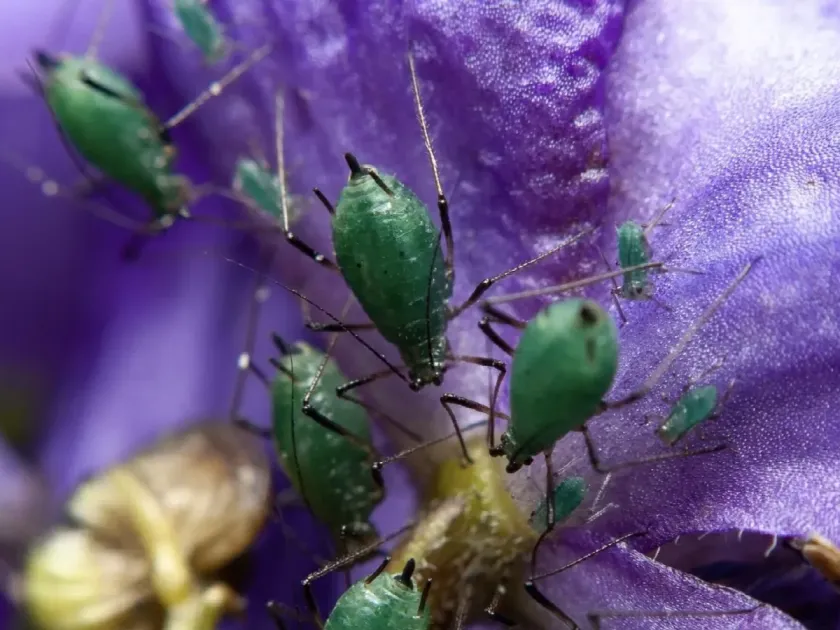
Description
How to identify
The Delphinium leaf miner (Delphiniobium junackianum, formerly classified under Phytomyza) is a small fly belonging to the Agromyzidae family, known for damaging Delphinium species.
The adult flies are small and dark, while the larvae are the stage responsible for the damage. They live and feed between the upper and lower epidermal layers of the leaves.
The life cycle is closely synchronized with the growth of the host plant. Overwintering occurs mainly in the pupal stage, usually hidden in the soil or decaying foliage.
Understanding their life cycle is crucial because chemical control is most effective against the adult flies before they lay eggs or when young larvae hatch.
This specialist pest is often overlooked until significant damage appears, making early observation and regular garden monitoring essential for effective management.
What it damages
The larvae feed on the leaf mesophyll, creating winding tunnels or "mines" that become visible as pale, squiggly lines across the leaf surface.
This damage significantly reduces the plant's photosynthetic capacity, leading to weaker growth, reduced flowering, and overall decline in plant vigor.
Heavy infestations can lead to leaf yellowing, necrosis, and premature leaf drop, which ruins the visual appeal of the delphinium stalks.
By damaging the internal structure of the leaf, the miner provides entry points for various secondary pathogens, including fungal and bacterial infections.
In severe cases, if the infestation is not managed, young plants may be stunted, and established plants may struggle to bloom properly throughout the summer.
Signs of infestation
The primary symptom is the presence of distinctive, serpentine white or light-green tunnels on the leaves, which are easy to spot upon close inspection.
Affected leaves often show signs of wilting or curling, especially during periods of high temperature and low soil moisture.
As the larvae grow, the mines become wider and more noticeable, eventually covering large portions of the leaf surface.
- Visible winding mines on the leaf surface.
- Yellowing or browning of leaf tissue surrounding the tunnels.
- Stunted development of the flower spikes.
- Presence of tiny larvae inside the tunnels when inspected closely.
In advanced stages, the foliage may look scorched, and the overall plant health rapidly deteriorates, leading to premature leaf death.
Control measures
The first line of defense is manual removal and destruction of infested leaves to prevent the larvae from completing their life cycle and pupating.
Sanitation practices, such as clearing away debris and tilling the soil around plants in late autumn, help destroy overwintering pupae.
If manual control is insufficient, systemic insecticides that are absorbed by the plant tissue can effectively kill larvae feeding inside the leaves.
Supporting plant health through proper fertilization and watering helps the delphinium survive stress caused by leaf miner activity.
Using yellow sticky traps can help monitor the arrival of adult flies, allowing for timely intervention before the eggs are laid on the foliage.
Taxonomy
- Latin name
- Delphiniobium junackianum
- Order
- Hemiptera (bugs, aphids, leafhoppers)
- Family
- Aphididae
- EPPO code
- DELPJU
Discussion
No discussions yet — be the first.