
Dasyphora
Dasyphora
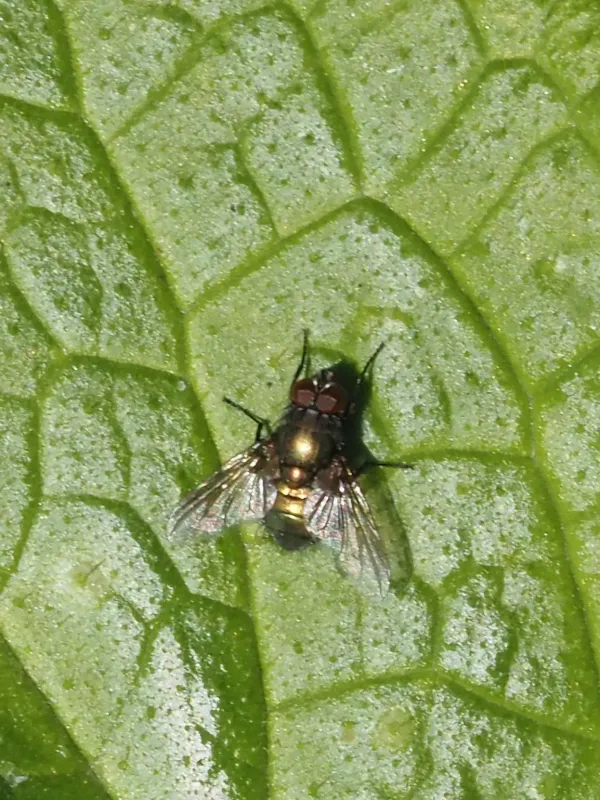
Description
How to identify
Dasyphora is a genus of flies belonging to the family Muscidae (house flies). Adult specimens typically measure between 6 and 9 millimeters and are characterized by a metallic blue or greenish sheen on their bodies, resembling blowflies.
The head of the fly features large compound eyes, often meeting in males. Their mouthparts are of the sponging type, adapted for feeding on liquid organic matter, including secretions and exudates.
Systematically, this genus belongs to the order Diptera. Diagnostic identification relies heavily on wing venation patterns and the arrangement of setae on the thorax, which distinguish them from similar-looking muscids.
Larvae develop in moist organic substrates, such as dung or decaying plant material. They are typically headless, legless, and conical in shape, undergoing several larval instars before pupation.
The life cycle is temperature-dependent. Adults are highly mobile and active during warm months, demonstrating strong flight capabilities in search of hosts and breeding grounds.
What it damages
The primary economic impact of Dasyphora is within the livestock industry. These flies act as significant nuisance pests for cattle and horses, causing distress and impacting animal welfare.
They feed on ocular, nasal, and wound secretions. This persistent irritation causes the animals to become restless, leading to reduced grazing time and lower milk or weight gain performance.
Dasyphora flies are vectors for various pathogens, mechanically carrying bacteria and parasites that cause conjunctivitis and eye infections, such as thelaziosis, between hosts.
Beyond direct irritation, the presence of these flies creates unsanitary conditions in stables and pastures, necessitating increased spending on veterinary care and pest mitigation.
Economic damage manifests as production losses due to animal stress and the costs associated with repeated insecticidal treatments for the entire herd.
When it appears
The flight season for Dasyphora typically commences in late spring when average temperatures exceed 12 to 15 degrees Celsius.
Population density peaks during mid-summer months, specifically June and July, when conditions for larval development in organic waste are optimal.
As autumn approaches and temperatures drop, activity levels decrease, though some individuals may persist until the first heavy frosts.
The biological cycle can be completed in just a few weeks, allowing for multiple generations to emerge throughout a single warm season.
Hibernation often occurs in the pupal stage or as adults, typically buried in the soil or sheltered in barns and outbuildings where conditions remain stable.
Signs of infestation
The most prominent sign of infestation is abnormal animal behavior, such as constant tail-flicking, head-tossing, and grouping together to avoid fly attacks.
Visual inspection often reveals excessive tearing, ocular discharge, and dense clusters of flies around the eyes and nostrils of the livestock.
High fly concentrations on the walls, doors, and window frames of animal housing are reliable indicators of an established population on the property.
Audible buzzing and heavy fly activity around manure piles, silage storage, or wet feed areas clearly mark these locations as breeding sites.
In some cases, egg clusters may be identified on the surface of organic matter, signaling the onset of a new generation of the pest.
Control measures
The cornerstone of management is strict sanitation. Frequent removal and proper disposal of manure are essential to eliminate the substrates required for larval development.
Applying residual insecticides to the walls and ceilings of barns provides a highly effective barrier against adult fly populations.
Applying topical repellents to livestock is critical to protecting individual animals from fly feeding and preventing the transmission of eye pathogens during grazing.
Mechanical controls, such as installing fine-mesh screens on windows and using light-based or chemical traps, help manage fly numbers in enclosed environments.
- Regular professional disinfection.
- Use of insecticide-treated ear tags for cattle.
- Optimizing livestock density in enclosures.
Taxonomy
- Latin name
- Dasyphora
- Order
- Diptera (flies)
- Family
- Muscidae
- EPPO code
- DSYPSP
Discussion
No discussions yet — be the first.