
Cuspicona simplex
Cuspicona simplex
Description
How to identify
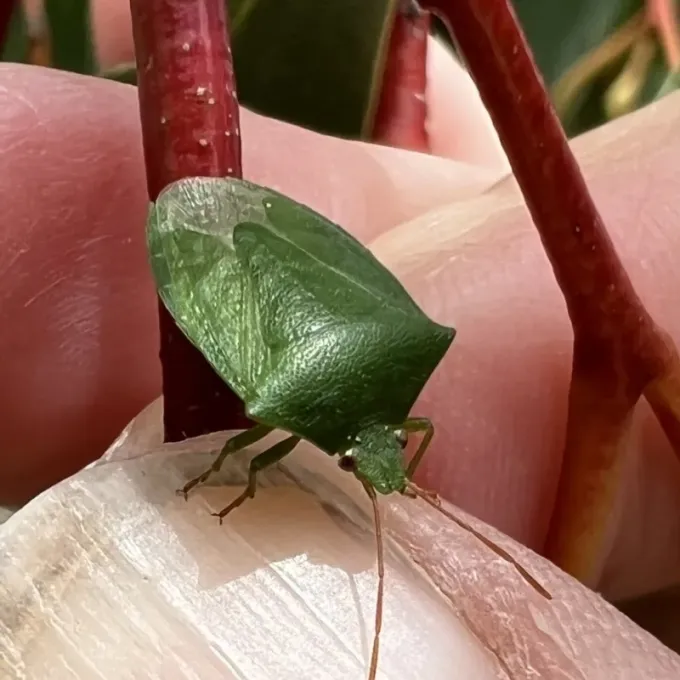
Cuspicona simplex is a species of true bug belonging to the family Pentatomidae, commonly known as stink bugs or shield bugs due to their distinctive body shape.
Adult individuals are characterized by a shield-like body, and their coloration often varies between greenish and yellowish-green, providing effective camouflage among foliage.
The insect possesses a small head equipped with a piercing-sucking mouthpart, known as a rostrum, which is specialized for penetrating plant tissues to extract nutrient-rich cell sap.
Key diagnostic features often include specific projections or spines on the edges of the pronotum, which are essential for precise identification under magnification.
The life cycle encompasses an egg stage, five nymphal instars, and the adult stage, with nymphs typically differing from adults in size and the lack of fully developed wings.
What it damages
This pest demonstrates significant trophic specialization, attacking a wide range of vegetable, fruit, and legume crops during various stages of plant growth.
The primary targets are fruits and young flower buds, where the bug feeds intensively, leading to physiological disruption of the plant tissues.
Crops frequently affected by this pest include various solanaceous species, legumes, and orchard fruit trees within the regions where the species is prevalent.
Damage to fruits often results in severe deformation, loss of commercial quality, and diminished taste, rendering the harvest unsuitable for market sale.
In addition to direct mechanical injury, the feeding sites often become infection points for secondary fungal and bacterial pathogens, leading to fruit rot.
When it appears
The pest reaches its peak activity during the warmer months, when temperatures are optimal for the rapid completion of the insect's reproductive life cycle.
Reproduction typically begins in the spring as adults emerge from overwintering sites once ambient temperatures consistently remain above a specific threshold.
Multiple generations may occur throughout a single growing season, with the highest population density often coinciding with fruit ripening, increasing the risk of loss.
As autumn approaches, adults seek suitable hibernation sites such as field margins, leaf litter, or other sheltered environments to enter a state of diapause.
Regular monitoring of population density is essential throughout the growing season, employing pheromone traps or visual inspections of target crops.
Signs of infestation
The most common sign of infestation is the direct observation of the insects on the underside of leaves or resting on ripening fruits, especially during early morning hours.
Injured fruits display characteristic puncture marks, which subsequently develop into discolored, necrotic spots, surface depressions, or irregular tissue distortions.
Heavy infestations frequently lead to premature abscission of flowers and young fruit, resulting in a significant reduction in total crop yield.
Presence of excrement, appearing as small dark spots on the leaf surface, serves as another indicator of active feeding activity in the area.
- Distorted and misshapen fruit growth.
- Necrotic spots on vegetable surfaces.
- Yellowing and premature wilting of leaf segments.
- Stunted development of young shoots at feeding sites.
Control measures
Managing Cuspicona simplex requires an integrated approach that combines cultural, biological, and, where necessary, chemical control strategies for effective results.
Cultural practices such as crop rotation and the timely removal of weeds are critical, as these plants often serve as reservoirs for the pest population.
Systemic insecticides should be applied only when the economic injury threshold is exceeded, ensuring strict adherence to pre-harvest intervals to ensure food safety.
Biological control efforts focus on utilizing natural predators and parasitoids, such as parasitic wasps, which can help regulate egg and nymph populations.
Manual collection of the pests is feasible for small-scale gardens or low-density infestations, helping to minimize reliance on synthetic chemical interventions.
Taxonomy
- Latin name
- Cuspicona simplex
- Order
- Hemiptera (bugs, aphids, leafhoppers)
- EPPO code
- CUSPSI
Discussion
No discussions yet — be the first.