
Cuspicona
Cuspicona
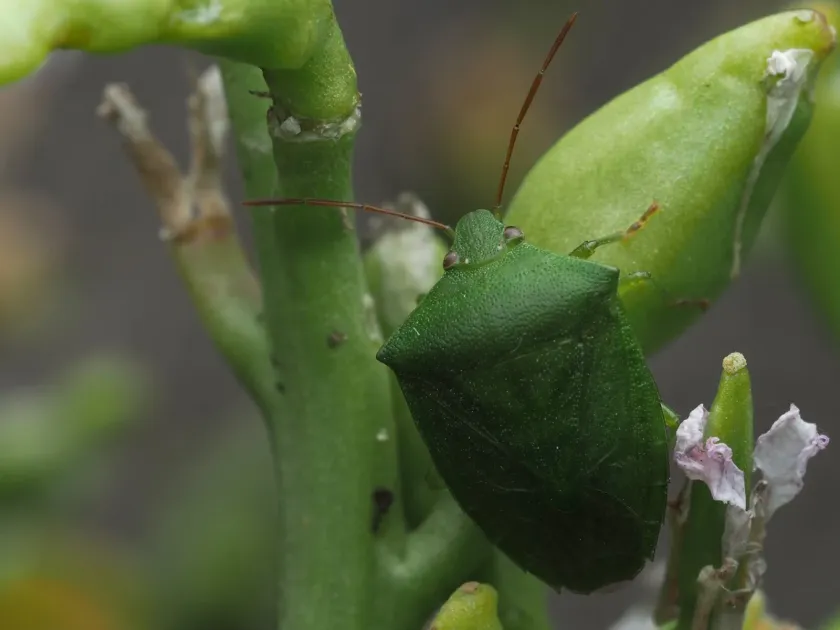
Description
How to identify
Cuspicona is a genus of shield bugs (Pentatomidae) within the order Hemiptera. These insects are characterized by their flattened, shield-like body shape, which provides excellent camouflage among foliage.
Adult bugs typically possess a green or brownish hue, allowing them to blend into leaves and stems. They have a piercing-sucking mouthpart, known as a rostrum, which is tucked underneath the body when not in use.
The nymphs go through several instars, gradually increasing in size and developing wing pads. Each stage of development involves molting, during which the insect sheds its exoskeleton.
Identifying species within the Cuspicona genus often requires close examination of specific physical features, such as the shape of the pronotum (the plate behind the head) and the wing structure.
These insects are primarily active during the day, although their elusive behavior and protective coloring often make them difficult to detect during early infestations.
What it damages
Cuspicona species are polyphagous, meaning they feed on a wide variety of plant species. They are known to cause damage to vegetable crops, legumes, and even certain fruit-bearing trees.
The feeding process involves inserting their rostrum into plant tissues and injecting saliva containing enzymes. This leads to localized cell death and the formation of necrotic spots on leaves and fruit.
The damage to fruit is particularly severe, as it often results in scarring, pitting, and general deformation. Such damage significantly reduces the marketability and overall quality of the harvested product.
Younger plants and succulent shoots are most vulnerable, as heavy feeding can lead to stunted growth, wilting, and sometimes total loss of the floral parts or early fruit set.
Furthermore, the physical punctures created by these bugs can facilitate the entry of secondary pathogens, such as bacteria and fungi, causing rot and further destroying plant health.
When it appears
The activity cycle of Cuspicona is highly dependent on climate and temperature. Adults overwinter in protected environments and emerge in early spring to search for suitable host plants.
Once active, the bugs initiate mating and egg-laying. Eggs are typically laid in small clusters on the underside of leaves, ensuring that the emerging nymphs have immediate access to food.
Several generations can occur within a single growing season if weather conditions remain warm. The rate of development is directly linked to ambient temperatures, with hotter weather accelerating the lifecycle.
As autumn approaches and temperatures drop, adults prepare for diapause. They move into sheltered areas such as leaf litter, bark crevices, or field debris to survive the winter months.
The peak period of damage usually coincides with the mid-to-late growing season, when the bugs are most abundant and the plants are actively developing their fruit and seeds.
Signs of infestation
Chlorotic spotting on leaves is one of the earliest signs of infestation. These spots may eventually turn brown or necrotic as the tissue dies due to the injection of digestive enzymes.
Distorted or deformed fruit is a hallmark sign of shield bug activity. Fruits may show lumps, depressions, or hardened spots, indicating where the bugs have repeatedly fed.
The presence of nymphs, which often appear in groups near the egg-laying sites, is a strong indicator of an active population that requires immediate management.
Plant growth retardation, such as the curling of young leaves or the failure of flowers to develop properly, serves as an indirect but clear signal of heavy pest pressure.
Observation of the adult bugs themselves, particularly on the stems or the undersides of leaves, confirms the presence of this pest on the crop.
Control measures
Integrated pest management starts with field hygiene. Removing weeds and crop residues eliminates the secondary host plants and overwintering sites for the bugs.
Biological control, including the use of egg parasitoids like wasps, can be highly effective in maintaining pest populations below the economic threshold without resorting to harsh chemicals.
Chemical control should be considered only when scouting reveals that the population has crossed the economic damage threshold. Use of targeted, low-toxicity insecticides is recommended.
Regular monitoring using traps can provide valuable data on the timing of population peaks, allowing for more precise and effective application of control measures.
Crop rotation and maintaining field borders free of primary host shrubs are essential cultural practices to reduce the migration of these bugs into commercial plantings.
Taxonomy
- Latin name
- Cuspicona
- Order
- Hemiptera (bugs, aphids, leafhoppers)
- EPPO code
- CUSPSP
Discussion
No discussions yet — be the first.