

Description
How to identify
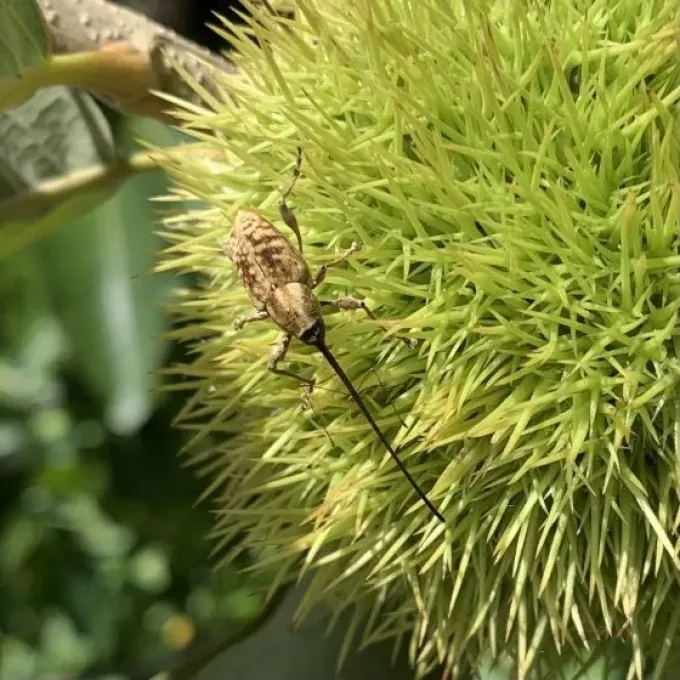
Weevils are a vast family of beetles (Curculionidae) easily recognizable by their elongated snouts or rostrums. This specialized head structure allows them to feed on and lay eggs deep within plant tissues.
Adult weevils vary significantly in size, ranging from tiny 1 mm species to those over 30 mm long. Their bodies are typically hard-shelled and can be black, brown, or even covered in iridescent scales for camouflage.
The larvae are legless, C-shaped grubs with pale, fleshy bodies and brown head capsules. They are notorious for living entirely hidden inside the plant, whether in seeds, stems, roots, or developing fruit.
Biologically, they are part of the order Coleoptera. With over 60,000 described species, weevils are among the most diverse groups of insects and pose a serious threat to global agriculture and food storage.
Many adult weevils exhibit a survival mechanism known as "thanatosis" or feigning death. When disturbed, they retract their legs and drop from the plant to the ground, making them exceptionally difficult to spot during routine inspections.
What it damages
Different weevil species are highly specialized. For instance, the strawberry blossom weevil targets berry crops, while the grain weevil is a devastating pest in storage facilities, destroying harvested cereals.
In orchards, weevils attack fruit trees like apple and pear, causing significant damage by feeding on flower buds and emerging fruitlets. This often results in premature fruit drop and a drastic reduction in overall yield.
Vegetable gardens are susceptible to various species that feed on brassicas, such as cabbage and radishes. They create numerous small holes in leaves, hindering photosynthesis and stunting the growth of young seedlings.
Field crops, including sunflowers and sugar beets, are often hit by species that attack seedlings or roots. This destruction at early developmental stages often forces farmers to replant entire fields.
Ornamental flowers are also victims; weevils can disfigure roses and lilies by feeding on petals and stems. This damage ruins the aesthetic appeal and marketability of flowers grown for commercial florist use.
When it appears
Weevil activity begins in early spring as soon as temperatures rise above 8–10 degrees Celsius. Overwintered adults emerge from shelters like leaf litter, bark crevices, or soil to find food and mating partners.
The peak of infestation typically coincides with the budding and flowering phases of host plants. During this window, adults feed intensively and females deposit eggs into the tender reproductive parts of the plants.
The life cycle involves complete metamorphosis: egg, larva, pupa, and adult. Depending on the species and climate, there may be one or several generations produced within a single growing season.
Throughout the summer, larvae develop inside the plant tissue, shielded from external environment and predators. This hidden lifestyle makes the summer months the most critical period for population buildup.
As autumn approaches, the new generation of adults seeks overwintering sites to survive the cold. Proper management of field sanitation before winter is crucial to reduce the overwintering population for the next year.
Signs of infestation
The most common sign of weevil activity is the presence of "shot holes" or tiny, pin-prick punctures in the foliage. These are caused by adults feeding on leaf tissue, leaving behind a characteristic pattern.
On berry crops, look for drooping or severed flower stalks. If a bud appears withered or has fallen to the ground, it is likely infested with larvae that have fed on the internal reproductive organs.
Sudden, unexplained wilting of healthy-looking plants often points to root-feeding weevil larvae. Excavating the soil around the roots will reveal whether the plant's structural integrity has been compromised.
In grain storage, the presence of weevils is indicated by dusty residue, empty husks, and a noticeable rise in the temperature of stored grain piles, caused by the collective metabolic activity of thousands of larvae.
To detect adult weevils on trees, the sheet-shake method is highly effective. Place a light-colored sheet under the tree branches early in the morning and shake them vigorously; the beetles will drop, allowing for easy identification.
Control measures
Cultural control is a primary line of defense. Regular cultivation of the soil around plants and in between rows disrupts the pupation process and exposes larvae to birds and harsh weather conditions.
Sanitation is essential; promptly remove and destroy all infested plant parts and crop residues. By eliminating potential shelter and overwintering sites, you significantly decrease the chance of re-infestation.
Installing sticky bands or physical barriers on tree trunks can prevent weevils from crawling up into the canopy. This non-chemical method is effective for protecting trees during the initial spring emergence.
Biological control agents, such as entomopathogenic fungi (Beauveria bassiana) or parasitic nematodes, are excellent options for suppressing weevil populations without harming beneficial insects or the environment.
Chemical control involving insecticides should be reserved for periods of high infestation. Always choose products registered for your specific crop and rotate different chemical classes to prevent the development of pesticide resistance.
Content graph
Connections · Weevil
Most often together:
Marketplace
Products · 1
Biology
Taxonomy
- Latin name
- Curculio
- Order
- Coleoptera (beetles)
- Family
- Curculionidae
- EPPO code
- CURCSP
Community
Discussion
No discussions yet — be the first.