
Red currant blister aphid
Cryptomyzus ribis
Description
How to identify
The red currant blister aphid (Cryptomyzus ribis) is a small, pale yellowish-green insect belonging to the Aphididae family.
This species is notorious for its complex life cycle, which involves overwintering as eggs on the bark of currant shoots near the buds.
In spring, the eggs hatch into stem mothers that initiate the first colonies on the undersides of unfolding leaves.
Throughout the season, several generations are produced, including winged forms that can migrate to alternate hosts, typically plants from the Lamiaceae family.
They return to currant bushes in late summer and autumn to lay wintering eggs, completing the cycle.
What it damages
The primary host plants are red and white currants, although it can occasionally infest gooseberry bushes.
The aphids feed exclusively on the undersides of leaves, injecting saliva that triggers abnormal cell growth in the host tissue.
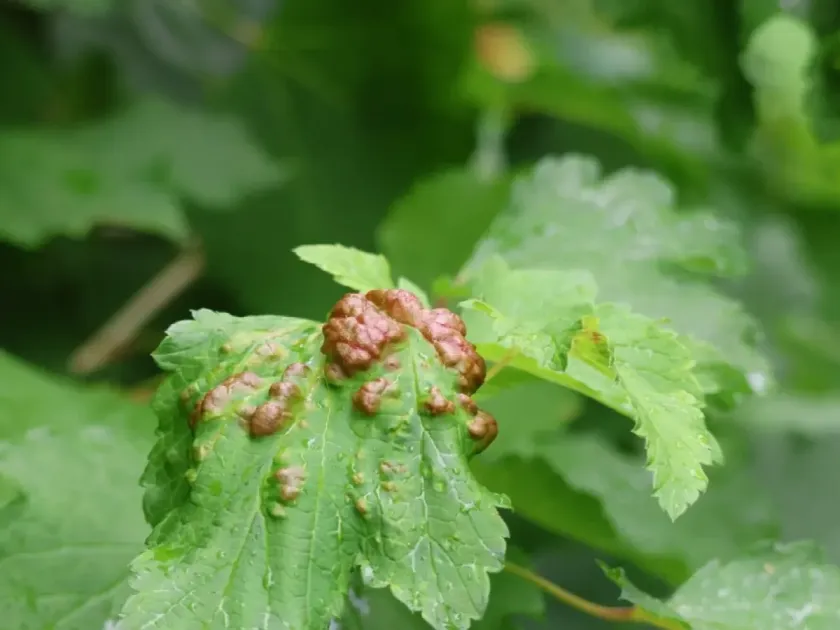
This physiological reaction manifests as blister-like galls, which disrupt the plant's ability to conduct photosynthesis efficiently.
Severe infestations can lead to early leaf drop, reduced berry size, and a decrease in the overall sugar content of the fruit.
Over several seasons, heavy aphid pressure weakens the shrub, making it more susceptible to environmental stress and opportunistic pathogens.
Signs of infestation
The most diagnostic feature is the appearance of raised, reddish, or yellowish-brown blisters (galls) on the upper surface of leaves.
Inspecting the underside of these galls reveals dense clusters of small aphids and their cast-off skins from molting.
Leaves may become severely discolored, curled, or necrotic as the season progresses and the number of aphids increases.
Sticky honeydew excreted by the aphids can cover the foliage, often leading to the growth of black sooty mold.
Ant activity on the branches is a strong indicator of an existing aphid colony, as ants protect aphids in exchange for honeydew.
Control measures
Dormant oil sprays applied in late winter or early spring can effectively smother overwintering eggs before they hatch.
Cultural control involves removing weeds such as hedge nettle or dead-nettle, which serve as alternate hosts for the aphids during mid-summer.
Encouraging natural predators like ladybirds, lacewings, and hoverflies is highly effective for maintaining aphid populations below the threshold.
If chemical intervention is necessary, apply insecticidal soaps or systemic pesticides according to the manufacturer's safety instructions.
Regular pruning of bushes to improve airflow and thinning of excess growth can reduce the suitability of the environment for aphid colonization.
Taxonomy
- Latin name
- Cryptomyzus ribis
- Order
- Hemiptera (bugs, aphids, leafhoppers)
- Family
- Aphididae
- EPPO code
- CRYMRI
Discussion
No discussions yet — be the first.