
Currant aphid
Cryptomyzus korschelti
Description
How to identify
The currant aphid (Cryptomyzus korschelti) belongs to the Aphididae family, order Hemiptera. It is a small sap-sucking insect commonly found on various currant species.
Adult aphids are typically pale green or yellowish, allowing them to blend in with the leaf tissue. Both winged and wingless forms exist, enabling effective colonisation of new host plants.
These pests overwinter as eggs, which are strategically placed by females in bark crevices or near buds on current-season shoots.
In spring, the hatchlings known as fundatrices emerge and start feeding, initiating rapid asexual reproduction to build up large colonies.
Understanding their morphology is crucial, as they have specialized mouthparts capable of penetrating the leaf epidermis to access the vascular system.
What it damages
The primary hosts for this aphid are plants within the Ribes genus, including black, red, white currants, and gooseberries.
Aphids aggregate on the undersides of young leaves, draining plant sap and depriving the shoot of essential nutrients for healthy growth.
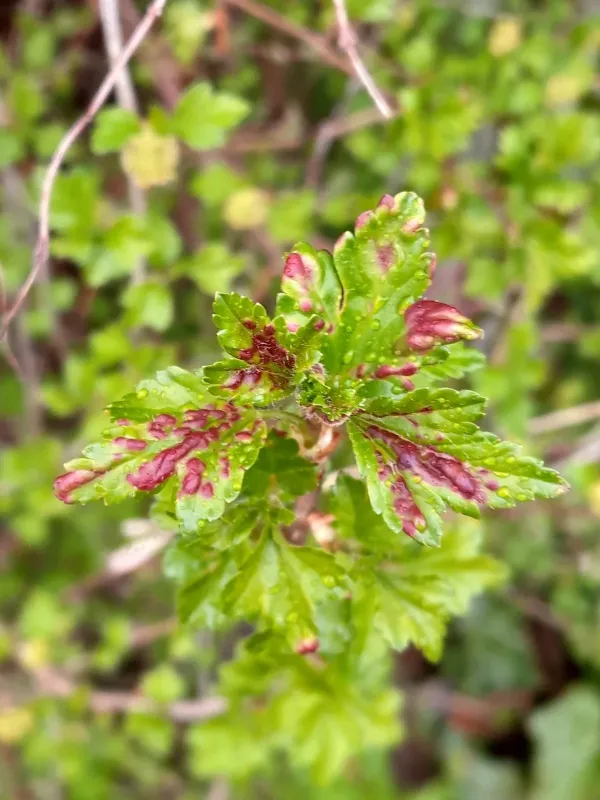
The feeding process involves the injection of salivary enzymes, which cause the leaf blade to curl, twist, and show localized discoloration or blistering.
Severe infestations can lead to stunted shoot development, reduced fruit set, and overall weakening of the entire shrub during the growing season.
Additionally, the sugary honeydew excreted by aphids promotes the growth of sooty mold, which blocks sunlight and interferes with the plant's photosynthesis.
When it appears
The life cycle begins early in the season when temperatures rise, triggering egg hatching during the bud-burst stage of the host plant.
Population density peaks between late spring and early summer, taking advantage of the flush of new, soft growth on the currant bushes.
During peak summer, winged individuals may migrate to different parts of the bush or nearby host plants to expand the colony's range.
As autumn approaches, the aphid shifts to producing sexual forms to lay overwintering eggs, ensuring the species survives until the next year.
Climatic factors, such as prolonged warmth and dry conditions, can significantly accelerate the aphid's reproduction rate in the garden.
Signs of infestation
The most distinctive sign of infestation is the curling and distortion of terminal leaves, which prevents them from fully expanding.
Looking at the underside of these leaves, one will find dense clusters of small aphids often accompanied by ants, which farm them for honeydew.
Leaves may develop yellowish or reddish patches in the areas where the aphids have been feeding consistently for several days.
- Deformed and stunted shoot tips.
- Sticky honeydew residue on foliage.
- Visible presence of aphid colonies.
If left unchecked, the overall aesthetic and vigor of the currant bush decline, leading to visible wilting of the younger parts of the plant.
Control measures
Effective management of Cryptomyzus korschelti requires a blend of cultural practices and targeted chemical interventions when necessary.
Cultural methods include regular pruning of suckers and dead wood, which reduces the sites available for overwintering eggs.
Encouraging beneficial insects like ladybugs, lacewings, and hoverflies can provide significant natural control of aphid populations in the garden.
For chemical control, systemic insecticides are the most effective, as they are translocated within the plant to reach aphids hiding in curled leaves.
Always adhere to local guidelines regarding pesticide use and ensure that treatments are applied before the leaves curl too tightly for contact.
Taxonomy
- Latin name
- Cryptomyzus korschelti
- Order
- Hemiptera (bugs, aphids, leafhoppers)
- Family
- Aphididae
- EPPO code
- CRYMKO
Discussion
No discussions yet — be the first.