
Currant lettuce aphid
Cryptomyzus
Description
How to identify
The currant lettuce aphid (Cryptomyzus ribis) is a common pest belonging to the family Aphididae that specifically targets Ribes species.
Adult aphids are small, approximately 2 mm in length, and typically exhibit a pale yellowish or greenish color, making them difficult to spot against the foliage.
The species has a complex life cycle, overwintering as eggs on the bark of currant and gooseberry bushes near the dormant buds.
In spring, the eggs hatch into fundatrices, which initiate the primary colony development on the underside of leaves.
During the summer, winged forms emerge to migrate to secondary host plants, specifically various species of the Lamiaceae family, such as hedge nettles.
What it damages
The pest primarily infests red and white currants, although it can also affect gooseberries and occasionally black currants.
Aphids suck sap from the leaves, causing the plant to lose vital nutrients and energy required for optimal growth and fruit production.
Severe infestations lead to stunted shoot growth, which limits the plant's ability to produce healthy buds for the following season.
The leaves subjected to aphid feeding undergo significant physiological stress, often resulting in premature senescence and shedding.
The cumulative damage reduces the overall vigor of the bush, making it more susceptible to secondary fungal pathogens and environmental stresses.
Signs of infestation
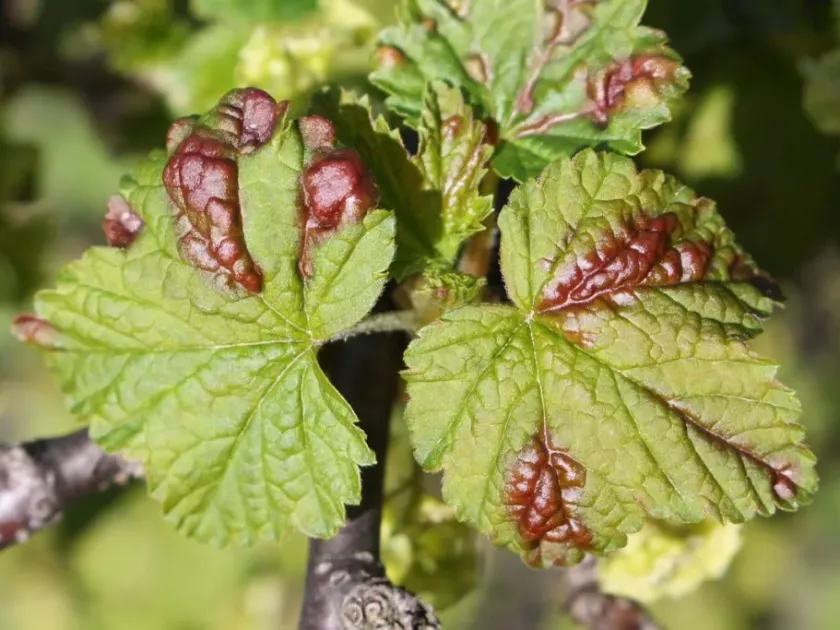
The most distinctive symptom of an infestation is the formation of leaf galls — raised, blister-like swellings on the upper leaf surface.
These galls are characteristically colored in shades of red, pink, or yellow, providing a stark visual contrast to healthy green tissue.
Colonies of aphids can be found clustered within the depressions on the underside of these galls, protected from predators and weather.
As the infestation progresses, leaves become severely crinkled and distorted, often turning yellow or brown before dropping off early.
The presence of sticky honeydew secreted by the aphids often encourages the growth of sooty mold, further degrading the leaf surface.
Control measures
Preventative control begins with early spring applications of dormant oil or targeted insecticides to eliminate overwintering eggs.
Good horticultural practice includes keeping the area around the base of bushes clear of weeds, particularly those in the mint family.
If an infestation is detected during the growing season, systemic insecticides are often recommended to provide effective and long-lasting control.
- Encouraging natural predators such as ladybugs, lacewings, and hoverflies can help suppress aphid populations naturally.
- Pruning and destroying heavily infested branches can help reduce the immediate pest pressure on the entire plant.
- Applying horticultural soaps or neem oil is a viable option for organic growers looking for safer alternatives to synthetic chemicals.
Removing and composting or burning leaf litter in late autumn is crucial to disrupt the pest's cycle and reduce the number of eggs for the next spring.
Taxonomy
- Latin name
- Cryptomyzus
- Order
- Hemiptera (bugs, aphids, leafhoppers)
- Family
- Aphididae
- EPPO code
- CRYMSP
Discussion
No discussions yet — be the first.