
Cricotopus trifasciatus
Cricotopus trifasciatus
Description
How to identify
Cricotopus trifasciatus is a species of non-biting midge belonging to the family Chironomidae (order Diptera). These insects are commonly found in wetland environments and aquatic agricultural systems.
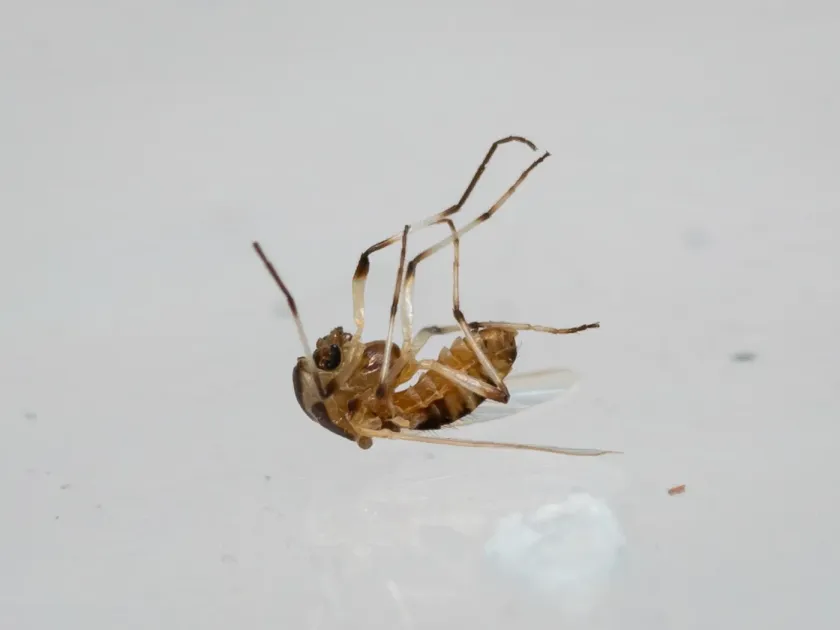
The adult midge is characterized by distinct markings on its abdomen, specifically three transverse light-colored stripes, which help in its visual identification in the field.
Larvae are worm-like, often translucent, green, or yellowish, with a dark, sclerotized head capsule. They are aquatic organisms that live at the bottom of water bodies.
They construct specialized tubes or cases made of organic debris, silt, and silk threads, which serve as protection and as a platform for feeding activities.
The life cycle encompasses egg, four larval instars, pupa, and adult. The duration of the life cycle is highly temperature-dependent, allowing for multiple generations per year.
What it damages
The primary concern regarding this species is its impact on rice (Oryza sativa) seedlings during the early growth stages, specifically when fields are flooded.
Larvae feed on the delicate tissues of submerged seedlings, often consuming the base of the stems and roots, which can lead to significant plant loss.
This feeding damage compromises the plant's ability to anchor in the soil and absorb nutrients, making the young rice highly susceptible to environmental stress.
High infestation density often leads to sparse stands or patchy crop emergence, which can necessitate replanting if the population density is high enough.
Secondary infections by aquatic fungi or bacteria often colonize the wounds created by the larvae, further weakening the young seedlings.
When it appears
The emergence of adults typically begins in late spring and early summer when water temperatures in rice paddies become favorable for egg-laying.
Depending on the climatic conditions, multiple generations can occur during the rice growing season, posing a continuous threat to young crops.
Larval activity is most intense during periods of stable water temperature, which facilitates the rapid development of successive instars.
Late-season populations tend to decline as rice fields are drained for harvest, which eliminates the necessary aquatic habitat for the larval stages.
Fluctuations in water levels due to irrigation practices play a critical role in the seasonal dynamics and mortality of the larval population.
Signs of infestation
Early symptoms of infestation include the presence of damaged or consumed shoot tips on submerged or partially submerged rice seedlings.
The presence of small, silt-covered silk tubes attached to the rice plants or on the surface of the mud is a definitive indicator of the pest's activity.
Visible patches of thinned vegetation or floating dead seedlings in the paddy are strong evidence of severe infestation levels.
Yellowing and subsequent wilting of seedlings are common consequences of the damage to the basal stem area, which disrupts nutrient transport.
Large swarms of adult midges hovering over the paddy surface at dawn or dusk are indicators of a high population density in the immediate environment.
Control measures
Water management is the primary control strategy; temporary draining of the fields can significantly reduce larval populations by disrupting their habitat.
Chemical control with insecticides is generally reserved for cases where economic injury thresholds are exceeded during the highly sensitive seedling phase.
Agricultural practices, such as optimizing seeding dates to minimize the overlap between the vulnerable growth stage and peak insect activity, are effective.
Maintaining high-quality irrigation water and managing peripheral weeds can help limit the potential breeding sites for the midges.
- Use of light traps to monitor adult flight and population trends.
- Biological control through the use of specific microbial pesticides.
- Ensuring robust nutrient management to support rapid seedling development.
Taxonomy
- Latin name
- Cricotopus trifasciatus
- Order
- Diptera (flies)
- Family
- Chironomidae
- EPPO code
- CRCTTR
Discussion
No discussions yet — be the first.