
Cricotopus
Cricotopus
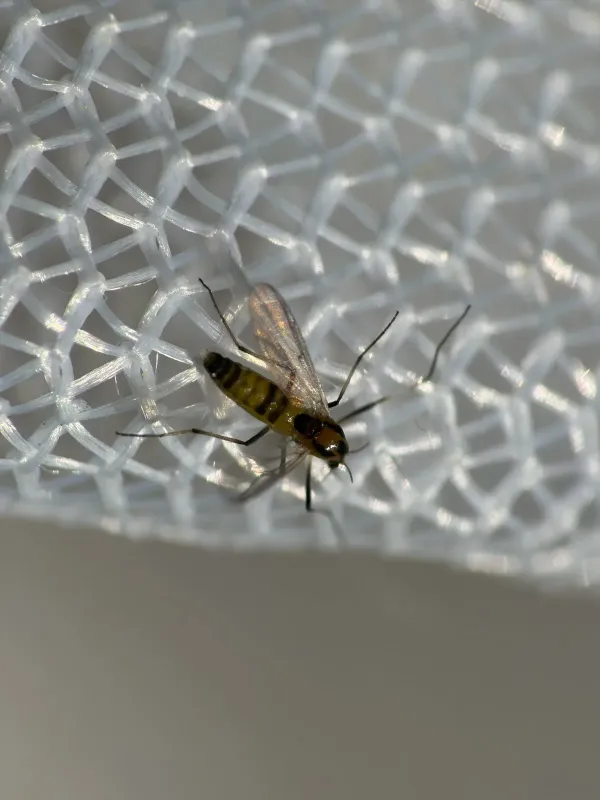
Description
How to identify
Cricotopus is a genus within the family Chironomidae (non-biting midges), belonging to the order Diptera. These small insects resemble common mosquitoes but do not bite or feed during the adult stage.
The larvae are worm-like and vary in color, often appearing greenish, brownish, or reddish. They live in aquatic environments, such as flooded fields, irrigation canals, and standing water bodies.
Adult midges function primarily to reproduce. After mating, females lay eggs in the water, which hatch into larvae that pose a significant threat to aquatic and semi-aquatic crops.
Identification is typically performed by specialists examining the larval mouthparts under a microscope. This is necessary due to the high species diversity within the Chironomidae family.
The life cycle involves complete metamorphosis: egg, larva (multiple instars), pupa, and adult, with larvae being the only stage that causes economic damage to agriculture.
What it damages
Rice crops are the primary target for Cricotopus larvae. They feed on the roots and the base of young stems, particularly in recently flooded fields where the crop is most vulnerable.
Feeding damage compromises the plant's nutrient uptake system, resulting in stunted growth and, in severe cases, plant death. This leads to gaps in the stand and reduced yield.
Besides rice, these larvae can inhabit other aquatic vegetation. The presence of the pest is often correlated with poor water management or long-standing stagnant water in the fields.
The economic impact is most severe when larvae reach high population densities during the early vegetative growth phase of the rice plants.
Injured seedlings often turn yellow and show reduced vigor, making them more susceptible to subsequent environmental stresses or pathogenic infections.
When it appears
The pest's activity begins in the spring as soon as water temperatures in irrigation systems rise. This coincides with the planting season for many aquatic crops.
Multiple generations can occur throughout the growing season, with the rate of development highly dependent on water temperature and the presence of organic debris.
Adult midges are most active during dawn or dusk, often forming swarms. They lay eggs directly onto the water surface or submerged plant surfaces.
Larvae remain active in the water column or within the substrate throughout the flooded period, feeding constantly as they grow through several instars.
As water temperatures cool toward autumn, the larvae prepare for dormancy, often overwintering in the mud of irrigation channels or field bottoms.
Signs of infestation
Key symptoms include patches of missing or dead seedlings within the rice field. On closer inspection, one can find irregular gnawing marks on the stems near the soil line.
Larvae often construct protective tubes or cases using silk and particles of silt or plant debris. Finding these structures attached to the base of stems is a diagnostic sign.
Yellowing of the youngest leaves and the presence of floating debris from damaged plants are indicative of active larval feeding in the vicinity.
Observing the field bottom or near-root zones often reveals the larvae, which are visible to the naked eye and exhibit characteristic thrashing movements when disturbed.
Field-wide patches of thinning density are common indicators, especially in areas with deeper water where larval density is higher due to stability.
Control measures
The most effective agronomic control strategy is the temporary drainage of the fields. Exposing the soil surface to air effectively kills the aquatic larvae.
Proper field leveling and optimized irrigation scheduling help prevent the creation of stagnant "hotspots" where larval populations tend to congregate.
When economic thresholds are exceeded, chemical control using registered insecticides may be necessary. These should be applied carefully to minimize impact on non-target aquatic organisms.
Biological control methods are increasingly used, focusing on encouraging natural predators such as fish or using specific microbial formulations to manage larval populations.
- Drainage of irrigation water to desiccate larvae.
- Optimized planting dates to avoid peak pest activity.
- Regular monitoring of larval populations in flooded zones.
- Use of selective insecticides only when thresholds are reached.
Taxonomy
- Latin name
- Cricotopus
- Order
- Diptera (flies)
- Family
- Chironomidae
- EPPO code
- CRCTSP
Discussion
No discussions yet — be the first.