
Hazel aphid
Corylobium avellanae
Description
How to identify
The hazel aphid (Corylobium avellanae) is a specialized aphid species belonging to the family Aphididae. It is primarily known as a pest that targets plants within the Corylus genus, including hazel and filberts.
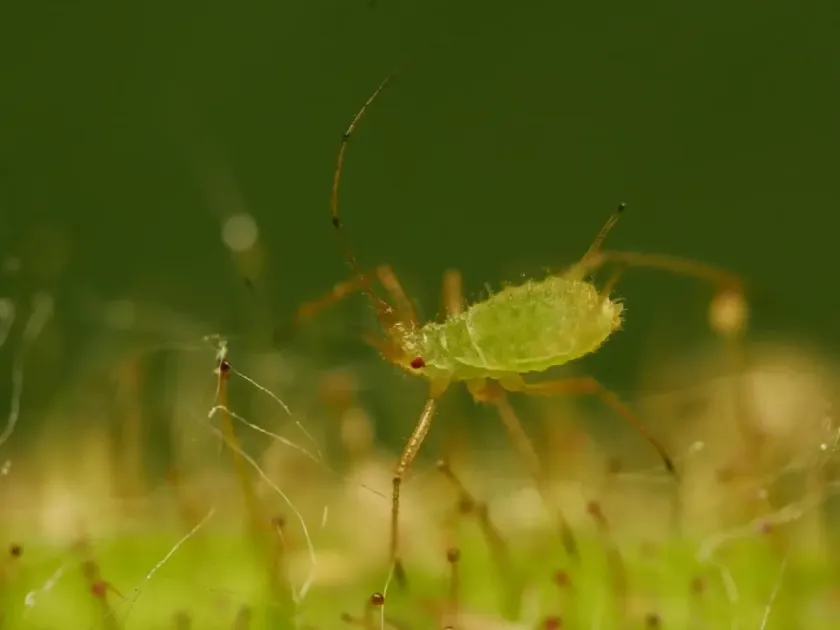
Adult aphids typically measure between 2 and 3 mm in length. Their bodies are elongated, and their coloration ranges from light green to yellowish-green, providing excellent camouflage against the foliage.
A diagnostic feature of this species is its exceptionally long antennae, which often exceed the length of its body. The specific morphology of the siphunculi and cauda is used by entomologists for accurate identification.
The lifecycle includes both apterous (wingless) and alate (winged) forms. Winged individuals are produced when the aphid colony density increases, allowing for migration to new hosts.
Overwintering occurs in the egg stage. Females deposit their eggs near buds or in bark crevices during the autumn, ensuring the population survives the winter temperatures.
What it damages
Hazel aphids feed exclusively on the sap of hazelnut and wild hazel trees. They prefer the tender tissues of young shoots and the abaxial surface (underside) of leaves.
Feeding involves piercing the plant epidermis and extracting phloem sap, which causes a significant nutrient drain on the host plant, weakening its overall vigor.
Heavy infestations lead to stunted growth and distortion of new shoots. This results in reduced leaf surface area and, consequently, compromised photosynthesis and lower yields.
The excretion of honeydew promotes the growth of sooty mold, a black fungal layer that covers the leaves. This mold physically blocks sunlight, further inhibiting the plant's metabolic functions.
Chronic damage negatively impacts the tree's health, making it more susceptible to environmental stress, winter damage, and various secondary diseases.
When it appears
Activity begins in the spring as soon as buds start to burst. The fundatrices (stem mothers) emerge from overwintering eggs and immediately begin feeding on young foliage.
Population peaks usually occur during late spring and early summer when plant growth is at its most active, providing an abundance of high-quality phloem sap.
Multiple generations are produced throughout the summer months. The duration of each generation cycle is highly dependent on ambient temperature, with warmer conditions speeding up the process.
By late summer, the change in daylight duration triggers the production of sexual morphs. These individuals mate, and females lay the overwintering eggs to complete the cycle.
Monitoring should be conducted consistently from bud break through mid-summer, which is the most critical period for population control in hazelnut orchards.
Signs of infestation
The most visible symptom of infestation is the curling and twisting of young leaves at the tips of shoots. Aphid colonies are typically found sheltered inside these curled leaves.
The presence of large ant populations on hazelnut trees is a clear indicator of aphid activity, as ants tend to aphids to harvest the sugary honeydew they secrete.
A sticky, shiny residue on leaves below the colonies confirms honeydew production. If this residue turns black over time, it indicates the colonization of sooty mold fungi.
Closer visual inspection of the undersides of young leaves usually reveals dense clusters of green aphids, often aligned along the leaf veins.
General unthriftiness of the tree, including delayed shoot elongation and yellowing foliage despite adequate irrigation, is a frequent sign of hidden aphid stress.
Control measures
Cultural control involves the judicious pruning of heavily infested shoot tips early in the season, which can significantly reduce the initial population size.
Integrated Pest Management emphasizes the protection of natural enemies such as lady beetles, lacewings, and hoverflies, which are highly efficient at suppressing aphid populations.
When populations exceed economic thresholds, systemic insecticides can be applied to effectively eliminate the aphids by targeting their phloem-feeding activity.
- Regular orchard scouting to detect initial aphid activity.
- Use of biorational pesticides to maintain the balance of natural predators.
- Maintaining tree vigor through proper fertilization to improve resistance to infestations.
It is essential to rotate chemical classes of insecticides to prevent the development of resistant aphid populations within the orchard environment.
Taxonomy
- Latin name
- Corylobium avellanae
- Order
- Hemiptera (bugs, aphids, leafhoppers)
- Family
- Aphididae
- EPPO code
- CRLOAV
Discussion
No discussions yet — be the first.