
Dobsonfly (genus Corydalus)
Corydalus
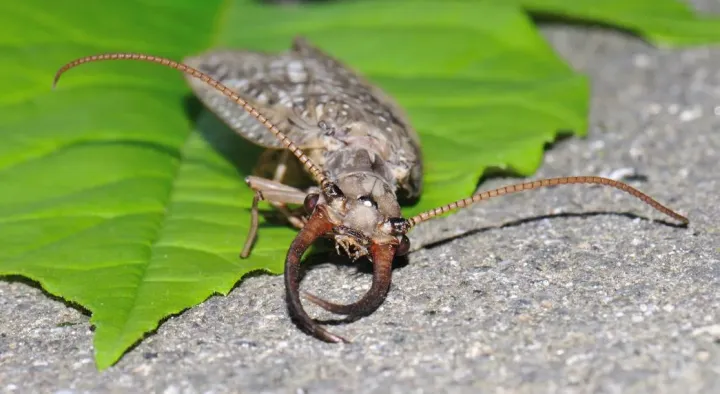
Description
How to identify
Dobsonflies of the genus Corydalus belong to the order Neuroptera and the family Corydalidae. These are large insects characterized by long wings that fold flat over the body when at rest.
The appearance of adults is notable for long antennae and prominent mandibles, which are especially well-developed in males. The coloration usually ranges from grayish-brown to dark brown, providing excellent camouflage on tree bark.
The larvae, often known as "hellgrammites," develop primarily in aquatic environments or very moist soil near water bodies. They possess powerful chewing mouthparts, making them aggressive predators in their natural habitats.
The insect's life cycle involves complete metamorphosis: egg, larva, pupa, and adult. The duration of the life cycle can range from one to several years, depending on temperature conditions and food availability.
While adults feed very little or not at all, their activity is centered around reproduction near water. Mass emergence of adults often coincides with high humidity and nighttime hours, as they are strongly attracted to light sources.
What it damages
It is important to note that adult Corydalus cause almost no direct damage to crops, as they do not feed or consume only nectar. The primary damage is associated with the activity of their larvae in specific environments.
Larvae living in waterlogged soils or the root zones of riparian crops can damage the plant root systems. Their aggressive behavior and significant size allow them to sever the tender roots of young seedlings.
In agricultural practice, damage is most commonly recorded in crops grown in hydroponic systems or in fields with high groundwater tables. In such areas, larvae can destroy young shoots and roots.
The presence of a large number of larvae in the soil leads to suppressed plant vigor, leaf yellowing, and slowed vegetation. In rare cases, intensive root damage triggers secondary infections and plant death.
This pest rarely causes massive economic damage because its biology is closely tied to natural aquatic ecosystems; however, plots bordering rivers and wetlands remain at higher risk.
Control measures
The primary control measure is the management of the site's water balance. Reducing soil moisture levels in larval development zones significantly decreases their population and prevents further spread of the pest.
Mechanical removal of larvae during soil cultivation near water bodies helps reduce the local population. It is crucial to perform these operations in the periods preceding the mass emergence of adults.
The application of biological insecticides approved for use in water-protected areas allows for the control of larval numbers without disrupting the ecological balance of the surrounding environment.
Using light traps during evening hours helps capture adults before they can lay eggs. This method is effective for monitoring pest appearance and reducing the reproductive potential of the population.
Adhering to crop rotation practices and avoiding the planting of sensitive crops in low-lying areas prone to flooding are fundamental agrotechnical measures against the spread of dobsonflies.
Taxonomy
- Latin name
- Corydalus
- Family
- Corydalidae
- EPPO code
- CDLSSP
Discussion
No discussions yet — be the first.