
Darkling beetle
Corticeus
Description
How to identify
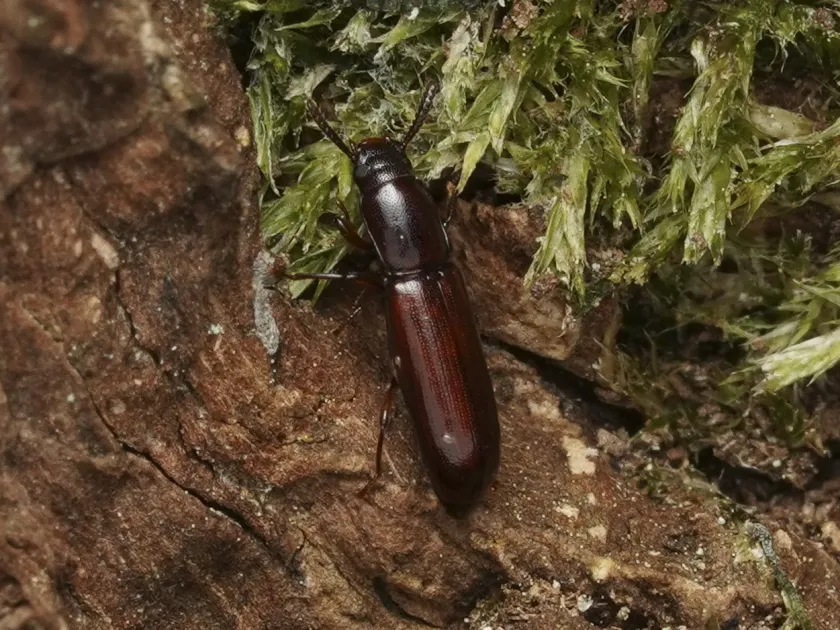
Darkling beetles of the genus Corticeus belong to the family Tenebrionidae, order Coleoptera. These are small beetles, typically elongated in shape, characterized by a dark brown or black chitinous exoskeleton.
Adult specimens exhibit a distinct sheen and their bodies are adapted for life in narrow spaces, such as under tree bark or within crevices of storage facilities. The larvae are worm-like, usually light or yellowish, and possess well-developed chewing mouthparts.
The species diversity of the genus is vast, but in an agronomic context, they are often associated with wood processing or the storage of plant products. Identification is performed by examining the structure of the antennae and the shape of the pronotum using laboratory magnification.
These insects prefer a secretive lifestyle, making them difficult to detect during the early stages of infestation. They demonstrate high sensitivity to substrate moisture and ambient temperature.
Unlike other members of the family, species of the genus Corticeus are frequently found in symbiotic or predatory relationships with bark beetles, requiring a comprehensive approach to assess their role in the agroecosystem.
What it damages
The damage caused by darkling beetles of the genus Corticeus is primarily secondary, although some species can damage weakened forest stands and wood-processing products.
In grain storage conditions, these beetles are most commonly discovered in premises with high humidity, where they feed on organic decay products, moldy grains, and the remains of other pests.
They are capable of penetrating deep into the grain pile, contaminating it with feces and larval skins, which significantly reduces the commercial quality of seed and food stock.
Under conditions of mass reproduction, darkling beetles create hotspots of grain self-heating, which triggers the development of microflora and subsequent spoilage of the entire product batch in the warehouse.
Damage to grains by these beetles renders the product unsuitable for food purposes due to a specific odor and the presence of insect metabolic products within the grain mass.
When it appears
The development cycle of the darkling beetle is closely linked to the temperature regime of the storage facility. Optimal conditions for reproduction and active feeding range from +20 to +28 degrees Celsius.
In heated warehouses, the pest's development can occur year-round without distinct periods of diapause, making them hazardous for long-term grain storage.
Imagines are most active at night, while larvae remain constantly within the bulk substrate, where humidity and food availability ensure their stable development.
The speed of the life cycle depends on grain moisture: at levels above 15 percent, the rate of insect reproduction increases exponentially.
During the spring and summer periods, mass emergence of imagines occurs, allowing them to disperse over long distances in search of suitable egg-laying sites.
Signs of infestation
The first sign of darkling beetle presence is a specific musty odor in the storage facility, caused by insect metabolic waste.
Upon inspection of the grain mass, empty larval skins are discovered, which accumulate in the upper layers of the pile or in the corners of storage rooms.
The presence of small holes in grains, which are typically colonized by secondary microflora, may also indicate the presence of this species in the storage space.
Visual monitoring using pheromone or food-based traps allows for the detection of the beetle population at an early stage of invasion, before critical infestation occurs.
Discovery of live individuals during grain sample sieving is a signal for immediate phytosanitary measures.
Control measures
The primary control method is adherence to strict sanitary regulations in storage facilities, including regular cleaning of dust and grain residues.
- Drying grain to a moisture content below 13% to slow down pest metabolism.
- Performing wet disinsection of storage containers before loading the harvest.
- Utilizing fumigation when critical levels of infestation are detected.
- Monitoring temperature within the grain pile to prevent overheating hotspots.
The use of contact insecticides is justified only in empty warehouse spaces in accordance with the regulatory standards for pesticide application.
Regular aeration of the grain helps reduce localized humidity, creating unfavorable conditions for the development of darkling beetle larvae.
Taxonomy
- Latin name
- Corticeus
- Order
- Coleoptera (beetles)
- Family
- Tenebrionidae
- EPPO code
- CRTCSP
Discussion
No discussions yet — be the first.