
Water boatman
Corixa
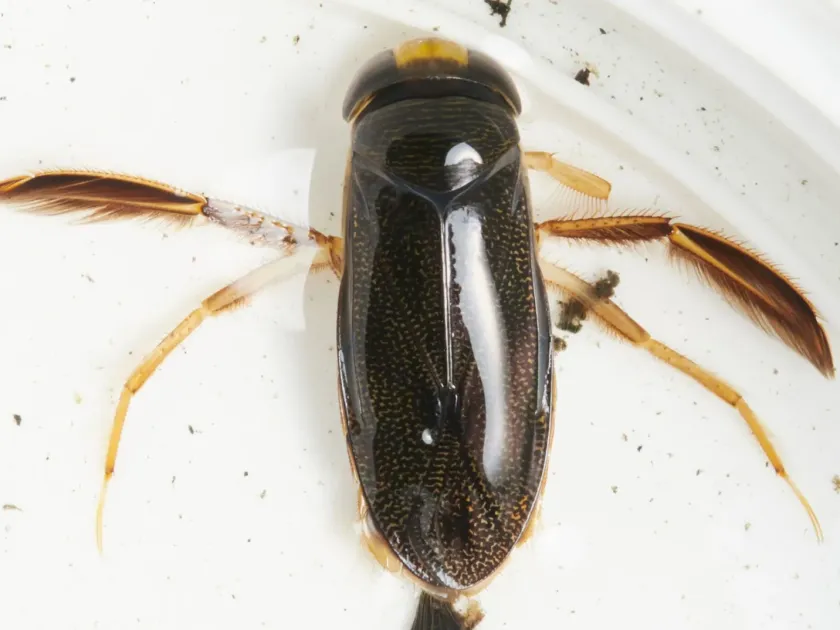
Description
How to identify
The water boatman belongs to the family Corixidae, order Hemiptera. These aquatic insects typically measure between 5 and 15 mm in length and have a flattened oval body.
They are easily identified by their elongated hind legs, which are fringed with fine hairs and act as oars for efficient swimming through the water column.
Their coloration usually ranges from brown to black, often featuring intricate transverse markings that provide camouflage against the pond floor or submerged debris.
Unlike many other aquatic bugs, water boatmen have specialized scoop-like front legs used to rake algae and organic matter into their mouths for feeding.
They are capable of strong flight, which enables them to colonize new aquatic environments rapidly and move between water bodies during seasonal shifts.
What it damages
Water boatmen primarily cause problems in aquaculture, where they compete with fish fry for the available supply of zooplankton.
By consuming large amounts of plankton, these insects significantly deplete the food sources necessary for young fish to grow and thrive.
In high densities, water boatmen have been known to feed on fish eggs and very small fry, potentially reducing the survival rate of the fish population.
They can also damage delicate aquatic vegetation, which is essential for maintaining the balance and oxygenation levels within a managed pond ecosystem.
Accumulation of their waste products can degrade water quality, indirectly impacting the health of commercially valuable aquatic life in closed systems.
When it appears
Activity begins in early spring as water temperatures rise, triggering the emergence of overwintering adults from the mud at the bottom of ponds.
During the summer months, water boatmen reach their peak population density, engaging in intensive reproduction and laying eggs on submerged substrates.
As autumn arrives and temperatures drop, the insects decrease their feeding activity and begin seeking suitable deeper areas to spend the winter.
Migratory flights are most common during warm spring and autumn evenings when insects move to find more suitable habitats with ample food.
The lifecycle includes several nymph stages, ensuring that there are multiple generations present throughout the warm seasons of the year.
Signs of infestation
A primary sign of infestation is observing large numbers of insects swimming rapidly near the surface or resting in colonies on the bottom.
A noticeable decline in fish growth rates and general activity level can indicate that food competition from water boatmen is impacting the fish population.
Visual inspection of rocks, stems of aquatic plants, or other submerged structures will often reveal clusters of small eggs laid by the females.
The presence of water boatmen can sometimes be detected by the distinct buzzing or chirping sounds produced by males, especially during the mating season.
Increased turbidity or a shift in water quality parameters in a closed system can occasionally be linked to high insect density and their excretions.
Control measures
The most effective management practice is the periodic draining and drying of ponds, which eliminates both nymphs and egg-laying sites.
Installing fine-mesh screens over water inlets can prevent adults from entering managed aquatic systems from nearby infested bodies of water.
Biological control methods include encouraging the presence of natural predators, such as dragonfly larvae and certain fish species, that feed on boatmen.
Regular maintenance, including the removal of excess submerged vegetation, reduces the available area for egg-laying and disrupts the insect's habitat.
- Draining ponds to break the reproductive cycle.
- Using light traps to capture adults during nocturnal flight periods.
- Maintaining optimal water quality to discourage excessive population growth.
- Encouraging natural predators within the pond environment.
Taxonomy
- Latin name
- Corixa
- Order
- Hemiptera (bugs, aphids, leafhoppers)
- Family
- Corixidae
- EPPO code
- CORXSP
Discussion
No discussions yet — be the first.