
Arbutus leafminer
Coptodisca arbutiella
Description
How to identify
The Arbutus leafminer Coptodisca arbutiella is a small moth belonging to the family Heliozelidae. It is a specialized pest primarily affecting various species of Arbutus, particularly the Pacific madrone.
Adult moths are tiny, often with metallic-colored wings, making them difficult to spot during routine inspections. They are most active during the warmer months of the growing season.
The life cycle involves larvae mining within the leaf tissue, where they consume the inner parenchyma while remaining protected by the upper and lower leaf epidermis.
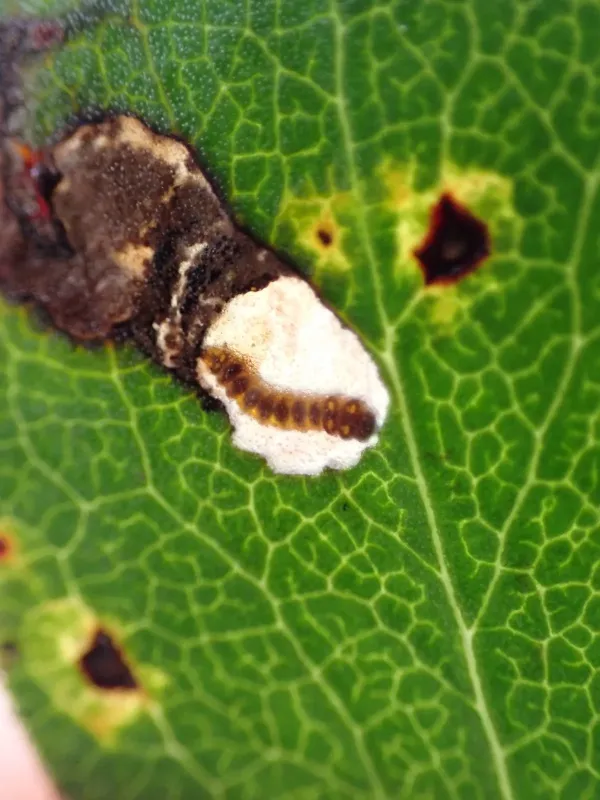
A distinctive behavioral trait of this species is that, when mature, the larva cuts a circular or oval disc out of the leaf. It uses this piece of tissue as a portable case for pupation.
Due to their small size and cryptic habits, populations can reach high levels before the damage becomes visibly apparent to the tree owner or gardener.
What it damages
The primary damage is caused by the larval stage, which constructs mines within the leaves of the host plant, disrupting the tree's photosynthetic capability.
As larvae feed, they create blotch mines that eventually lead to holes in the leaves. These openings are characteristically clean-cut due to the larva's habit of cutting out pupation cases.
Severe infestations can result in significant leaf drop, reducing the tree's vigor and its overall aesthetic appeal in landscape settings.
Repeated annual damage may contribute to the general decline of affected madrone trees, making them more susceptible to drought and secondary pathogens.
While an individual mine does little harm, a high density of larvae can cause the loss of a substantial percentage of the functional leaf area on a single branch.
Signs of infestation
The most visible sign of an infestation is the presence of numerous small, circular holes in the foliage, resembling tiny windows punched through the leaf blade.
Before the holes appear, you can often identify the presence of the pest by looking for pale, discolored blotches on the leaf surface where the larva is actively mining.
Under close inspection, the empty leaf mines are visible as thin, flattened tracks or irregular patches, sometimes containing larval waste (frass).
Checking the ground beneath the canopy can reveal the tiny discarded leaf discs, confirming the presence of pupating larvae in the vicinity.
The yellowing of leaves in heavily infested sections of the tree crown serves as a clear indicator that the tree is suffering from the stress of the leafminer activity.
Control measures
Sanitation is a critical control measure; raking and destroying fallen leaves during the dormant season helps eliminate pupae before they emerge as adults.
Monitoring with pheromone traps can help pinpoint the timing of adult emergence, allowing for more precise application of control agents if deemed necessary.
Systemic insecticides are the most effective chemical method for control, as they target the larvae inside the leaf tissue where contact sprays are often ineffective.
Encouraging natural predators, such as parasitic wasps, is a viable long-term strategy for managing populations in more natural or woodland landscapes.
Providing adequate irrigation and tree care helps maintain the plant's health, allowing it to better withstand and recover from leafminer-induced stress.
Taxonomy
- Latin name
- Coptodisca arbutiella
- Order
- Lepidoptera (butterflies)
- Family
- Heliozelidae
- EPPO code
- COPDAR
Discussion
No discussions yet — be the first.