
Cocoa pod borer
Conopomorpha cramerella
Description
How to identify
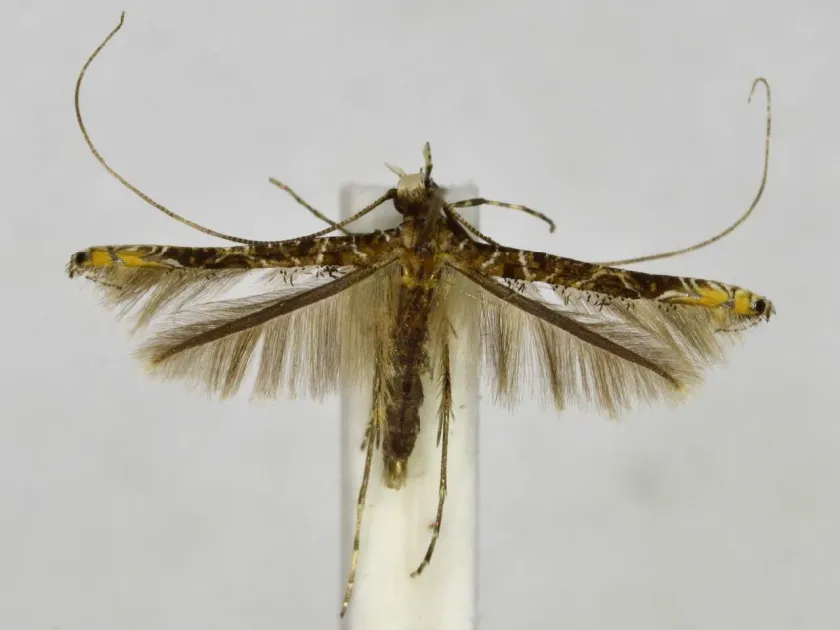
The cocoa pod borer (Conopomorpha cramerella) is a moth belonging to the order Lepidoptera and the family Gracillariidae. It is considered one of the most serious pests affecting cocoa cultivation globally.
The adult moth is small and cryptic, often remaining unnoticed during daylight hours. Its morphology is adapted to blending into the environment of the cocoa tree canopy, making detection challenging.
What it damages
The larvae of the cocoa pod borer feed on the internal tissues of the developing cocoa pod, specifically targeting the beans. This feeding process prevents proper development of the seeds.
By consuming the pulp and damaging the beans, the larvae reduce the weight and quality of the final product, rendering it unsuitable for the chocolate industry and causing severe financial losses.
When it appears
The insect thrives in tropical environments where cocoa trees provide a continuous food supply throughout the year. It does not undergo diapause, allowing it to complete multiple generations annually.
Population density often peaks during the main harvest seasons, as the availability of suitable pods for oviposition increases significantly, providing ideal conditions for rapid multiplication.
Signs of infestation
Detection of the pest is based on external symptoms on the cocoa pods. Affected pods often show premature ripening, uneven shapes, and hardening of the outer shell.
- Dark, discolored patches on the pod surface.
- Small emergence holes left by larvae leaving the pods.
- Internal galleries filled with larval frass.
- Clumping of beans within the pod due to damaged mucilage.
Control measures
Integrated Pest Management (IPM) is the gold standard for controlling this pest. Frequent harvesting, which removes all pods from the tree regardless of their stage, helps disrupt the life cycle of the moth.
Biological control using parasitoid wasps and the application of pheromone-based mating disruption techniques are key components in modern management strategies to reduce the reliance on harsh chemicals.
Taxonomy
- Latin name
- Conopomorpha cramerella
- Order
- Lepidoptera (butterflies)
- Family
- Gracillariidae
- EPPO code
- AROCCR
Discussion
No discussions yet — be the first.