
Cocoa pod borer
Conopomorpha
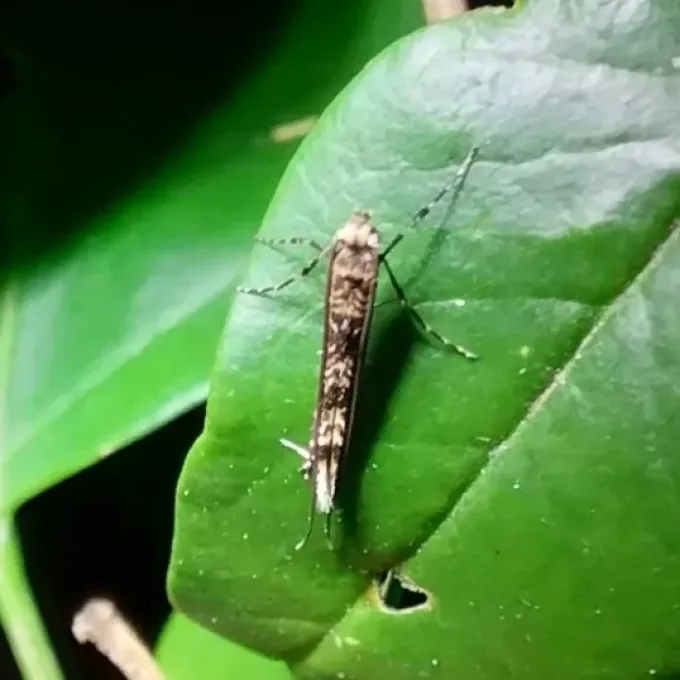
Description
How to identify
Conopomorpha is a genus of moths belonging to the family Gracillariidae. These small insects are known for their narrow wings and specialized behavior, making them significant pests in tropical fruit cultivation.
The life cycle involves adult moths laying eggs on the surface of young, developing fruits, often seeking protected spots like crevices or stem attachments.
Once hatched, the larvae penetrate the fruit rind immediately, entering the pulp where they spend their entire larval stage feeding and developing.
The transition to the pupal stage often occurs in a silky cocoon attached to the fruit surface or debris, providing a crucial stage for environmental survival.
The duration of each developmental stage is highly dependent on ambient temperature and humidity, which usually allows for multiple overlapping generations per year.
What it damages
This genus primarily attacks economically important tropical trees, most notably cocoa (Theobroma cacao), litchi, rambutan, and longan.
Larval feeding activity creates tunnels within the pulp and seeds, which severely stunts the growth of the fruit and often leads to premature shedding.
The primary damage is the loss of commercial yield, as infected fruits lose their marketability due to internal decay and structural damage caused by the larvae.
The holes bored into the fruit serve as entry points for secondary infections, including fungal rots and opportunistic bacteria, further ruining the harvest.
In regions with high infestation pressure, Conopomorpha species can cause massive economic losses, sometimes destroying the majority of a seasonal harvest.
Signs of infestation
The most common sign of infestation is the presence of small entry holes on the fruit skin, often accompanied by characteristic larval frass or excrement piles.
Internally, fruits show extensive tunneling and cavity formation, which may lead to the total collapse of the internal structure as larvae reach maturity.
Fruits may exhibit external deformities, uneven ripening, or discoloration due to the interruption of nutrient transport caused by the larval tunnels.
During the late stages of infestation, one can observe pupal cocoons on the fruit surface, appearing as small, brownish or white structures.
An increased rate of fruit drop before normal maturity is a strong indicator that a plantation is currently under attack by the moth.
Control measures
Sanitation is the cornerstone of management; all fallen and damaged fruits must be collected and destroyed regularly to break the life cycle of the pest.
Pheromone traps are essential for monitoring the population density of adult moths, allowing farmers to predict peak egg-laying periods for targeted applications.
- Application of selective insecticides during the moth's peak flight activity.
- Use of biological control agents, such as specific parasitic wasps that attack larvae.
- Application of Bacillus thuringiensis sprays to disrupt larval development.
- Regular pruning of canopies to improve airflow and reduce humidity levels unfavorable for moths.
An integrated pest management approach that combines cultural, biological, and chemical methods is required to effectively mitigate the impact of this pest.
Taxonomy
- Latin name
- Conopomorpha
- Order
- Lepidoptera (butterflies)
- Family
- Gracillariidae
- EPPO code
- CNPMSP
Discussion
No discussions yet — be the first.