
Tansy aphid
Coloradoa tanacetina
Description
How to identify
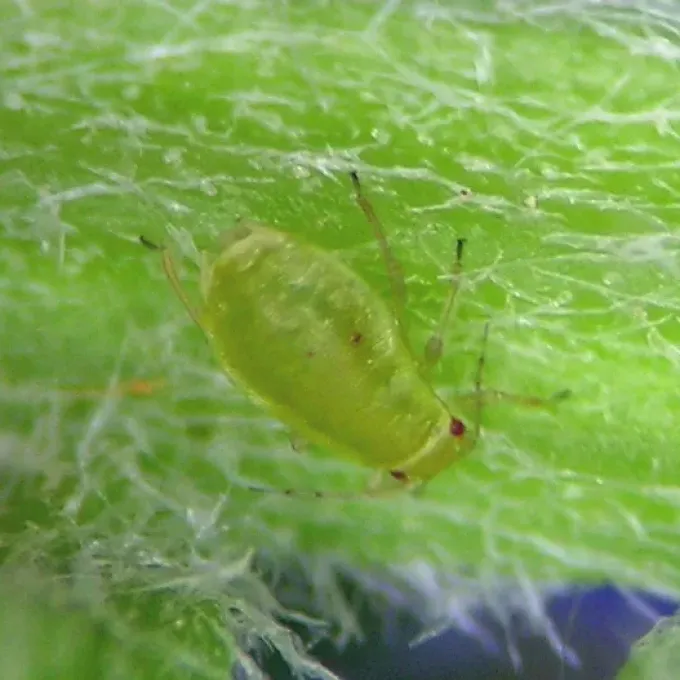
The tansy aphid (Coloradoa tanacetina) is a small insect belonging to the Aphididae family. It is specifically adapted to feed on plants within the Asteraceae family, most notably the common tansy (Tanacetum vulgare).
Adult aphids are typically greenish or yellowish, blending perfectly with the foliage of their host plants, which makes early detection challenging for farmers and gardeners.
The lifecycle includes multiple generations throughout the growing season, characterized by rapid reproduction rates, allowing the population to reach damaging levels in a short period during favorable weather.
This species overwinters primarily in the egg stage. Eggs are laid in the crevices of plant stems or at the base of the plant, ensuring their survival against cold winter temperatures.
Identification is based on the insect's morphology, including its characteristic cornicles and the specific preference for the undersides of young leaves and soft stems.
What it damages
The tansy aphid feeds by piercing plant tissues with its stylet and sucking out sap, which removes vital nutrients and weakens the plant's overall health and physiological development.
Feeding on young shoots causes significant curling and deformation of leaves, which inhibits the plant’s ability to conduct photosynthesis efficiently and stunts overall growth.
Beyond the direct removal of plant fluids, aphids excrete honeydew, a sugary waste product that promotes the growth of sooty mold, blocking sunlight from reaching the leaves.
The presence of these aphids can lead to the transmission of plant viruses, as the insects move from one plant to another, potentially causing systemic diseases within the crop.
Significant infestations often lead to the loss of flowering buds, drastically reducing the quality and volume of the medicinal or ornamental harvest in affected plantations.
Signs of infestation
The first sign of an aphid infestation is the curling and yellowing of the most tender leaves at the top of the plant or around the flower buds.
Sticky residue (honeydew) on the foliage and a visible presence of ants patrolling the plant are clear indicators of an active aphid colony nearby.
Stunted growth of the main stem and the failure of buds to open fully are typical symptoms occurring during periods of high pest density.
Close inspection of the underside of leaves reveals clusters of small insects, which may vary in size depending on their age and developmental stage.
Premature leaf drop or the wilting of younger stems during warm, dry weather conditions often indicates that an aphid colony has severely stressed the host plant.
Control measures
Integrated pest management strategies should focus on encouraging natural predators such as ladybugs, lacewings, and hoverflies, which are highly effective at regulating aphid populations.
Regular monitoring of plants allows for the early removal of infested stems, preventing the spread of aphids to healthy portions of the crop.
In cases where manual intervention is insufficient, horticultural soaps or neem oil can be applied, providing a low-toxicity solution that is effective against soft-bodied insects.
Chemical control should be used as a last resort, choosing systemic or contact insecticides that are specifically approved for use on the target crop to ensure plant safety.
- Maintaining crop health through proper irrigation and nutrition to increase resistance.
- Removing nearby weeds that may act as alternative hosts for the aphid.
- Utilizing yellow sticky traps for monitoring flight activity of winged aphids.
Taxonomy
- Latin name
- Coloradoa tanacetina
- Order
- Hemiptera (bugs, aphids, leafhoppers)
- Family
- Aphididae
- EPPO code
- COLDTA
Discussion
No discussions yet — be the first.