
Chrysanthemum aphid
Coloradoa rufomaculata
Description
How to identify
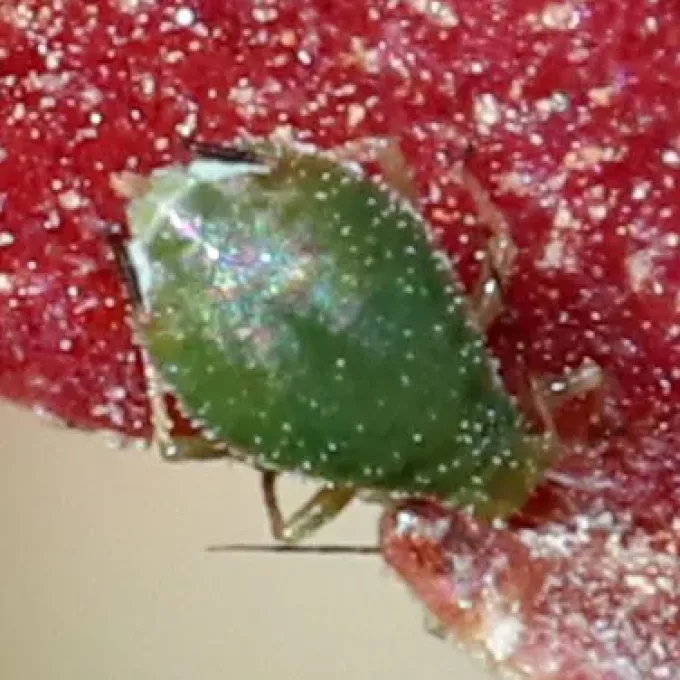
The chrysanthemum aphid (Coloradoa rufomaculata) is a tiny sap-sucking insect belonging to the family Aphididae. Adults typically measure about 1.5–2 mm in length, with body coloration ranging from pale green to yellowish-brown, often featuring distinct dark markings on the abdomen.
The life cycle of this species is closely tied to the host plant, the chrysanthemum. In greenhouse environments, the population can breed year-round through parthenogenesis, which allows for extremely rapid population growth in the absence of predators.
These insects prefer to hide on the undersides of leaves, along young shoots, and near developing flower buds. Their cryptic coloration makes them difficult to detect until the infestation is well-established.
Beyond the direct physical damage, this aphid species is a known vector for various plant viruses, which can lead to severe stunting and discoloration that is often mistaken for nutrient deficiencies.
They thrive in moderate temperatures and stable humidity levels, which are commonly found in commercial or home greenhouse conditions, making the chrysanthemum a prime target throughout the growing season.
What it damages
The primary host for this pest is the chrysanthemum. It is known to attack both garden-grown and greenhouse-cultivated varieties, significantly affecting plant health and aesthetic value.
Under heavy pressure, the infestation may spread to other closely related plant species within the Asteraceae family that are positioned in close proximity to the affected chrysanthemums.
The primary damage occurs through the continuous extraction of plant sap. This process saps the plant's vitality, slowing down growth and preventing the plant from reaching its full potential.
Damage to the plant includes leaf curling, distortion of new growth, and bud malformation. Flowers that do manage to open are often stunted or asymmetrical, ruining their marketability.
Aphids secrete honeydew, a sticky substance that promotes the growth of sooty mold. This black fungal growth inhibits photosynthesis and further weakens the plant's ability to recover.
Signs of infestation
The most common sign is the presence of curled or distorted leaves at the tips of shoots. Examining the interior of these curled leaves usually reveals clusters of the small insects.
Sticky residue on leaves and stems, known as honeydew, is a tell-tale sign that an aphid colony is actively feeding and has reached a significant population level.
The presence of ants roaming over the plant is a strong indicator of an aphid infestation. Ants actively protect aphids from predators to harvest the honeydew, effectively acting as guards for the colony.
General chlorosis or the yellowing of leaves, despite proper fertilization, often indicates that a colony of sap-sucking insects is hidden on the undersides of the foliage.
A sudden drop or failure of flower buds to open is a critical sign of a heavy infestation, indicating that the plant has lost too much sap to sustain the flowering process.
Control measures
Cultural control involves maintaining good sanitation, such as removing weeds and plant debris around the planting site, which can serve as reservoirs for the pest between seasons.
Mechanical control can be effective in the early stages; washing plants with a strong stream of water can physically dislodge colonies and reduce their population without using harsh chemicals.
Biological control includes the use of natural enemies such as lady beetles, lacewings, or parasitic wasps. These are highly effective in controlled environments like greenhouses.
Chemical control should be utilized when populations exceed the economic threshold. It is essential to use systemic insecticides that move through the plant tissues to reach the aphids feeding on the undersides of leaves.
Recommended management strategies:
- Regular monitoring of new shoot growth.
- Systemic insecticide application for persistent infestations.
- Rotating pesticide modes of action to prevent the development of insecticide resistance.
- Avoiding over-fertilization with nitrogen, which encourages succulent growth attractive to aphids.
Taxonomy
- Latin name
- Coloradoa rufomaculata
- Order
- Hemiptera (bugs, aphids, leafhoppers)
- Family
- Aphididae
- EPPO code
- COLDRU
Discussion
No discussions yet — be the first.