
Coloradoa aphid
Coloradoa
Description
How to identify
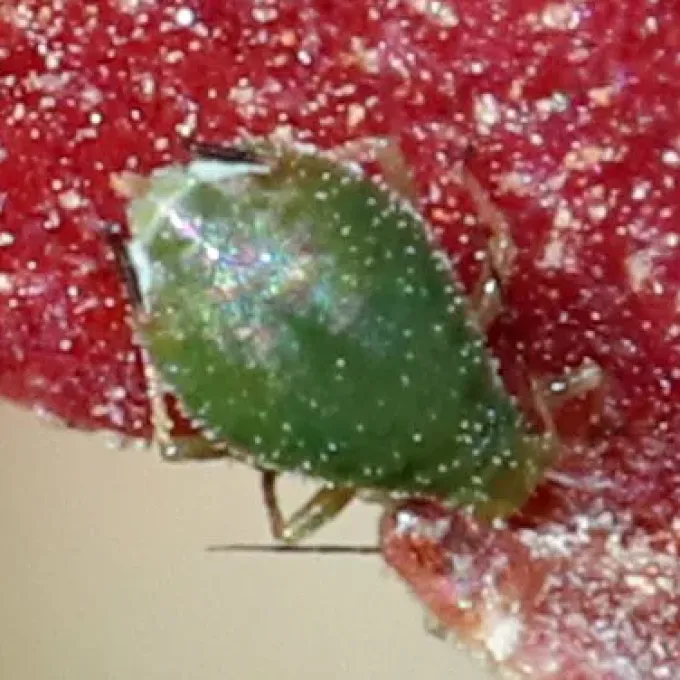
The genus Coloradoa belongs to the family Aphididae (true aphids) within the order Hemiptera. These are tiny insects, typically measuring between 1 and 2 mm in length.
Their coloration varies from light green to yellowish-brown, allowing them to blend seamlessly with the foliage of their host plants, making them difficult to spot initially.
They possess specialized mouthparts called a stylet, which they insert into plant tissues to extract sap directly from the phloem vessels.
The life cycle involves rapid asexual reproduction during the growing season, where females give birth to live nymphs, leading to exponential population growth.
As autumn approaches, the life cycle shifts to produce sexual individuals that mate and lay overwintering eggs on host plant debris or bark.
What it damages
These aphids are host-specific to plants in the family Asteraceae, including chrysanthemums and various wild composite flowers.
By congregating on tender stems and buds, they deprive the plant of vital nutrients, leading to stunted development and reduced vigor.
The physical damage is compounded by the loss of plant turgor pressure, causing leaves to curl, yellow, and eventually drop prematurely if the infestation is severe.
Beyond direct feeding damage, some species of aphids are known vectors for various plant viruses, which can cause systemic diseases that are harder to manage than the insects themselves.
Reduced flowering and poor aesthetic quality are major economic consequences for growers of ornamental plants when dealing with Coloradoa infestations.
Signs of infestation
Distorted, curled, or puckered leaves at the terminal ends of shoots are the most common early indicator of an aphid infestation.
The presence of sticky honeydew on leaf surfaces, often followed by the growth of black sooty mold, indicates that an aphid colony has been feeding for some time.
Close inspection of the underside of leaves usually reveals dense clusters of small, soft-bodied insects and shed white skins from molting nymphs.
An increased presence of ants on the plant is a significant secondary sign, as ants often protect aphids to harvest the sugary honeydew they secrete.
Developmental abnormalities in flower buds, such as malformation or failure to open properly, signify that the aphids are concentrating their feeding on the reproductive parts of the plant.
Control measures
Cultural control involves maintaining garden hygiene by removing crop residues and weeds that serve as alternative hosts or overwintering sites for the aphids.
Biological control relies on encouraging natural predators such as ladybirds, lacewing larvae, and parasitic wasps, which can significantly reduce aphid numbers without chemical intervention.
If chemical treatment is necessary, systemic insecticides are generally the most effective, as they are absorbed into the plant and target the aphids through their feeding activity.
Always ensure thorough coverage during application, focusing on the undersides of leaves and the growing points where the insects are most active.
Integrated Pest Management (IPM) practices, including regular monitoring and spot treatments, are recommended to maintain plant health while minimizing environmental impact.
Taxonomy
- Latin name
- Coloradoa
- Order
- Hemiptera (bugs, aphids, leafhoppers)
- Family
- Aphididae
- EPPO code
- COLDSP
Discussion
No discussions yet — be the first.