
Elm cockscomb aphid
Colopha ulmicola
Description
How to identify
The Elm cockscomb aphid (Colopha ulmicola) is a member of the family Aphididae, order Hemiptera. It is primarily recognized by its unique ability to induce the formation of distinct galls on elm leaves.
Morphologically, the aphid is small, but its ecological impact on its host plant is significant due to the redirection of plant resources toward gall creation.
The species has a complex life cycle, which involves host alternation between elm trees (the primary host) and the roots of certain grasses (secondary hosts).
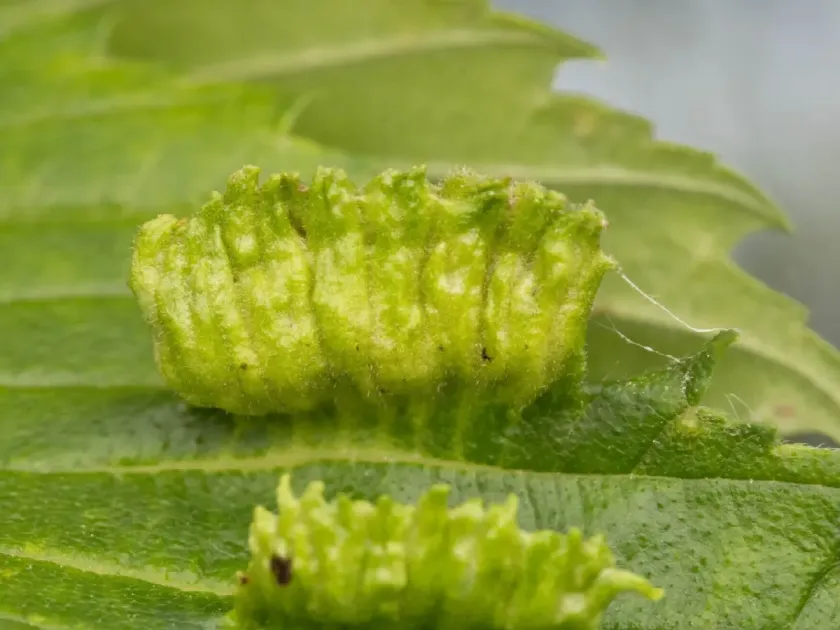
Identifying this pest in the field is usually done by spotting the characteristic galls rather than observing the small aphids themselves, which remain hidden inside the protective growths.
Understanding their taxonomy and life cycle is crucial for effective monitoring and scheduling management strategies throughout the growing season.
What it damages
The primary host for this species is the elm tree, particularly the American elm (Ulmus americana), where the aphids cause specific tissue deformities.
The damage manifests as "cockscomb-like" galls on the upper leaf surface, which interfere with normal transpiration and photosynthesis processes.
While the aesthetic damage is the most apparent, heavy infestations can weaken the tree, leading to premature leaf drop and stunted branch development.
In nursery settings, high populations of this aphid can significantly reduce the vigor and marketability of young elm trees due to the severe leaf distortion.
Secondary infections of leaves can occur through the gaps or weakened tissues associated with the galls, potentially introducing further stress to the plant.
When it appears
The lifecycle on elm trees begins in early spring, as overwintering eggs hatch and nymphs begin feeding on the developing buds and leaves.
During late spring, the feeding induces the growth of galls, inside which the aphid colony matures and reproduces rapidly.
In mid-summer, the galls harden and crack, allowing winged aphids to emerge and migrate to secondary herbaceous hosts where they spend the summer.
As autumn approaches, the aphids return to elm trees to lay overwintering eggs in the bark crevices, completing the annual cycle.
Control measures must be applied before the galls have fully developed to be effective, as the galls provide a physical barrier against chemical treatments.
Signs of infestation
The most distinctive sign of infestation is the presence of pale-green, crested galls on the upper leaf surfaces, resembling a rooster's comb.
Leaves hosting these galls often become curled or folded, making the tree canopy appear disheveled or unhealthy during the spring and summer months.
A small opening on the underside of the leaf, directly opposite the gall, acts as an exit point for waste material produced by the feeding colony.
An increased presence of ants on the bark can serve as a biological indicator, as ants often attend aphids to collect honeydew secretions.
Discoloration or yellowing of the foliage surrounding the galls is a common symptom of the sustained nutrient loss caused by the feeding aphids.
Control measures
Managing the Elm cockscomb aphid requires timely intervention, as the galls protect the insects once they are fully formed.
- Apply systemic insecticides early in the season when buds begin to swell.
- Encourage natural predators like lady beetles and lacewings in the garden.
- Remove and destroy infested leaves in small landscapes to reduce local populations.
- Provide proper irrigation and fertilization to help trees recover from feeding stress.
- Regular monitoring during the early spring to identify the need for chemical treatment.
Chemical applications are ineffective once the galls are established, making early detection the most important aspect of integrated pest management.
By combining cultural practices with proactive scouting, arborists can keep trees healthy and maintain their aesthetic value without over-relying on pesticides.
Taxonomy
- Latin name
- Colopha ulmicola
- Order
- Hemiptera (bugs, aphids, leafhoppers)
- Family
- Aphididae
- EPPO code
- CLPHUL
Discussion
No discussions yet — be the first.