
Colopha
Colopha
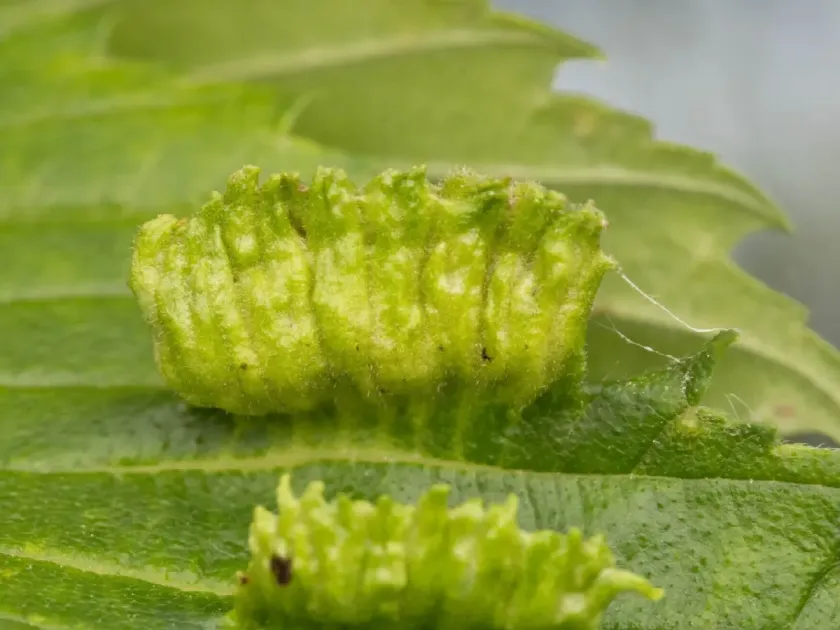
Description
How to identify
The Colopha genus belongs to the family Aphididae (true aphids), subfamily Eriosomatinae. These insects are characterized by their complex life cycles and specific host plant associations.
They are often cryptic, living within galls on woody primary hosts or colonizing the root systems of herbaceous plants as secondary hosts.
Adults and nymphs are typically protected by waxy, cotton-like secretions, which help them survive in soil environments and resist desiccation.
Taxonomically, identifying specific species within the Colopha genus requires detailed microscopic examination of antennal structure and body features.
Understanding their classification as root-feeding or gall-forming aphids is essential for implementing targeted pest management strategies in commercial farming.
What it damages
Colopha species are known to cause damage to cereals and certain deciduous trees, such as elm (Ulmus). Their feeding habits directly impact plant vitality.
By sucking sap from roots, they deprive the plant of water and nutrients, leading to stunted growth, yellowing, and decreased grain yield in infested fields.
The root damage caused by these aphids often serves as an entry point for secondary pathogens, such as soil-borne fungi, further weakening the crop.
In the case of primary host trees, the formation of galls reduces photosynthetic efficiency and can lead to branch deformities if the infestation is heavy.
The combined impact of sap-draining and secondary infection creates significant economic risks for growers, particularly in cereals where roots are sensitive.
When it appears
The life cycle typically begins in early spring, when nymphs emerge from eggs that overwintered on the bark of primary host trees.
During the growing season, alate (winged) forms migrate to secondary herbaceous hosts, where they establish colonies on the root systems.
Population growth is rapid during warm, moderately humid weather, which supports the intensive asexual reproduction typical of the genus.
As autumn approaches, physiological changes in the host plants and temperature drops trigger the migration of sexual forms back to primary hosts.
Monitoring for the presence of these aphids is crucial during migration windows to prevent the establishment of colonies in cereal fields.
Signs of infestation
The most reliable sign of a Colopha infestation is the presence of white, woolly, or waxy colonies on the root system of pulled-up plants.
Stunted development of crops in localized patches, often accompanied by leaf yellowing, suggests root-feeding activity rather than top-soil pests.
Increased ant activity around the base of plants is a strong indicator, as ants tend these aphids to feed on their sugary honeydew secretions.
On woody plants, look for leaf galls, which indicate that the population is actively breeding and completing its life cycle in the area.
- Patchy stunted growth in cereal crops.
- White waxy substance found on plant roots.
- Yellowing of leaves despite adequate irrigation.
- Presence of ants in the rhizosphere.
- Leaf gall formations on elm trees.
Control measures
Cultural practices, such as clean cultivation and deep plowing, are fundamental in disrupting the habitat and overwintering sites of the pest.
Crop rotation helps break the cycle of host migration, making it difficult for the population to find suitable secondary hosts year after year.
Chemical control involving systemic insecticides is often necessary when infestations are identified early in the growth stage of the crop.
Promoting the presence of natural predators, such as lady beetles and lacewings, can help keep aphid populations below economic damage thresholds.
Regular field scouting and diagnostic root inspections during the early part of the season allow for timely intervention before severe damage occurs.
Taxonomy
- Latin name
- Colopha
- Order
- Hemiptera (bugs, aphids, leafhoppers)
- Family
- Aphididae
- EPPO code
- CLPHSP
Discussion
No discussions yet — be the first.