
Cinaropsis
Cinaropsis
Description
How to identify
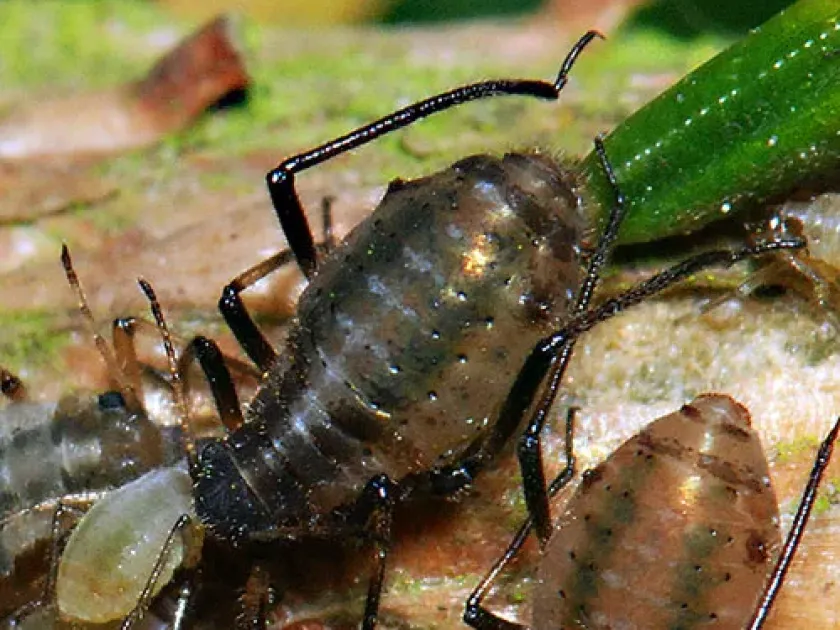
Cinaropsis (lat. Cinaropsis) belongs to the family Aphididae (true aphids). These are small insects, morphologically close to members of the genus Cinara, specialized in feeding on the sap of coniferous tree species.
The body of an adult is usually oval or elongated, ranging from 2 to 5 millimeters in length. The coloration varies from dark brown to almost black, and the body is often covered with a waxy bloom, giving the insect a matte finish.
The antennae are significantly shorter than the body and have a characteristic segment structure. The siphunculi (cornicles) on the abdomen are poorly developed, which is a key diagnostic feature for identifying the genus Cinaropsis in the field.
Unlike other aphid species, members of this group prefer a hidden lifestyle, congregating on the shoots or bark of trees. They often live in symbiosis with ants, which provide them with protection against natural predators.
The life cycle includes both parthenogenetic reproduction during the spring and summer periods, and a sexual process in the autumn, concluding with the laying of overwintering eggs in the crevices of coniferous tree bark.
What it damages
The primary hosts for Cinaropsis are members of the Coniferae family, predominantly spruce, pine, and fir. The damage manifests as a weakening of young seedlings and mature trees in forests and nurseries.
Signs of infestation
The presence of the pest is often detected by the abundant secretion of honeydew, on which sooty molds subsequently develop, forming a black film on the needles and branches.
Control measures
Chemical control involves the application of systemic insecticides during periods of mass hatching of larvae from eggs. Preparations based on neonicotinoids and organophosphorus compounds are effective, providing a prolonged protective effect.
Taxonomy
- Latin name
- Cinaropsis
- Order
- Hemiptera (bugs, aphids, leafhoppers)
- Family
- Aphididae
- EPPO code
- CINOSP
Discussion
No discussions yet — be the first.