
Green conifer aphid
Cinara viridescens
Description
How to identify
The green conifer aphid (Cinara viridescens) belongs to the order Hemiptera and the family Aphididae. It is a specialized pest that specifically targets coniferous trees.
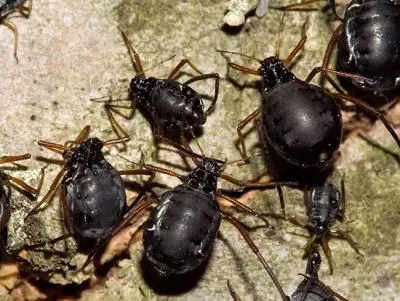
Adults typically measure 3–4 mm in length. Their bodies are oval and vary from pale green to yellowish-green, often with darker markings, allowing them to blend into the needle foliage.
They possess long, slender legs and prominent cornicles, which are typical of the Cinara genus. They are often found in clusters along the twigs or needles of the host plant.
The species completes its entire life cycle on the same host plant. It reproduces parthenogenetically during the spring and summer months, leading to rapid population growth.
Overwintering occurs in the egg stage, with eggs laid on the needles or bark, ensuring the survival of the species until the following spring.
What it damages
The primary host for Cinara viridescens is various species of spruce. The aphids feed by inserting their piercing-sucking mouthparts into the plant tissue.
Heavy feeding extracts significant amounts of nutrients, causing stunted growth and physical deformation of the young shoots.
A major indirect symptom is the secretion of honeydew, a sticky substance that promotes the growth of sooty mold, which blocks sunlight from the needles.
Affected trees may show signs of yellowing needles, premature needle drop, and general decline in vigor, making them susceptible to secondary infections.
In ornamental settings, the aesthetic value of the trees is severely diminished by the presence of black sooty mold and aphid debris.
When it appears
The lifecycle begins in early spring as temperatures rise. The peak activity period usually occurs during late spring and early summer when the trees are putting on new growth.
Activity may slow during extreme summer heat, but colonies can remain persistent throughout the growing season if environmental conditions are favorable.
Signs of infestation
The presence of ants patrolling the branches is a primary indicator of aphid activity. Ants aggressively protect the aphids in exchange for the honeydew they secrete.
Sticky residue on the foliage and the development of a black, dusty appearance (sooty mold) are clear signs that a colony is well-established.
Careful observation of the underside of needles and young shoots often reveals clusters of aphids nestled near the base of the needles.
Control measures
Effective management involves a combination of cultural practices and chemical control using systemic insecticides that are absorbed by the tree.
Treatment should be timed to hit the first generation of aphids in early spring before the population peaks and causes irreparable damage.
- Monitor conifers regularly, especially during the spring growth phase.
- Use systemic insecticides containing imidacloprid or similar active ingredients if infestation is severe.
- Encourage natural predators like ladybugs, lacewings, and hoverflies in the garden.
- Control ant colonies near the base of the trees to deny aphids their protective guardians.
- Apply horticultural oils in late winter to suppress overwintering eggs.
Taxonomy
- Latin name
- Cinara viridescens
- Order
- Hemiptera (bugs, aphids, leafhoppers)
- Family
- Aphididae
- EPPO code
- CINOVI
Discussion
No discussions yet — be the first.