
Pine aphid
Cinara strobi
Description
How to identify
The pine aphid (Cinara strobi) is a species of aphid belonging to the family Aphididae. It is a specific pest that primarily infests white pines and other five-needled pines.
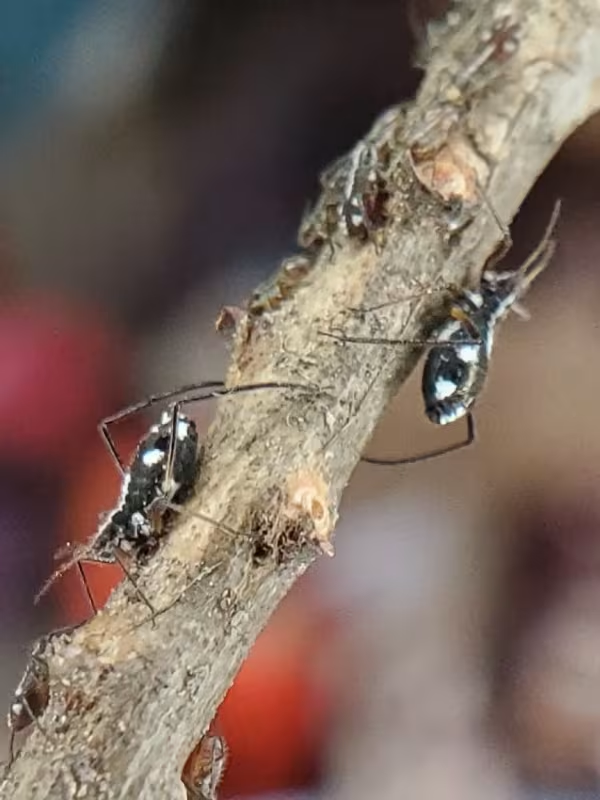
Adult aphids of this species are relatively large, typically measuring between 3 and 5 millimeters in length. Their bodies are dark brown to black, providing camouflage against the pine bark.
A key identification trait is the presence of longitudinal white wax stripes on their bodies. These wax deposits serve to protect the insects from environmental stress and moisture loss.
The life cycle involves an overwintering egg stage. Eggs are laid on needles or twigs in the autumn, remaining dormant throughout the winter until conditions become favorable in the spring.
During the growing season, they reproduce through parthenogenesis, allowing for rapid colonization of host trees during the spring and early summer months.
What it damages
The primary host for Cinara strobi is the eastern white pine (Pinus strobus). They feed by piercing the bark of young branches and stems to extract sap from the phloem.
Persistent feeding by large colonies saps the tree's vigor. This nutrient loss leads to stunted growth, yellowing needles, and a significant decline in the tree's overall health and aesthetic value.
The feeding sites often develop fungal infections, as the punctures provide entry points for pathogens. This can lead to localized bark necrosis and the eventual death of branches.
Nursery stock is particularly susceptible to damage. Infested young trees may show reduced growth rates and poor vitality, making them unsuitable for ornamental or timber use.
Furthermore, weakened trees are more prone to secondary attacks by wood-boring insects, such as bark beetles, which can ultimately lead to the death of the entire tree.
When it appears
The activity of these aphids begins in early spring, synchronized with the onset of new vegetative growth in pine trees. Eggs hatch as temperatures rise above freezing.
Population density typically peaks in late May and June. During this time, the aphids are most active on fresh, succulent shoots where sap flow is highest.
As summer progresses, the population may fluctuate depending on humidity and temperature levels. Hot, dry weather can sometimes suppress colony growth, but secondary outbreaks can occur.
By late summer and autumn, winged sexual forms are produced. These aphids mate, and the females lay overwintering eggs on the needles and bark to prepare for the following year.
Environmental conditions play a crucial role in population dynamics. A mild, wet spring often favors higher survival rates for early aphid generations.
Signs of infestation
The most noticeable sign of an infestation is the accumulation of honeydew, a sticky substance secreted by the aphids. This substance coats the needles and bark, creating a shiny appearance.
Sooty mold, a black fungus, frequently grows on the honeydew-covered surfaces. This dark layer hinders photosynthesis, giving the tree a sickly and dirty appearance.
Ant activity is a strong indicator of the presence of these aphids. Ants often tend to aphid colonies, aggressively protecting them from natural predators in exchange for honeydew.
Upon closer inspection of the branches, one can observe clusters of dark, aphid-like insects arranged in lines along the twigs, often hidden near the base of needle bundles.
Needle yellowing (chlorosis) and the premature dropping of older needles are common symptoms of heavy infestation, signaling that the tree is under severe physiological stress.
Control measures
Effective management requires early detection and integrated pest control tactics. Regular monitoring of trees during the spring season is essential for success.
- Apply systemic insecticides (such as neonicotinoids) to control populations during active feeding.
- Install sticky bands around the base of the trunk to disrupt ant traffic and reduce the protection ants provide to aphids.
- Encourage natural predators like ladybird beetles, lacewings, and hoverflies by minimizing broad-spectrum pesticide use.
- Prune and destroy heavily infested branches in smaller plantings to reduce the aphid population.
- Ensure proper tree irrigation and balanced fertilization to help the tree withstand potential stress caused by aphid feeding.
It is important to rotate the types of chemicals used to prevent the development of insecticide resistance within the aphid population.
If the infestation is limited, manual removal using a strong water jet can also be an effective way to dislodge aphids from branches without resorting to harsh chemical treatments.
Taxonomy
- Latin name
- Cinara strobi
- Order
- Hemiptera (bugs, aphids, leafhoppers)
- Family
- Aphididae
- EPPO code
- TODOST
Discussion
No discussions yet — be the first.