
Siberian spruce aphid
Cinara sibiricae
Description
How to identify
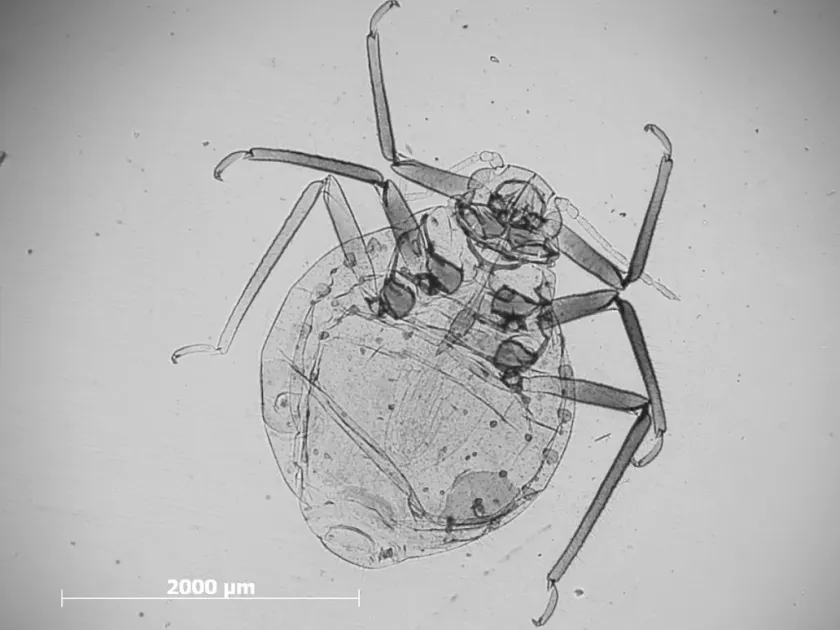
The Siberian spruce aphid (Cinara sibiricae) is a member of the Aphididae family, known for its ability to infest conifer trees. These insects are relatively large compared to other aphid species, often reaching 3–5 mm in length.
Their bodies are pear-shaped and usually dark brown or black, providing excellent camouflage against the bark of spruce trees. They belong to the subfamily Lachninae, which is characterized by long legs and often robust appearance.
The life cycle involves both winged and wingless forms, allowing the population to spread efficiently throughout a plantation or an orchard during the active season.
These aphids are highly adapted to cold climates, which explains their name and their successful presence in northern regions and mountainous areas.
Entomologists identify them by their specific habitat choice—mainly the stems and branches of spruce trees where they feed in dense, visible colonies.
What it damages
The Siberian spruce aphid primarily targets various spruce species (Picea). It is a sap-sucking insect that feeds on the nutrients flowing through the phloem of young branches.
By consuming large amounts of plant sap, the aphids cause significant stress to the host tree. This can result in stunted growth, especially in young saplings.
Beyond direct damage, the feeding process weakens the tree, making it more susceptible to secondary attacks by other pests or fungal infections.
In ornamental forestry, the presence of these aphids is a serious aesthetic problem, as the trees lose their vitality and exhibit symptoms of decline.
While mature trees can often withstand moderate infestations, young or newly planted trees may suffer severe damage if the pest population remains unchecked.
When it appears
The activity of the Siberian spruce aphid commences early in the spring, as soon as temperatures rise enough to initiate the hatching of overwintered eggs.
The peak population density usually occurs in late May and June. During this period, the aphids multiply rapidly through several generations.
Mid-summer heat and the presence of natural predators, such as ladybugs and lacewings, often lead to a natural decline in the aphid population.
During the autumn, the females lay eggs that are designed to survive the harsh winter conditions, remaining dormant until the next spring.
Monitoring should be most intense during the late spring months to catch the infestation before it becomes widespread across the tree canopy.
Signs of infestation
A classic sign of infestation is the presence of honeydew, a sticky substance excreted by the aphids, which covers the foliage and branches.
Sooty mold fungus frequently grows on this honeydew, giving the branches and needles an unsightly black, charred appearance.
The needles may turn yellow, lose their elasticity, and drop prematurely, leading to thinning of the tree's foliage, which is particularly noticeable in ornamental spruce.
Heavy ant activity on the tree is a very strong indicator of aphid presence, as ants protect the aphid colonies to harvest the honeydew.
Close inspection of the tree trunks and stems reveals clusters of dark-colored aphids that remain stationary while feeding, often blending perfectly with the tree's bark.
Control measures
Managing the Siberian spruce aphid requires a multifaceted approach to prevent damage and maintain the health of the host trees.
Mechanical control, such as using a strong blast of water to wash the colonies off the branches, can be effective on a small scale.
For more severe cases, systemic insecticides are the most reliable method for neutralizing the pest by affecting its food source.
- Application of imidacloprid or pyrethroid-based systemic sprays.
- Encouraging natural predators by planting beneficial flowers.
- Applying dormant oils in early spring to suppress egg hatching.
- Managing ant populations to deny aphids protection from natural enemies.
Consistent monitoring and early intervention are key to protecting your spruce trees and avoiding the use of excessive chemical treatments in the long run.
Taxonomy
- Latin name
- Cinara sibiricae
- Order
- Hemiptera (bugs, aphids, leafhoppers)
- Family
- Aphididae
- EPPO code
- CUPRSI
Discussion
No discussions yet — be the first.