
Pine aphid
Cinara piniphila
Description
How to identify
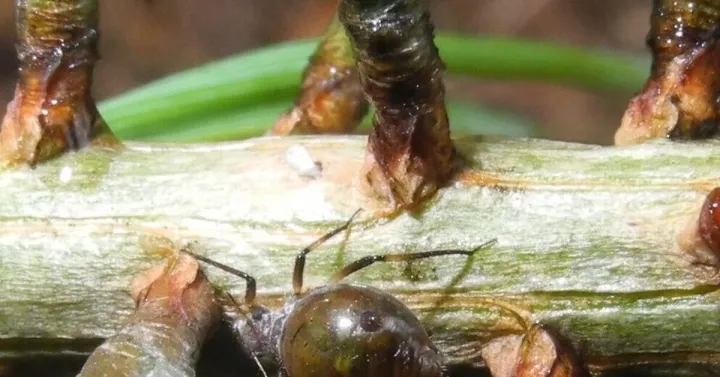
The pine aphid (Cinara piniphila) is a member of the Aphididae family, specialized in feeding on various pine species. These small insects are adapted to living on the bark and needles of conifers.
Adult aphids are typically brown or dark-colored, which provides excellent camouflage against the bark of the host tree. They are often found in clusters, anchored to the tree by their feeding mouthparts.
Their life cycle involves sexual and asexual stages. They overwinter as eggs, which are deposited in rows on needles or branches, ensuring the survival of the species during harsh winter conditions.
The species maintains a complex symbiotic relationship with ants. Ants protect the aphids from predators in exchange for the sugary honeydew the aphids excrete, which facilitates the spread of the colony.
Population density can fluctuate based on environmental factors, but these aphids are capable of rapid colonization of healthy or stressed trees when conditions are favorable.
What it damages
The primary hosts of Cinara piniphila are pine trees, specifically damaging young shoots and tender bark. By piercing plant tissues, they extract essential sap, weakening the tree's physiological state.
The continuous removal of sap leads to a decline in tree vigor, stunted growth, and a reduction in the overall vitality of the affected plants, making them look stressed and unhealthy.
Beyond direct feeding, aphids secrete honeydew, which serves as a substrate for sooty mold fungi. These fungi form a black layer on the needles, interfering with photosynthesis and gas exchange.
Severe infestations result in needle discoloration, premature shedding, and branch deformation. Young saplings are particularly vulnerable and may suffer significant mortality if left untreated.
Infested trees become more susceptible to secondary attacks from bark beetles and other wood-boring insects, which can lead to the long-term decline of the forest stand.
When it appears
The seasonal cycle begins in early spring when overwintering eggs hatch. This coincides with the bud break of the host pine, providing the aphids with fresh food sources.
Population peaks usually occur during late spring and early summer. During this period, the aphids undergo several generations, significantly increasing their numbers on the host tree.
Summer heat can occasionally reduce aphid activity, but in well-watered environments or shaded areas, the colonies can persist and cause damage throughout the entire growing season.
As autumn approaches, sexual individuals are produced. They mate and lay eggs, which will serve as the overwintering generation, marking the transition to the dormant phase.
Monitoring the infestation status throughout the spring and early summer is crucial for identifying the need for management interventions before population spikes become uncontrollable.
Signs of infestation
The presence of ants patrolling the branches of a pine tree is a primary field indicator of an aphid infestation, even if the aphids themselves are not immediately visible.
Direct observation reveals colonies of dark insects densely packed on thin twigs or at the base of needle clusters. They remain largely stationary while feeding.
The accumulation of sticky honeydew on branches is a clear symptom of infestation. Over time, this substance becomes coated with black sooty mold, which is easily spotted during inspection.
Affected trees display signs of yellowing needles, stunted shoot growth, and an overall loss of aesthetic appeal. In extreme cases, the branches may show signs of wilting or curling.
- Presence of ants (tending aphids).
- Dense clusters of aphids on twigs.
- Sticky honeydew residue on needles.
- Black sooty mold covering foliage.
- Yellowing and premature needle fall.
Control measures
Management strategies for the pine aphid include a combination of chemical control, biological interventions, and maintaining proper tree health through cultural practices.
Systemic insecticides are generally the most effective method for controlling infestations, as they are absorbed by the tree and make the sap toxic to the aphids.
Biological control, such as encouraging native predators like lady beetles and lacewings, can help suppress aphid populations in natural and semi-natural forest environments.
Ensuring trees are well-watered and properly fertilized helps boost their natural resistance to insect pests, making them less attractive and less vulnerable to aphid colonization.
Controlling ant populations around the base of the trees can also be an effective indirect measure, as it deprives the aphids of their primary defense mechanism against natural enemies.
Taxonomy
- Latin name
- Cinara piniphila
- Order
- Hemiptera (bugs, aphids, leafhoppers)
- Family
- Aphididae
- EPPO code
- CINAPP
Discussion
No discussions yet — be the first.