
Pine aphid
Cinara piniformosana
Description
How to identify
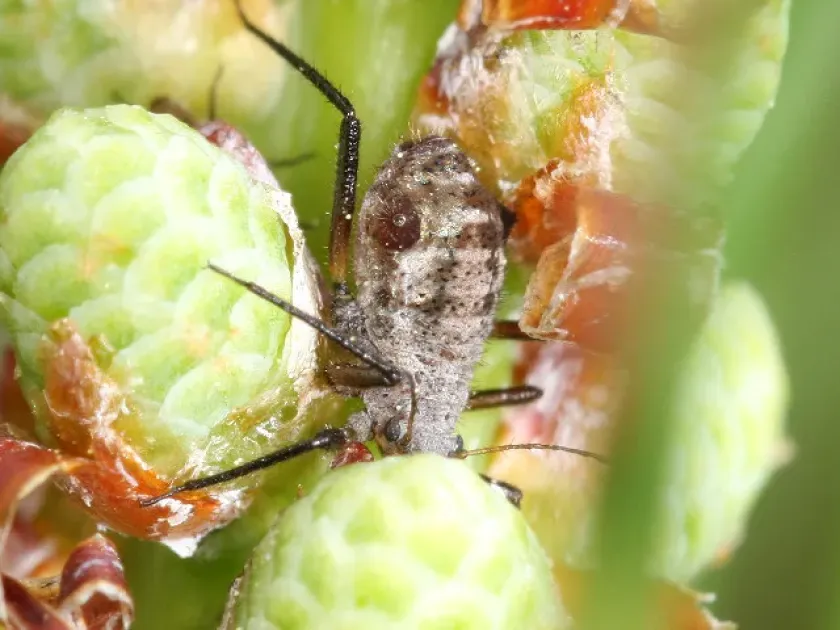
The Pine aphid (Cinara piniformosana) is a small insect belonging to the family Aphididae. It is a specialized pest that thrives on various species of pine, particularly the Scots pine, causing significant distress to young trees.
Adult aphids are typically dark brown or black, allowing them to blend in with the bark of the host tree. Their bodies are pear-shaped, measuring approximately 3–4 mm in length, often covered with a protective waxy bloom.
They possess well-developed siphunculi (cornicles) on their abdomen, which are used to secrete honeydew. This sugary substance is highly attractive to ants, which often protect the aphid colonies from natural predators.
The population consists of both winged and wingless forms. The winged adults are responsible for colonizing new host plants, facilitating the rapid spread of the infestation throughout a forest or nursery.
Field identification is achieved by examining the young shoots and the bark of thin twigs. Colonies often appear as dense clusters, frequently accompanied by an active ant presence, which is a telltale sign of their activity.
What it damages
The primary damage is caused by the aphid piercing and sucking sap from the phloem of young pine needles and shoots. This continuous extraction of nutrients leads to the weakening of the host tree.
The feeding process causes visible distortion and stunted growth of the affected shoots. The chemical composition of the aphid's saliva triggers abnormal development, leading to curled or twisted twig formations.
Severe infestations lead to premature yellowing and shedding of needles, which reduces the photosynthetic area of the tree. This decline in vitality makes the pine tree susceptible to other secondary forest pests.
The honeydew excreted by the aphids provides a substrate for the growth of sooty mold (black fungus). This mold covers the needles, further inhibiting photosynthesis and impairing the tree's overall respiration process.
In nursery settings, heavy aphid pressure can lead to the death of young seedlings. Even in established trees, the aesthetic and commercial value is significantly degraded due to sparse foliage and visible sooty deposits.
When it appears
The life cycle is closely synchronized with the phenology of the pine tree. The season begins in early spring, when eggs that overwintered on the bark hatch into nymphs as temperatures rise.
Throughout the spring and summer months, the population grows rapidly through parthenogenesis. Multiple generations are produced in a single season, allowing the numbers to reach a peak by late spring or early summer.
As autumn approaches, the aphid population produces sexual forms. These individuals mate and lay overwintering eggs on the pine needles or bark, ensuring the survival of the species through the winter months.
The rate of population growth is highly dependent on climate conditions. Dry, warm springs are particularly favorable for rapid reproduction and colonization, leading to more severe outbreaks.
Monitoring should be most intense during the spring and early summer when the colony density is highest and the impact on new growth is most critical for the tree's seasonal development.
Signs of infestation
The most immediate sign of infestation is the twisting and deformation of terminal shoots. These visible structural changes are a clear indicator that the tree is under sap-sucking pressure.
Needle yellowing and premature needle drop are classic symptoms of significant aphid colonization. If the tree loses its vibrant green color and looks sparse, it is often due to nutrient depletion caused by aphids.
A sticky, shiny residue on the needles and twigs indicates the presence of honeydew. This substance is a strong visual marker and is often associated with a high concentration of ants tending the aphid colony.
The presence of black, sooty mold patches on the foliage suggests that the infestation has been present for some time. This mold develops on the honeydew and covers the needles in a dark, dusty layer.
Closer inspection will reveal clusters of dark, pear-shaped insects lining the stems. Seeing these clusters, especially at the base of new needles, confirms the presence of Cinara piniformosana.
Control measures
For ornamental and nursery trees, the use of systemic insecticides is highly recommended. These products are absorbed into the plant vascular system, providing lasting protection against aphids feeding on the sap.
Contact insecticides can be utilized during early spring to manage the initial nymph populations before they form large, protected colonies. Regular monitoring is essential to time these applications correctly.
Ant management is a vital component of control. By using sticky bands or barriers on the tree trunk, you can prevent ants from protecting the aphids, which allows natural predators like ladybugs to reach and consume the colony.
Promoting biological control is an effective long-term strategy. Encouraging the presence of natural enemies such as lacewings and hoverflies can help suppress aphid populations in a more sustainable manner.
Maintaining tree vigor through proper irrigation, balanced fertilization, and avoiding drought stress is crucial. Healthy, well-nourished trees are significantly more resilient and less attractive to pest colonization.
Taxonomy
- Latin name
- Cinara piniformosana
- Order
- Hemiptera (bugs, aphids, leafhoppers)
- Family
- Aphididae
- EPPO code
- CINAPN
Discussion
No discussions yet — be the first.