
Spruce shoot aphid
Cinara pilicornis
Description
How to identify
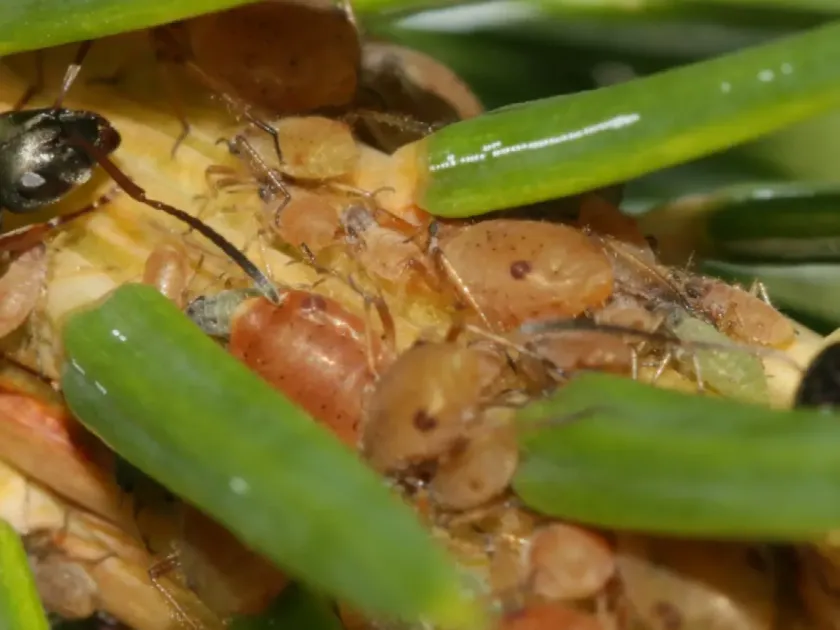
The spruce shoot aphid (Cinara pilicornis) belongs to the family Aphididae. It is a relatively large aphid, with adults reaching approximately 3-4 mm in length, often appearing brownish or yellowish-brown in color.
The body is notably covered in fine, long hairs, which gives the species its specific appearance. These aphids are frequently found in small to medium colonies on the needles and tender shoots of spruce trees.
Like many species in the Cinara genus, they possess a relatively robust body structure compared to smaller garden aphids. They are specialized feeders adapted to the chemistry of coniferous sap.
Life cycle overwintering occurs in the egg stage. Eggs are laid in rows along the needles of the previous year's growth, remaining dormant until the favorable temperatures of early spring.
The species reproduces via parthenogenesis during the spring and summer months, allowing populations to escalate rapidly when environmental conditions are optimal for spruce growth.
What it damages
The primary host is the Norway spruce (Picea abies), though other Picea species can also be infested. The aphid is a notable pest in both forest nurseries and landscape planting.
Aphids feed by inserting their stylets into the needle tissue to extract plant sap. This process removes vital nutrients and water from the tree, leading to physiological stress.
A major indirect impact is the production of honeydew. This sticky substance encourages the growth of sooty mold (Capnodium spp.), which blocks sunlight from reaching the needles.
Heavy infestations result in needle yellowing, premature needle drop, and a significant loss of aesthetic value, making infested trees appear stunted or sickly.
In young trees, repeated feeding can cause localized dieback of shoots and growth retardation, potentially affecting the tree's form and overall development in its critical years.
When it appears
Development begins in early spring, synchronized with the bud break of the spruce tree. The overwintered eggs hatch into fundatrices, which initiate the first spring generation.
Peak populations usually occur during late spring and early summer, specifically during the period of rapid shoot elongation when sap flow is at its maximum intensity.
Mid-summer heat can lead to a decline in aphid numbers, though weather patterns significantly influence their survival. Extended dry periods might temporarily boost population growth if natural enemies are absent.
By autumn, sexual morphs appear and mate to lay the overwintering eggs. This ensures the species persists through the dormant winter period until the next favorable season.
Environmental factors like heavy rainfall or cold snaps in spring are natural population regulators, often washing colonies off the needles and reducing overall damage.
Signs of infestation
The most visible indicator is the presence of sticky honeydew on the needles, often accompanied by the development of black, soot-like fungal growth on the tree surface.
Heavy ant activity on the tree trunk and branches is a classic sign of aphid infestation, as ants tend the aphids to collect the sugary honeydew excreted by the insects.
Needle discoloration, ranging from light yellowing to brown, followed by premature leaf drop when the branch is shaken, serves as a late-stage symptom of infestation.
Growth distortion of new spring shoots indicates that the aphid feeding is interfering with the hormonal balance and nutrient supply of the host tree.
- Sticky residue on needles and stems.
- Black sooty mold covering the foliage.
- Increased ant activity near the canopy.
- Needle shed after physical disturbance.
- Stunted or deformed new growth.
Control measures
Effective management requires the application of systemic insecticides that are taken up by the tree, providing residual protection against aphids feeding on the needles.
Timing is critical: applications should be performed early in the season when the first nymphs appear, preventing the population from reaching levels that trigger significant honeydew production.
Chemical control options often include systemic products containing neonicotinoids or similar compounds, applied as foliar sprays to ensure complete coverage of the canopy.
Integrated pest management suggests encouraging natural predators like lady beetles, lacewings, and hoverflies, which are often highly effective at naturally controlling aphid outbreaks.
Proper horticultural care, including adequate watering and avoiding excessive nitrogen fertilization, helps maintain tree vigor and reduces susceptibility to aphid colonization.
Taxonomy
- Latin name
- Cinara pilicornis
- Order
- Hemiptera (bugs, aphids, leafhoppers)
- Family
- Aphididae
- EPPO code
- CINOPL
Discussion
No discussions yet — be the first.