
Fir aphid
Cinara pichtae
Description
How to identify
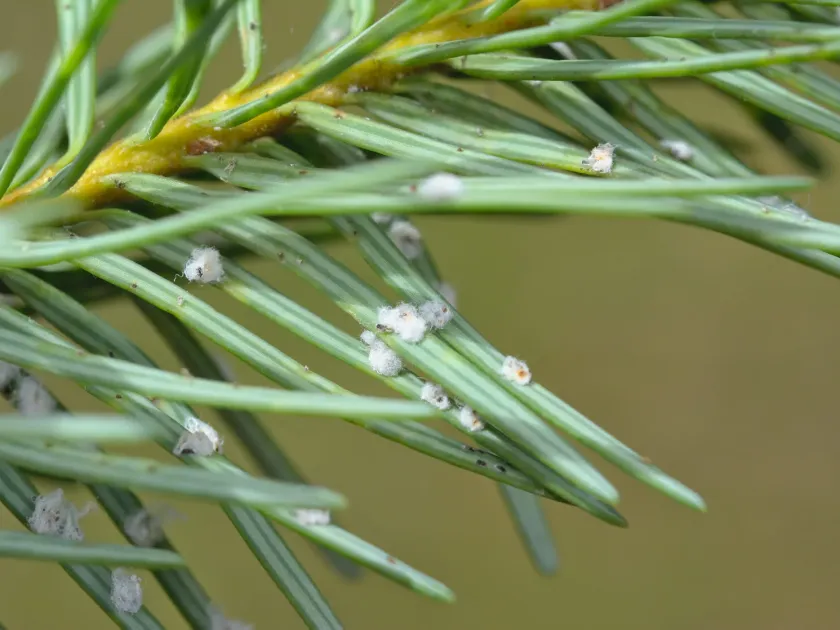
The fir aphid (Cinara pichtae) is a member of the order Hemiptera and the family Aphididae. It is a specialized pest that feeds exclusively on the sap of fir trees (Abies), often found in nurseries and ornamental landscapes.
Adult aphids are relatively large for their kind, typically displaying dark brown or black bodies. They are often covered with a fine waxy substance, which acts as a protective layer against environmental stress.
The life cycle involves overwintering as eggs, which are deposited by females in bark crevices or at the base of needles during the autumn months. These eggs remain dormant until the following spring.
As temperatures rise, larvae emerge and begin feeding on the young shoots of the host tree. They develop quickly through several instars, establishing dense colonies that can persist throughout the growing season.
The reproduction is highly efficient, allowing the population to reach peak numbers during mid-summer. Multiple overlapping generations can occur during a single season under favorable climate conditions.
What it damages
The primary damage is caused to young fir trees, as aphids suck plant sap, leading to stunted growth. The removal of nutrients weakens the plant, making it prone to other stressors.
Visible symptoms include the distortion and curling of young shoots. Heavy infestations cause needles to discolor, wither, and drop prematurely, significantly reducing the tree's aesthetic value.
The production of honeydew by the aphids promotes the growth of sooty mold, a black fungus that covers needles and bark. This blocks sunlight and hinders photosynthesis, further debilitating the plant.
Severely weakened trees show increased susceptibility to drought, frost, and secondary pests such as bark beetles. If left unchecked, the damage can lead to the decline of entire young tree stands.
In high-density nurseries, the economic impact is significant due to the loss of marketable size and the overall reduction in tree health and growth vigor.
Signs of infestation
The presence of sticky honeydew on the needles and branches is the most noticeable early sign of an infestation. This substance often attracts ants, which aggressively defend the aphids.
Closely examining the bark and young shoots reveals the aphid colonies themselves. They are often clustered tightly in groups, matching the color of the tree bark, which can make them difficult to spot initially.
The accumulation of sooty mold on the foliage creates a blackened, unattractive appearance. This growth is a direct result of the sugar-rich waste left behind by the feeding aphids.
Tree distress is manifested by yellowing foliage and poor annual shoot development. In severe cases, the needles lose their lush, green look and may turn brown before falling.
Ant activity on the stems is a reliable indicator that an aphid colony is present. The ants travel up and down the trunk to collect honeydew, acting as a clear marker for the hidden pest population.
Control measures
Integrated Pest Management (IPM) is essential for controlling Cinara pichtae. Regular scouting of fir trees during the early spring allows for the detection of initial populations before they explode.
Management of ant populations is crucial, as ants protect aphids from natural predators. Using sticky barriers on trunks can prevent ants from accessing the colonies, leaving the aphids exposed.
Chemical control involving systemic insecticides is effective, as these chemicals are transported through the vascular system of the tree to the feeding sites. Application timing is critical for maximum efficacy.
Encouraging natural predators such as ladybugs, lacewings, and hoverflies is an effective long-term strategy. Maintaining a diverse environment around the plantation helps keep the aphid numbers below economic thresholds.
- Apply systemic insecticides during the peak of larval emergence.
- Use sticky traps or bands to prevent ants from tending to aphid colonies.
- Prune and remove heavily infested branches to reduce local population pressure.
- Improve tree health through proper irrigation and fertilization practices.
Taxonomy
- Latin name
- Cinara pichtae
- Order
- Hemiptera (bugs, aphids, leafhoppers)
- Family
- Aphididae
- EPPO code
- CINAPC
Discussion
No discussions yet — be the first.