
Spruce aphid
Cinara piceae
Description
How to identify
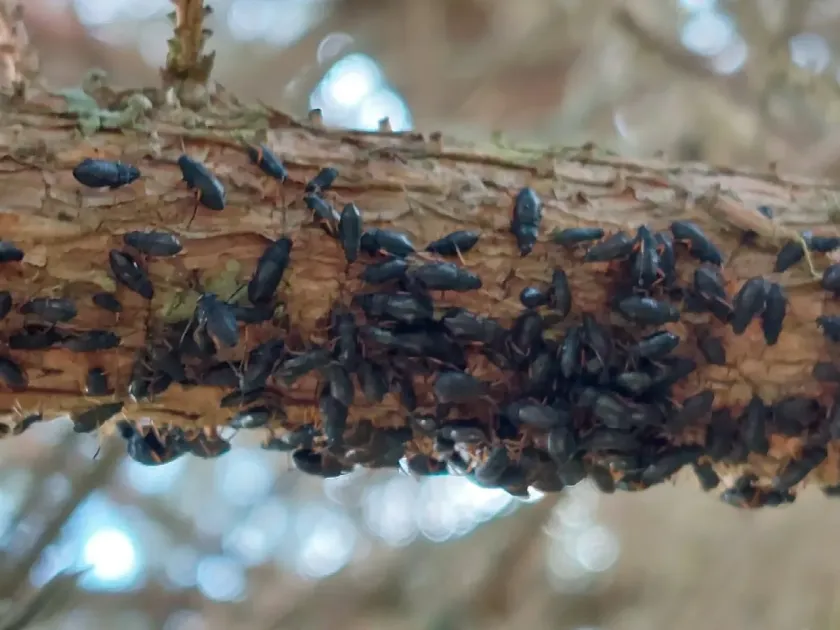
The spruce aphid, Cinara piceae, belongs to the family Aphididae. These are relatively large insects, with adults measuring between 3 and 4 mm in length. They are easily distinguishable by their dark brown to black coloration.
These aphids are characterized by their sedentary behavior, forming dense colonies on the bark of twigs and small branches. They possess piercing-sucking mouthparts specialized for extracting sap from the host plant.
The lifecycle is complex, involving both wingless and winged generations. Winged adults are primarily responsible for the dispersal of the population to healthy trees during the active growing season.
They reproduce both parthenogenetically and sexually. The winter is typically passed in the egg stage, with eggs firmly attached to the needles or the bark of young spruce branches.
As a host-specific pest, Cinara piceae primarily targets spruce species. Their ability to remain camouflaged on the bark makes them difficult to spot in the early stages of infestation.
What it damages
The primary host plants are various spruce species (Picea spp.). The aphids feed by inserting their stylets into the bark of young shoots, drawing out essential nutrients and sap from the tree.
Feeding causes severe physiological stress to the tree. Significant nutrient loss leads to weakened growth, yellowing of the needles, and, in cases of severe infestation, premature needle drop.
A major side effect of aphid infestation is the production of honeydew. This sticky substance covers the needles and encourages the growth of sooty mold, which blocks sunlight and hinders photosynthesis.
If left untreated, young trees may experience significant stunting or even dieback. Older trees lose their aesthetic appeal as the needles turn dull, blacken, or drop prematurely.
Furthermore, the damage caused by aphids makes the tree more susceptible to secondary infections from fungi and other opportunistic pests that exploit the weakened condition of the plant.
When it appears
Activity typically begins in early spring, as temperatures rise and the eggs start to hatch. The first generations are composed of wingless females that begin feeding immediately.
The peak of population density generally occurs in late spring and early summer (May and June). Warm and dry weather conditions during these months are ideal for rapid aphid reproduction.
Multiple generations occur throughout the summer. The population dynamics are heavily influenced by the presence of natural predators and the environmental conditions of the site.
As autumn approaches, the production of winged sexual forms begins. These individuals mate and lay the overwintering eggs that ensure the survival of the species until the following spring.
While visible activity is most pronounced during the warm season, the presence of the pest is essentially continuous due to the overwintering eggs located on the branches.
Signs of infestation
The most direct sign of infestation is the presence of dense, dark colonies of aphids on the branches. They are often found clustered near the base of needles or on young twigs.
Sticky honeydew deposits on the foliage are a hallmark of aphid presence. This substance attracts dust and supports the growth of black, unsightly sooty mold fungus on the surface of needles.
An increased presence of ants on the tree is a strong indicator of an aphid colony. Ants actively protect the aphids and harvest the honeydew, effectively acting as guards for the colony.
Visible yellowing, browning, or a general loss of color in the needles indicates that the tree is suffering from the aphids' feeding activity and requires urgent attention.
Needle shedding, especially in areas where colonies are concentrated, is a sign that the infestation has reached a critical stage and could threaten the overall health of the tree.
Control measures
Effective control involves the use of systemic insecticides, such as those containing imidacloprid or acetamiprid. These are absorbed by the tree and kill aphids upon ingestion of the sap.
Biological control is highly recommended for integrated pest management. Encouraging natural predators like lady beetles, lacewings, and hoverflies can help suppress aphid populations significantly.
- Regular monitoring of spruce trees from April onwards.
- High-pressure water sprays to dislodge aphid colonies from branches.
- Pruning and destroying heavily infested branches to reduce the population.
- Providing adequate water and soil nutrition to help trees withstand infestation stress.
Chemical treatments should be timed correctly, targeting the early phases of colonization. Applying insecticides early in the season prevents the buildup of massive populations.
Always rotate insecticide products with different modes of action to prevent the development of pesticide resistance in the aphid population, ensuring long-term effectiveness.
Taxonomy
- Latin name
- Cinara piceae
- Order
- Hemiptera (bugs, aphids, leafhoppers)
- Family
- Aphididae
- EPPO code
- CINOPC
Discussion
No discussions yet — be the first.