
Larch aphid
Cinara laricicola
Description
How to identify
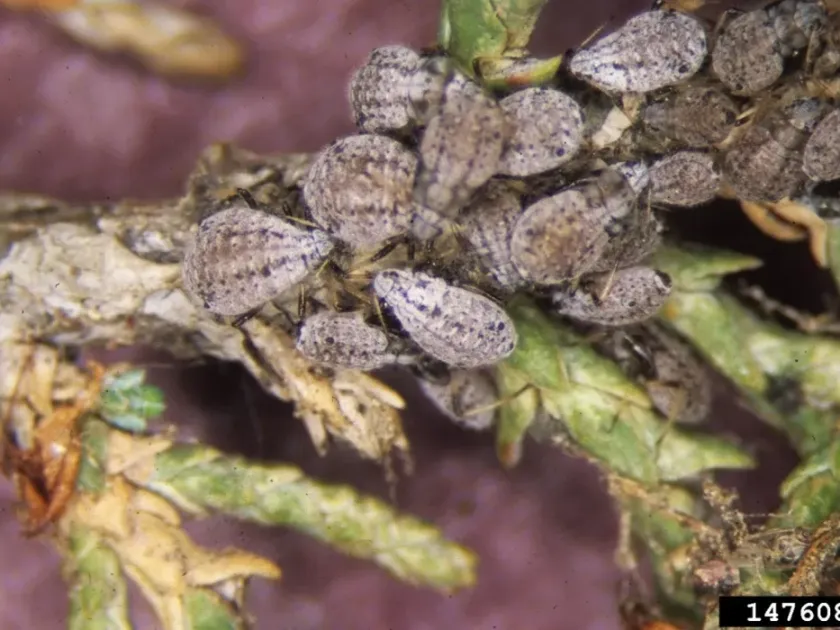
The larch aphid (Cinara laricicola) is a member of the Aphididae family, specializing in feeding on Larix species. These insects are often found in clusters on the stems and younger branches of the host tree.
The adult aphids typically have a dark brown or black body, which provides excellent camouflage against the bark of the larch. They are equipped with piercing-sucking mouthparts designed to extract nutrient-rich sap.
The population consists of both winged and wingless morphs. Winged individuals play a crucial role in colonization, allowing the species to migrate between trees when host quality declines.
The life cycle involves overwintering eggs, which are deposited in bark crevices or at the base of needles. These eggs are highly resistant to cold, allowing the species to persist through harsh winters.
In spring, nymphs hatch from these eggs and begin feeding immediately. They reproduce parthenogenetically, which allows for rapid population growth and the formation of large, dense colonies within a short period.
What it damages
The primary host is the larch tree. The aphids concentrate on young, tender shoots, which provide easy access to the plant's vascular system, causing significant physiological stress to the tree.
Damage is primarily caused by the massive removal of phloem sap. This leads to weakened growth, reduced vigor, and general decline of the affected branches or the entire tree if the infestation is severe.
Aphid feeding can cause the deformation of shoots. Furthermore, their sugary excretions, known as honeydew, coat the needles and bark, creating a sticky environment that facilitates the growth of sooty mold fungi.
Sooty mold growth blocks the stomata on the needles, severely limiting the tree's ability to perform photosynthesis. This results in yellowing needles and premature needle drop, significantly affecting the aesthetic value.
Severe infestations reduce the tree's ability to resist secondary pests and environmental stressors, which can ultimately lead to the death of small saplings or parts of the crown in mature trees.
When it appears
Activity typically begins in early spring as temperatures rise above 10°C. The hatching of nymphs is synchronized with the bud break of the larch, providing them with a fresh food source immediately.
The population density peaks during late spring and early summer, when environmental conditions are ideal for rapid reproduction. During this time, colonies can expand significantly across the entire tree.
Multiple generations can occur throughout the growing season. If summer temperatures remain moderate, the aphids can continue to feed and reproduce, extending the window of damage until autumn.
As autumn approaches, the production of sexual forms occurs. These individuals mate and lay the overwintering eggs that will remain dormant until the cycle restarts the following spring.
Effective management requires scouting to begin as soon as the buds start to open. Early detection is essential to prevent the aphid numbers from reaching levels that are difficult to control.
Signs of infestation
The most common sign of infestation is the presence of sticky honeydew on the needles. This substance is often shiny and can be detected by touching the foliage or noticing ants on the tree.
The development of a black, powdery coating known as sooty mold on the branches and needles is a clear indicator of a long-standing aphid colony presence.
The presence of ants is a strong indicator of aphid activity. Ants visit the aphids to feed on their honeydew and often protect the colonies from natural predators, making the infestation more persistent.
Yellowing, stunted, or distorted growth of the current year's needles is often observed on heavily infested branches. In severe cases, the needles may wither and drop prematurely.
Upon closer inspection, particularly with a hand lens, clusters of dark-colored aphids can be seen arranged along the stems, often grouped in rows or dense patches.
Control measures
For small trees, mechanical removal is effective. A strong stream of water can dislodge the aphids from the foliage, significantly reducing the population density without the need for chemicals.
Chemical control involving systemic insecticides is effective for larger infestations. Chemicals like acetamiprid or imidacloprid can be applied to the tree, where they are absorbed and kill the aphids during feeding.
Adding a surfactant to the spray mixture is recommended. Since larch needles have a waxy cuticle, surfactants ensure better coverage and penetration of the insecticide into the aphid colonies.
It is important to encourage natural predators, such as lady beetles, lacewings, and syrphid flies, which can provide effective biological control if insecticide use is kept to a minimum.
Good cultural practices, such as proper irrigation and fertilization, maintain tree health. A healthy tree is significantly more resilient to aphid attacks and can recover faster from damage.
Taxonomy
- Latin name
- Cinara laricicola
- Order
- Hemiptera (bugs, aphids, leafhoppers)
- Family
- Aphididae
- EPPO code
- CINALC
Discussion
No discussions yet — be the first.