
Juniper aphid
Cinara juniperivora
Description
How to identify
The juniper aphid (Cinara juniperivora) is a member of the Aphididae family, belonging to the order Hemiptera. These small, sap-sucking insects are specialized pests that specifically target juniper species.
Adult aphids are typically dark brown or black, allowing them to blend in with the dark bark and foliage of their host plants. They possess piercing-sucking mouthparts designed to tap into the phloem.
The life cycle involves multiple generations per year, often reproducing through parthenogenesis during the warmer months, which allows for rapid population explosions.
Juvenile aphids, or nymphs, resemble adults but are smaller in size. They are often found in tight clusters on young, succulent shoots where the plant's sap is most nutrient-rich.
These aphids share a mutualistic relationship with ants, which feed on the sugary honeydew excreted by the aphids while actively protecting them from potential predators like ladybugs.
What it damages
While juniper (Juniperus) is the primary host, this aphid species can also affect other members of the Cupressaceae family, including arborvitae and various false cypresses.
By extracting plant fluids from young shoots, the aphids rob the tree of essential nutrients, leading to physiological stress and reduced growth rates during the active season.
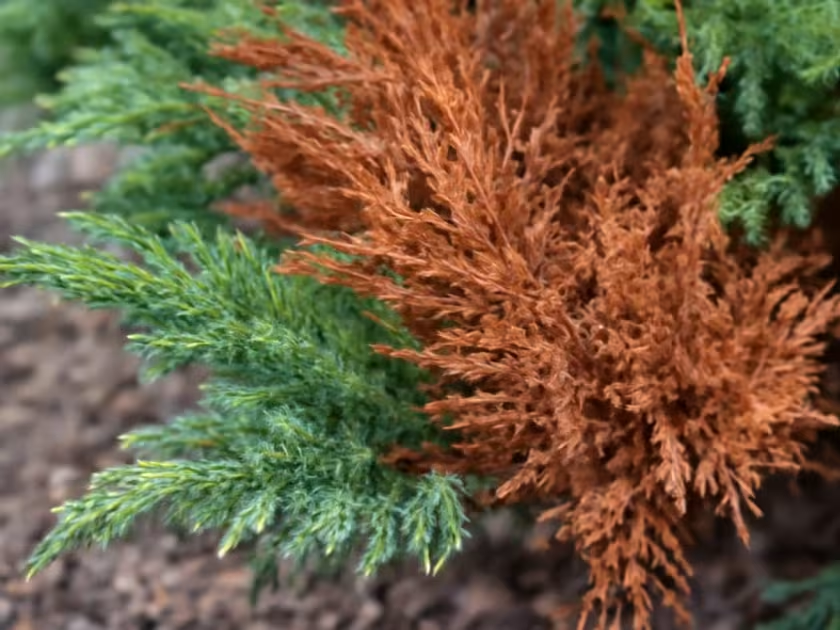
Heavy infestations cause the needles to turn yellow, wither, and eventually drop prematurely, resulting in sparse, unattractive foliage and stunted development of new branches.
The honeydew residue left behind by the aphids serves as a substrate for sooty mold, a black fungus that covers the plant surfaces and blocks essential light for photosynthesis.
Persistent infestations weaken the plant's natural defenses, making it more susceptible to environmental stress, winter damage, or secondary fungal infections.
When it appears
The activity of the juniper aphid begins in early spring, synchronized with the warming of temperatures and the start of new vegetative growth on the host trees.
Populations tend to reach their peak in late spring and early summer, taking advantage of the abundance of tender new shoots that appear during this growth phase.
Multiple generations occur throughout the summer, ensuring the pest remains a constant threat to the health and aesthetic value of ornamental juniper plantings.
Winged forms of the aphid are produced during the season to facilitate migration to adjacent healthy plants, effectively spreading the infestation across the garden or landscape.
As autumn approaches and temperatures drop, the aphids produce overwintering eggs, which are carefully deposited in protected areas such as needle bases or bark crevices.
Signs of infestation
Visible clusters of dark-colored aphids on new growth are the most obvious sign, particularly if these clusters are surrounded by foraging ants.
A noticeable yellowing or browning of the foliage, especially on young branch tips, is a clear indicator that the plant is under stress from feeding insects.
The presence of a sticky, glistening substance (honeydew) on the needles and branches, often turning black due to sooty mold, is a diagnostic symptom of an active infestation.
Distorted, twisted, or stunted shoots can indicate heavy aphid feeding that occurred while the branch tissue was still developing and soft.
Finding small, white, translucent cast skins (exuviae) left behind by nymphs during their molting process is a definitive sign of an active, growing aphid colony.
Control measures
Regular monitoring of juniper plantings is essential, focusing on the undersides of branches and tips where aphids prefer to congregate during the spring months.
For minor infestations, mechanical control such as a strong stream of water can physically dislodge aphids from the needles, effectively managing the population without chemicals.
Systemic insecticides are highly effective for established colonies, as the plant absorbs the chemical, making the sap toxic to the aphids for an extended period.
Implementing ant control measures can indirectly reduce aphid populations by removing their natural protectors, allowing predators to reach the colonies more easily.
- Encouraging natural predators such as lady beetles and lacewings.
- Using horticultural oils to smother overwintering eggs in early spring.
- Pruning and destroying severely infested branch segments to limit spread.
Taxonomy
- Latin name
- Cinara juniperivora
- Order
- Hemiptera (bugs, aphids, leafhoppers)
- Family
- Aphididae
- EPPO code
- CUPRJV
Discussion
No discussions yet — be the first.