
Juniper aphid
Cinara juniperensis
Description
How to identify
The juniper aphid (Cinara juniperensis) belongs to the order Hemiptera and the family Aphididae. It is a specialized pest that specifically targets coniferous species.
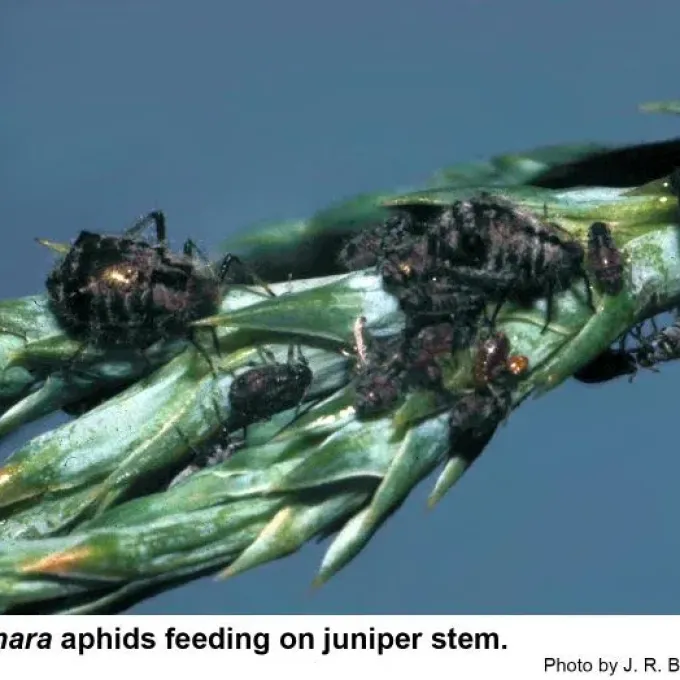
The insect has a brownish body, which provides excellent camouflage against the bark of juniper trees. While most adults are wingless, winged individuals appear during migration periods to colonize new plants.
Their life cycle is closely synchronized with seasonal temperature changes. They overwinter as eggs, typically laid in clusters near the base of needles or on young shoots during late autumn.
Reproduction is primarily parthenogenetic, allowing populations to expand rapidly during the growing season. Sexual forms appear only at the end of the year to produce winter eggs.
These aphids frequently maintain a mutualistic relationship with ants, which protect the aphid colonies from predators in exchange for the sugary honeydew they excrete.
What it damages
The primary hosts for this pest include species of the genus Juniperus, such as common and savin junipers. Occasionally, it may infest other members of the Cupressaceae family.
The aphid feeds by inserting its mouthparts into the young shoots and needles, extracting essential sap. This constant drainage of fluids weakens the overall vigor of the plant.
Feeding damage causes growth retardation, branch deformation, and, in severe cases, the necrosis of young shoots. The plant quickly loses its ornamental value and density.
The honeydew excreted by the aphids creates a sticky substrate on the foliage, which promotes the growth of sooty mold. This black fungus blocks sunlight and hinders photosynthesis.
Severe infestations can lead to significant needle drop and may ultimately jeopardize the survival of younger or stressed juniper shrubs.
When it appears
Nymphs emerge from overwintering eggs in early spring, precisely when temperatures rise and sap flow begins in the host plants.
Population levels usually peak during late spring and early summer, as the combination of warm weather and new growth provides an optimal environment for reproduction.
Multiple generations occur throughout the growing season, ensuring that the infestation can persist from spring until early autumn if left unchecked.
As temperatures drop in the fall, the population shifts to the production of sexual forms and the deposition of winter-hardy eggs.
Environmental factors, particularly mild and humid springs, can lead to explosive population growth, necessitating early detection and intervention.
Signs of infestation
The presence of a sticky, shiny film (honeydew) on the needles and bark is the most common early indicator of an aphid infestation.
Increased ant activity on the juniper branches is a strong warning sign, as ants actively farm the aphids for their sweet secretions.
Discoloration of the foliage, ranging from yellowing to browning, indicates that the plant is suffering from chronic sap loss caused by feeding.
Closer inspection of the twigs or needle bases often reveals clusters of brownish aphids that remain stationary while feeding.
The development of a black, powdery coating (sooty mold) on the needles is a telltale sign of an established colony that has been active for some time.
Control measures
Systemic insecticides are generally the most effective method for control, as they are absorbed by the plant and kill the aphids upon feeding.
Contact sprays may be utilized during the peak activity period to rapidly reduce high populations and prevent immediate damage to the shoots.
Regular visual inspections of your juniper specimens are essential to catch infestations before they cause visible browning or significant needle drop.
Managing local ant populations is a highly effective preventative strategy, as it disrupts the protective mechanism that allows aphid colonies to thrive.
Biological control, such as encouraging native predators like lady beetles or lacewings, is a viable strategy for maintaining a healthy balance in a private garden.
Taxonomy
- Latin name
- Cinara juniperensis
- Order
- Hemiptera (bugs, aphids, leafhoppers)
- Family
- Aphididae
- EPPO code
- CUPRJP
Discussion
No discussions yet — be the first.