
Cypress aphid
Cinara fresai
Description
How to identify
The Cypress aphid (Cinara fresai) is a member of the order Hemiptera and the family Aphididae. It is a specialized pest that feeds exclusively on various species of conifers, particularly within the Cupressaceae family.
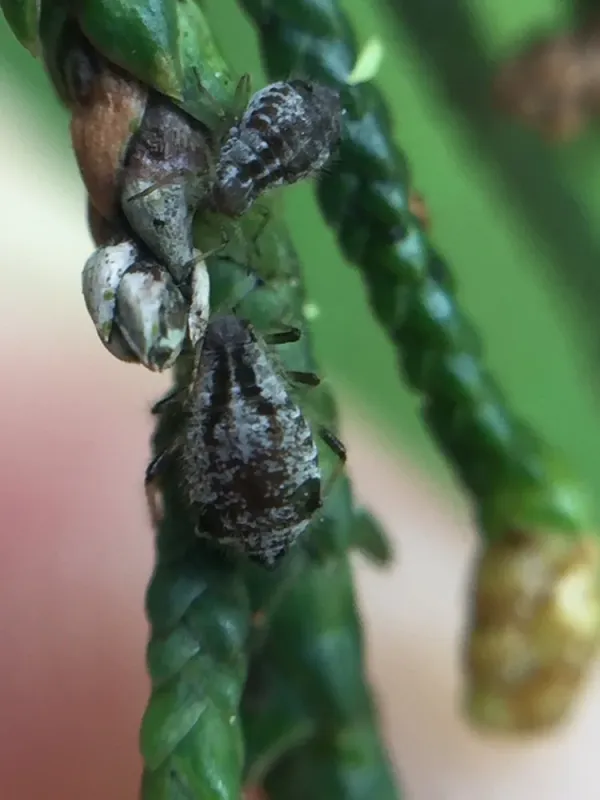
Adult aphids are typically brown or dark-colored, providing excellent camouflage against the bark of their host trees. Their bodies are often covered in a fine waxy secretion that offers protection from environmental stressors.
These insects tend to form dense colonies, frequently hiding in the interior of the tree canopy. This cryptic behavior often prevents homeowners and nursery staff from noticing an infestation until significant damage has occurred.
The life cycle of the species includes both wingless and winged forms. Winged aphids are essential for the dispersal of the colony to new host plants, facilitating the rapid spread of the pest across landscapes.
Reproduction is primarily parthenogenetic throughout the growing season, allowing a single female to establish a large colony in a very short amount of time, leading to quick population explosions.
What it damages
The primary hosts for this aphid include cypress (Cupressus), juniper (Juniperus), and arborvitae (Thuja). The aphids feed by inserting their piercing-sucking mouthparts into the succulent twigs.
Feeding results in the depletion of plant nutrients and vital sap, which causes the twigs to weaken, lose their luster, and eventually undergo chlorosis. The aesthetic value of the ornamental plants is severely compromised.
As they feed, the aphids excrete a sugary substance known as honeydew. This liquid accumulates on the foliage and serves as a substrate for sooty mold, a fungus that turns the leaves black and inhibits photosynthesis.
Heavy infestations often lead to premature needle drop and the dieback of entire branches. If left unmanaged, the tree may become severely stunted or even die due to extreme physiological stress.
The damage caused by the aphid also makes the tree highly susceptible to secondary pests, such as wood-boring beetles, which exploit the weakened state of the plant to initiate their own attacks.
When it appears
The pest's activity typically begins in early spring as soon as temperatures rise. The first generation of nymphs emerges from eggs and begins feeding on young, tender plant growth.
The population reaches its peak density during the late spring and early summer months when the weather is warm and stable, favoring rapid development and reproduction cycles.
Cypress aphids overwinter in the egg stage. The eggs are deposited by females onto the needles or bark of the twigs, remaining dormant throughout the winter and hatching at the first sign of spring warmth.
Proactive monitoring should commence as soon as growth resumes in spring. Gardeners should inspect the inner branches of susceptible conifers for the presence of ants or sticky honeydew residues.
During the cooler autumn months, a secondary increase in population density may occur. Continuous observation is required until the onset of hard frosts to ensure the colony is fully managed.
Signs of infestation
A primary indicator of a cypress aphid infestation is the presence of ant activity on the tree trunk. Ants act as guardians, protecting the aphids from predators in exchange for the sweet honeydew they produce.
The presence of a sticky, glistening residue on the needles is a clear sign of honeydew accumulation, which eventually darkens as sooty mold begins to grow on the infested areas.
Close inspection of the branch junctions will reveal clusters of aphids. These insects are often easily disturbed and may move slightly when touched, revealing their presence to the observant gardener.
Yellowing, browning, and thinning of the foliage, starting from the interior of the tree and working outward, are classic symptoms of a severe infestation that requires immediate attention.
The loss of vigor and the development of brittle needles that fall at the slightest touch indicate that the aphid colony has been actively feeding for an extended period.
Control measures
Systemic insecticides are the most effective method for controlling this pest. When applied as a soil drench or foliage spray, these chemicals are absorbed into the plant's tissues, poisoning the aphids as they feed.
Applying dormant oils in late winter or early spring can help suppress the population by suffocating the overwintering eggs, thereby reducing the number of nymphs that hatch in the spring.
Biological control using natural predators like ladybird beetles and lacewings is possible in early stages. Reducing ant populations is also crucial, as they interfere with these natural predators.
Proper plant care, including adequate irrigation and balanced fertilization, increases the tree's resilience to insect attacks and helps it recover faster from aphid-induced stress.
- Apply systemic insecticides during active growth stages.
- Use sticky traps or bands to disrupt ant transport of aphids.
- Prune and dispose of heavily infested branches to reduce colony size.
Taxonomy
- Latin name
- Cinara fresai
- Order
- Hemiptera (bugs, aphids, leafhoppers)
- Family
- Aphididae
- EPPO code
- CINAFR
Discussion
No discussions yet — be the first.