
Conifer aphid Cinara diversiseta
Cinara diversiseta
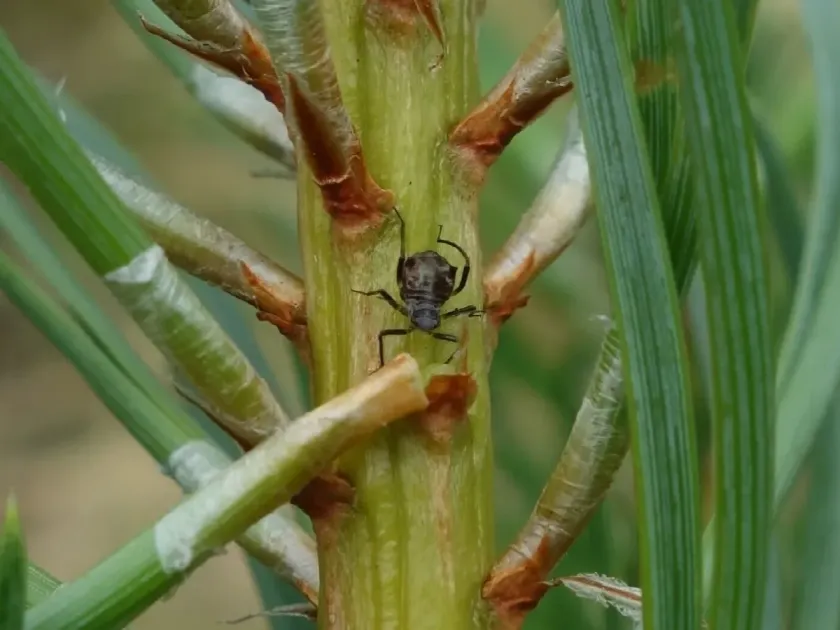
Description
How to identify
Cinara diversiseta belongs to the family Aphididae (true aphids) within the order Hemiptera. It is a specialized pest that specifically targets conifer species, particularly within the Cupressaceae family.
Adult aphids are relatively large, typically exhibiting shades of brown or gray, which provides effective camouflage against the bark of host trees. Their bodies are sometimes covered with a fine waxy secretion.
This species is characterized by long legs, allowing for swift movement across the branches. Colonies often consist of both winged and wingless females, which enables them to rapidly colonize neighboring plants or different parts of the same tree.
A distinctive feature of their biology is the production of honeydew, a sugary byproduct that attracts ants. Ants often form symbiotic relationships with these aphids, aggressively protecting them from natural predators.
The reproductive cycle is dominated by asexual (parthenogenetic) reproduction during the warmer months, allowing populations to explode in density very quickly when environmental conditions are favorable.
What it damages
The primary hosts for Cinara diversiseta include thuja, juniper, and false cypress. The aphids feed by piercing the surface tissues of young shoots and needles to extract plant sap.
Continuous sap extraction weakens the tree, leading to stunted growth and reduced vigor. Young saplings are particularly vulnerable, as their skeletal branches may fail to develop properly under the pressure of heavy infestation.
The accumulation of honeydew on foliage provides an ideal substrate for the development of sooty mold. This black fungal coating blocks sunlight, further inhibiting photosynthesis and reducing the overall health of the tree.
Heavy infestations typically result in the needles turning yellow or brown, followed by premature needle drop. Over time, affected branches may wither and die, severely compromising the ornamental appeal of the landscape plants.
Severe and prolonged stress from aphid feeding makes the conifers significantly more susceptible to secondary attacks from wood-boring insects, which can eventually lead to the death of the entire tree.
When it appears
The active life cycle of Cinara diversiseta begins in early spring as soon as temperatures rise, with the hatching of the "founder" generation from eggs that overwintered on the tree bark.
The population density usually peaks during the months of May and June. During this time, the fresh, succulent growth of the conifers provides an ideal food source for rapid expansion of the colonies.
While extreme summer heat can temporarily suppress activity, the aphids often persist in shaded areas of the canopy. Their numbers may decline but usually remain present throughout the season.
As autumn approaches, sexual reproduction occurs. Females lay overwintering eggs, which are securely attached to the bark or near the needle bases, ensuring the survival of the species through the winter months.
Agronomists and arborists should prioritize monitoring in early spring, as controlling the initial spring population is the most effective way to prevent mid-summer outbreaks and severe damage.
Signs of infestation
The presence of Cinara diversiseta is often signaled by visible clumps of dark, immobile insects clustered on the stems or branches of the conifers.
Visible symptoms include chlorosis (yellowing) of the needles, which may progress to browning and necrosis. Affected branches often lose their vibrant color and appear brittle or shriveled.
A key indicator of infestation is the presence of sticky honeydew on the needles, often accompanied by a black, soot-like fungal growth. Ant activity moving up and down the trunk is a reliable sign of aphid presence.
- Yellowing of needle tips and foliage.
- Visible sticky deposits on branches.
- Presence of ants on the trunk and branches.
- Dark sooty mold development.
- Premature needle shedding when branches are disturbed.
A simple field test involves holding a white sheet of paper beneath a branch and shaking it gently; the falling aphids are an unmistakable sign that professional intervention is required.
Control measures
An effective control program for Cinara diversiseta must be integrated. The first step should be preventing ant access to the canopy, using sticky barriers on the trunk to isolate the aphids from their protectors.
Systemic insecticides are generally the most effective chemical control method. Because they are absorbed by the plant tissues, these chemicals kill the aphids even when they are hidden deep within the dense canopy.
Application should occur at the first sign of infestation. It is crucial to rotate chemical classes to avoid the development of insecticide resistance, and thorough coverage of the branches is essential for success.
In residential settings or sensitive areas, biological controls such as encouraging natural predators—like ladybeetles, lacewings, and syrphid flies—can help keep aphid populations below damaging levels.
Maintaining tree health through proper irrigation and balanced fertilization is vital. Pruning and disposing of heavily infested branches can also drastically reduce the pest population density before full-scale chemical treatment is needed.
Taxonomy
- Latin name
- Cinara diversiseta
- Order
- Hemiptera (bugs, aphids, leafhoppers)
- Family
- Aphididae
- EPPO code
- CINADI
Discussion
No discussions yet — be the first.