
Cypress aphid
Cinara cupressi
Description
How to identify
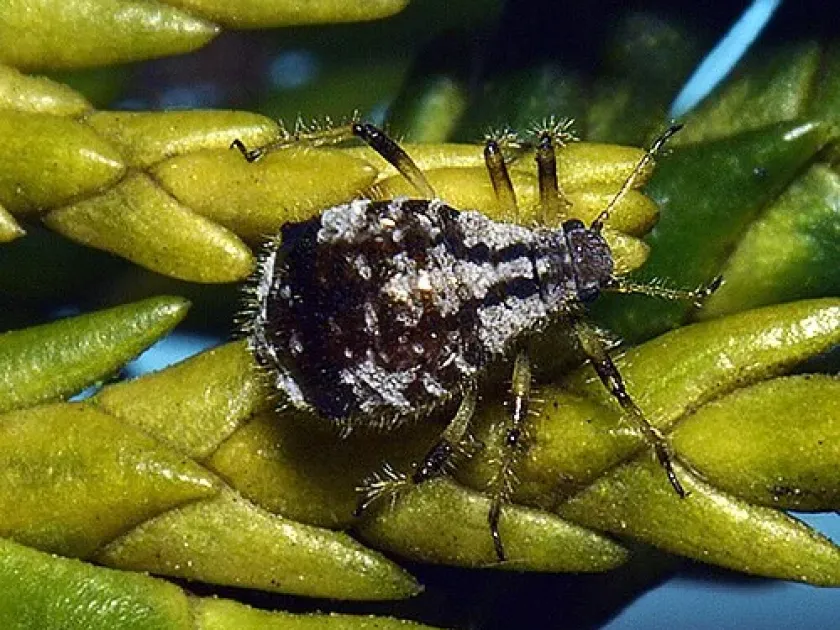
The cypress aphid (Cinara cupressi) is a significant pest belonging to the Aphididae family, primarily affecting various species of conifers in the Cupressaceae family.
These insects are small, typically measuring 2–3 mm in length, and exhibit a dark brown or blackish coloration which provides effective camouflage against tree bark.
Their life cycle involves both wingless and winged forms, allowing them to rapidly colonize healthy trees and expand their territory throughout the growing season.
They reproduce parthenogenetically, which enables them to multiply extremely quickly during favorable mild weather conditions in spring and autumn.
Overwintering occurs in the egg stage, with eggs laid in protected crevices of the bark or at the base of the foliage to ensure survival during the colder months.
What it damages
The primary hosts for this pest include Cupressus, Thuja, Juniperus, and Chamaecyparis species, which are widely used in urban landscaping and gardens.
Aphids feed by inserting their stylets into the plant's phloem, extracting vital nutrients and causing significant physiological stress to the host tree.
A major byproduct of their feeding is the excretion of honeydew, a sticky substance that covers the foliage and serves as a substrate for sooty mold growth.
Continued infestation often leads to yellowing, browning, and eventual drop of the needles, significantly reducing the tree's ornamental value and vitality.
In severe cases, the cumulative effect of nutrient loss and secondary fungal infections can lead to the death of individual branches or even the entire plant.
Signs of infestation
Initial symptoms are often subtle, appearing as a slight discoloration in the inner parts of the canopy where the pests are most protected from the environment.
The presence of sticky honeydew on the needles and branches is a clear indicator of aphid activity, often accompanied by increased ant activity around the tree.
The appearance of black sooty mold on the foliage is a secondary sign that indicates a long-standing infestation that has already caused damage.
Infected trees may show a general decline in health, with needles turning a rusty brown color and falling off prematurely when the branches are disturbed.
Close inspection of the bark and needle bases often reveals small clusters of aphids, which might be difficult to spot without a magnifying glass due to their color.
Control measures
Effective management begins with regular monitoring, especially during the peak periods of aphid activity in early spring before the foliage becomes too dense.
Systemic insecticides are generally the most effective control measure, as they are absorbed by the tree and provide protection over a longer duration.
Horticultural oils or insecticidal soaps can be used for localized control, provided they are applied with sufficient pressure to reach the pests hidden inside the canopy.
- Regular inspection of the interior canopy of conifers.
- Washing the foliage with strong water jets to remove colonies.
- Pruning and destroying heavily infested branches.
- Encouraging natural predators like ladybirds and lacewings.
Integrated pest management strategies suggest alternating between different classes of insecticides to prevent the development of resistance within the aphid population.
Taxonomy
- Latin name
- Cinara cupressi
- Order
- Hemiptera (bugs, aphids, leafhoppers)
- Family
- Aphididae
- EPPO code
- CUPRCU
Discussion
No discussions yet — be the first.