
Grey-brown larch aphid
Cinara cuneomaculata
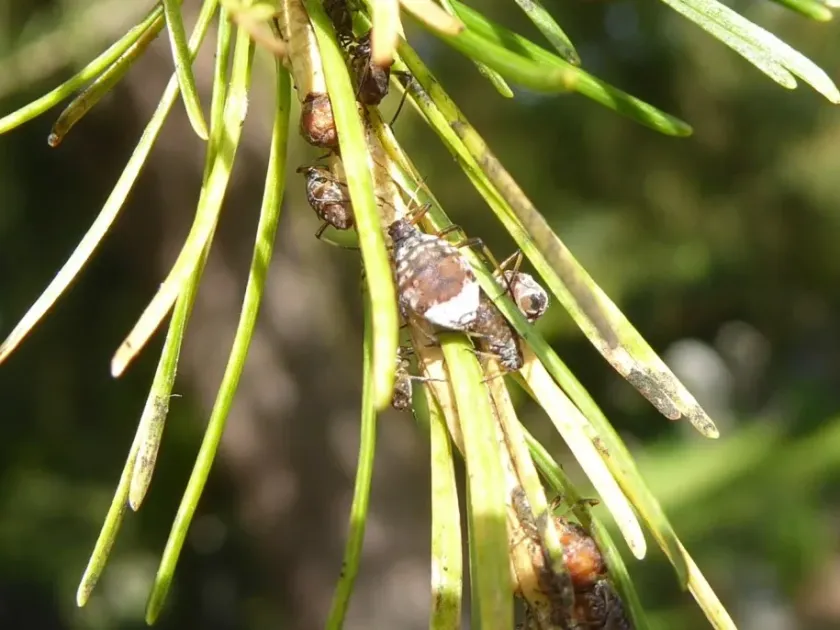
Description
How to identify
The grey-brown larch aphid, taxonomically classified as Cinara cuneomaculata, is a member of the Aphididae family. It is a specialized pest that primarily targets larch trees (Larix species) within forest ecosystems and ornamental plantings.
Adult aphids are relatively large in size compared to other aphid species. Their body coloration, ranging from dull grey to dark brown, provides excellent camouflage against the bark of host trees, making them difficult to detect without careful inspection.
The life cycle involves complex seasonal patterns, with winter survival occurring in the egg stage. Eggs are typically laid in bark crevices or near the base of needles, ensuring protection against cold weather until the following spring.
These insects exhibit colonial behavior, congregating in large groups on twigs, branches, or trunks. They feed by piercing plant tissues with their stylets to extract nutrient-rich phloem sap, which is essential for their rapid development.
During the growing season, generations overlap, allowing for exponential population growth. This cycle is heavily influenced by environmental factors such as temperature and humidity, which determine the timing of egg hatch and the intensity of the infestation.
What it damages
The primary hosts of Cinara cuneomaculata are various species of larch. The aphid poses a significant threat to young saplings and nursery stock, though mature trees in parks and forests are also frequently infested under favorable conditions.
Continuous sap extraction weakens the tree significantly, leading to reduced vitality and vigor. This stress makes the tree more susceptible to secondary attacks from other pests and pathogens that thrive on weakened host plants.
Infestation symptoms include stunted growth of new shoots, premature yellowing of needles, and eventually widespread needle drop. This loss of photosynthetic capacity drastically reduces the aesthetic and ecological value of the larch trees.
A major indirect impact is the excretion of honeydew, a sugary byproduct. This substance coats the foliage and creates an ideal environment for the growth of sooty mold, which blocks sunlight and interferes with gas exchange in the needles.
Additionally, this aphid species is capable of acting as a vector for various plant viruses, which can lead to chronic infections in conifer stands, further complicating management efforts in forest plantations.
Signs of infestation
The earliest signs of infestation are the presence of sticky honeydew on needles and branches, often accompanied by increased ant activity, as ants are attracted to the sugary secretions of the aphids.
Visible damage includes the twisting and deformation of young shoots, where aphids often congregate. Upon closer inspection, one may observe dense colonies of grey-brown insects adhering tightly to the tree bark or stems.
Needles may exhibit a dull, chlorotic appearance, turning yellow before falling prematurely. This symptom indicates that the tree is under significant physiological stress due to heavy feeding by the aphid colonies.
The development of black sooty mold on the surface of branches and needles serves as a diagnostic sign that the infestation has reached a critical density, necessitating immediate intervention.
On larger trees, the overall canopy might appear thin and unhealthy. During the evening, one might notice a characteristic shine on the lower foliage or ground caused by the accumulation of excreted honeydew.
Control measures
Effective management of Cinara cuneomaculata requires an Integrated Pest Management (IPM) approach, emphasizing monitoring, cultural practices, and targeted chemical applications only when necessary.
Cultural control involves maintaining optimal tree health through proper fertilization and watering, which increases the tree's innate resistance to pest pressure. Regular monitoring helps in detecting early colonies before they spread.
Biological control relies on preserving natural predators such as lady beetles, lacewings, and hoverfly larvae. These beneficial insects can often maintain aphid populations below economic injury levels if their habitats are protected.
- Application of systemic insecticides for long-lasting protection.
- Contact sprays during the early spring to target emerging nymphs.
- Using horticultural soaps or oils to wash off honeydew and small colonies.
- Encouraging natural predator populations through habitat conservation.
- Removing and destroying heavily infested branches to reduce local populations.
When using insecticides, it is critical to follow label instructions, particularly regarding timing and safety for pollinators. Repeat treatments may be required if new infestations appear within the same growing season.
Taxonomy
- Latin name
- Cinara cuneomaculata
- Order
- Hemiptera (bugs, aphids, leafhoppers)
- Family
- Aphididae
- EPPO code
- CINACU
Discussion
No discussions yet — be the first.