
Pine bark aphid
Cinara cronartii
Description
How to identify
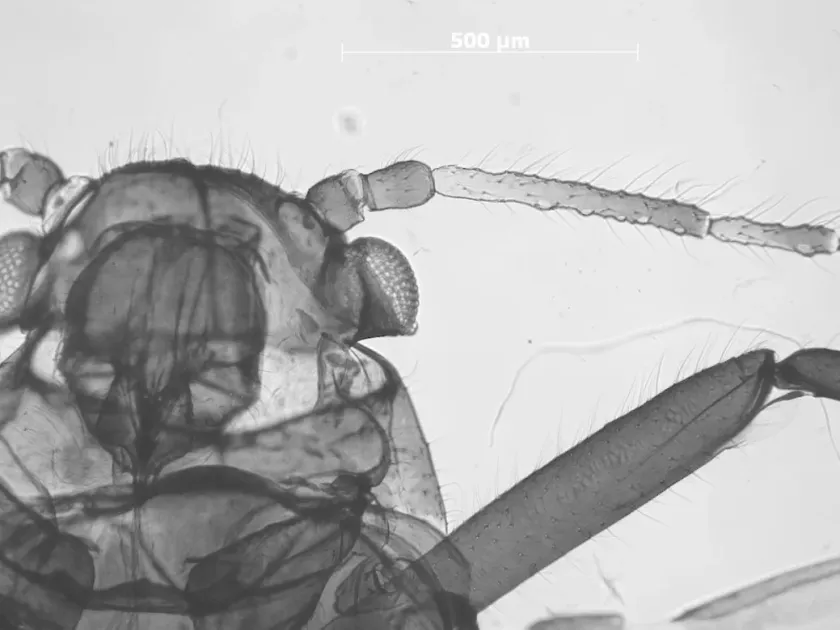
The pine bark aphid (Cinara cronartii) belongs to the family Aphididae. It is a specialized pest that thrives on various species of pine, often colonizing branches and stems.
These aphids are relatively large compared to other species, with a body color ranging from dark brown to black. They are often covered with fine hairs, allowing them to blend seamlessly with the texture of pine bark.
They live in dense colonies, frequently congregating on younger, tender bark where the phloem sap is easily accessible. This colonial behavior is a primary characteristic of the Cinara genus.
Both winged and wingless forms exist within the population. The winged adults facilitate the spread of the colony to neighboring trees, making infestation management a broader landscape concern.
The lifecycle relies on overwintering eggs laid in the crevices of the tree bark. As temperatures rise in spring, these eggs hatch, initiating a new cycle of rapid population growth.
What it damages
Cinara cronartii primarily targets pine trees. Young trees and saplings in nurseries are particularly vulnerable to sap extraction, which can stunt their growth significantly.
By constantly feeding on plant juices, the aphid drains vital energy from the tree. This weakening effect reduces the tree's overall vigor and makes it susceptible to secondary infections.
A major side effect of their feeding is the excretion of honeydew. This sticky substance covers needles and branches, creating a perfect breeding ground for sooty mold fungi.
The development of sooty mold physically blocks the stomata of the needles, severely inhibiting the tree's ability to photosynthesize, which leads to needle yellowing and premature drop.
In severe cases, the infestation causes dieback of individual branches or even the death of the entire tree, representing a significant economic loss in forestry and ornamental cultivation.
When it appears
The activity begins in early spring as temperatures rise above 5–8°C. This period is critical as the overwintering eggs hatch into the first generation of nymphs.
Population density typically peaks during May and June. During this time, the aphids reproduce rapidly, and colonies expand across the tree's surface to maximize sap intake.
By mid-to-late summer, natural population decline often occurs due to the action of predators like ladybugs and lacewings, as well as seasonal changes in plant physiology.
Autumn brings the formation of a sexual generation. The mated females lay hardy, overwintering eggs in protected areas, ensuring the survival of the species through the winter months.
Environmental factors, particularly mild and humid springs, can lead to explosive population growth, requiring vigilance during these periods to prevent extensive tree damage.
Signs of infestation
The presence of large numbers of ants crawling on pine trunks is a primary indicator of aphid activity. Ants aggressively protect the aphids to feed on the excreted honeydew.
Visual inspection reveals clusters of aphids sitting motionless on the bark. They are often difficult to spot due to their dark color, which mimics the appearance of pine bark textures.
A sticky, shiny residue on needles and branches indicates the presence of honeydew. This is often followed by a black, soot-like appearance caused by the growth of sooty mold.
Yellowing, twisting, and premature falling of the needles are signs of nutritional stress caused by the aphid's constant feeding on the tree's vascular system.
Decreased annual growth increments and the thinning of the crown in young pines are further indicators that the tree is suffering from chronic aphid infestation.
Control measures
Systemic insecticides are the most effective management tool. When applied, these chemicals are translocated through the tree's vascular system, killing aphids feeding anywhere on the tree.
Preventive spraying during the early spring bud-break phase is highly recommended to eliminate the founder generation, effectively stopping the infestation before it builds up.
Good silvicultural practices, including proper fertilization and irrigation, help keep trees vigorous. Healthy trees are significantly more resistant to aphid attacks than stressed ones.
Biological control agents, such as lady beetles, hoverflies, and lacewings, should be encouraged by planting diverse nectar-rich plants nearby to suppress aphid populations naturally.
For smaller ornamental trees, physical washing with a strong stream of water or insecticidal soap can remove the aphids and clean the honeydew/sooty mold buildup from the needles.
Taxonomy
- Latin name
- Cinara cronartii
- Order
- Hemiptera (bugs, aphids, leafhoppers)
- Family
- Aphididae
- EPPO code
- CINACR
Discussion
No discussions yet — be the first.